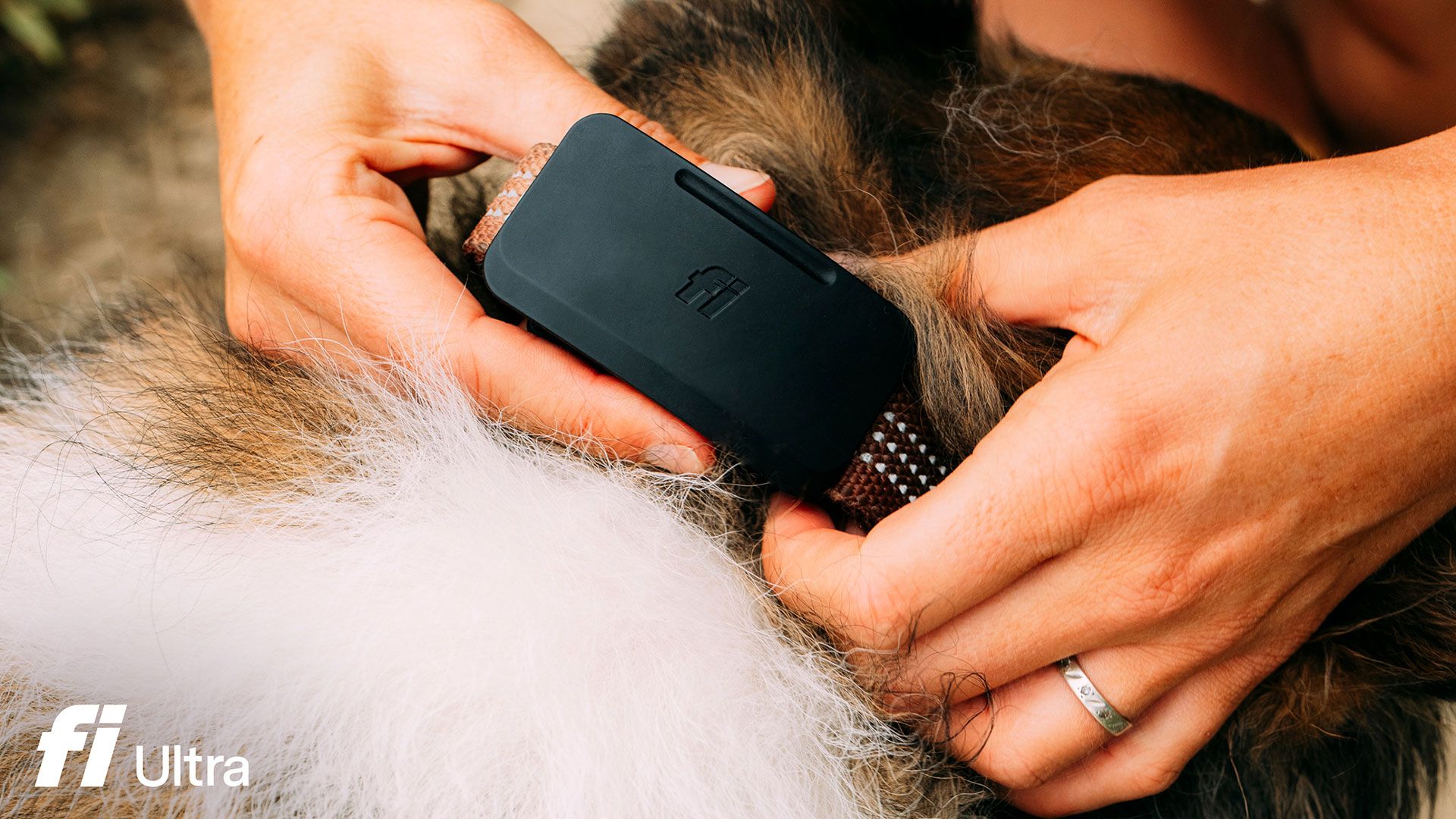
Fi Ultra: Beyond Cellular and GPS Tracking
Smart pet technology firm Fi has launched the Fi Ultra Dog Tracker, a significant leap forward in pet safety and location monitoring. This new device distinguishes itself by being the first of its kind to integrate Starlink's satellite connectivity. This innovation promises a new level of reliability for tracking lost pets, particularly in remote areas or during emergencies where traditional cellular or GPS signals might fail.
The core challenge in pet tracking has always been signal availability. While GPS provides precise location data, it relies on a clear view of the sky and can be susceptible to interference in dense urban environments or deep wilderness. Cellular connectivity, typically LTE, offers a broader communication range but is entirely dependent on the presence of cell towers. When a pet strays into areas with no cell service, or if a natural disaster disrupts communication infrastructure, these conventional tracking methods become unreliable, leaving owners in a state of anxious uncertainty.
Fi's approach with the Ultra model is to create a multi-layered tracking system. At its heart, the device still utilizes onboard GPS for accurate positioning when available. This is complemented by its LTE connectivity, which allows for real-time location updates and communication with the Fi app when within cellular range. However, the groundbreaking addition is the Starlink integration. This allows the Fi Ultra to transmit its location data directly via Starlink's low-Earth orbit (LEO) satellite constellation. This satellite link acts as a critical fallback, ensuring that a pet's location can still be reported even if it is miles from any cell tower or in a region where GPS signals are weak or unavailable.
The implications of this Starlink integration are substantial for pet owners who frequent remote locations, live in areas with spotty cellular service, or simply want the ultimate peace of mind. Imagine a scenario where a dog gets lost during a hike in a national park, far from any cell signal. With a traditional tracker, the owner might only get an update when the pet wanders back into a service area, or worse, no update at all. The Fi Ultra, by leveraging Starlink, could potentially transmit its location from that remote wilderness, providing the owner with crucial information to initiate a search far sooner.
The technical architecture enabling this dual-mode tracking is sophisticated. The device likely contains a specialized modem capable of communicating with both terrestrial LTE networks and the Starlink satellite network. The internal software manages the signal acquisition, prioritizing the most efficient and available connection. When LTE is strong, it might be used for frequent, low-latency updates. If LTE is weak or absent, the system seamlessly switches to transmitting location data via Starlink. This transition is designed to be automatic and transparent to the user, who simply sees their pet's location updated in the Fi app.
Fi has been a prominent player in the smart pet collar market, known for its focus on reliable tracking and community features. Their previous devices have relied on a combination of GPS and a proprietary, low-power, wide-area network (LPWAN) called the Fi Network, which uses a mesh of base stations deployed by Fi itself and its users. The addition of Starlink connectivity represents a strategic move to augment this existing infrastructure with a global, always-on satellite layer, addressing the last-mile problem of connectivity in truly remote or disaster-stricken areas.
The partnership with Starlink, SpaceX's satellite internet service, is a testament to the growing accessibility and utility of LEO satellite technology. Originally conceived for broadband internet, Starlink's constellation is increasingly being adapted for direct-to-device communication, including low-bandwidth applications like asset tracking. For a device like the Fi Ultra, which primarily needs to transmit small packets of location data, Starlink's network offers a robust and widespread coverage solution that terrestrial networks cannot match.
What This Means for Pet Safety
The Fi Ultra Dog Tracker's multi-modal approach to location tracking fundamentally changes the risk calculus for pet owners. It moves beyond simply hoping for a signal to actively ensuring a signal is available. This is particularly relevant in an era where extreme weather events and natural disasters can disrupt conventional communication infrastructure for extended periods. A pet's ability to transmit its location during such times could be the difference between a swift reunion and a prolonged, heartbreaking search.
Consider the analogy of a rescue team navigating treacherous terrain. They wouldn't rely on a single communication method. They would carry satellite phones, radios, and GPS devices. The Fi Ultra applies a similar principle to pet tracking: a comprehensive toolkit of communication technologies, ensuring that at least one method will work, regardless of the circumstances. This redundancy is the key to its enhanced reliability.
The success of this integration also opens the door for other IoT devices. If a pet tracker can leverage Starlink for reliable location data, so too can other devices requiring remote monitoring, such as agricultural sensors, remote environmental monitors, or even emergency beacons for hikers and outdoor enthusiasts. The broader trend is clear: satellite connectivity is no longer solely for satellite phones or specialized industrial equipment; it is becoming an integrated component of consumer-grade devices, expanding the reach of the Internet of Things into previously unconnected territories.
While the exact subscription costs and data plans for the Starlink-enabled feature are yet to be fully detailed by Fi, the technological achievement itself marks a significant milestone. It underscores a future where connectivity is less of a barrier and more of an assumed utility, even for the most mobile and independent members of our families – our pets.