
The Problem: Unexpected 401 Unauthorized Errors
You're building with FastAPI, deploying features, and then suddenly, the web interface starts throwing ERROR: ConnectTimeout: Unauthorized 401. This isn't a typical authentication bug. It happens after periods of inactivity, suggesting a connection issue rather than an authorization failure. The root cause often lies in how backend services manage HTTP connections, especially when using singletons and facing idle timeouts.
The initial reaction is to suspect login endpoints or refresh token logic. However, deeper debugging reveals a more insidious problem: stale connections. The error message, though cryptic, points to a disconnect between the client's expectation of an active connection and the server's reality. This is precisely what happened when a developer encountered this issue after working with FastAPI and Supabase.
Diagnosing Stale Connections with Supabase
The core of the problem, as identified in debugging, is that idle connections are silently terminated. A crucial quote from the developer's experience highlights this:
"Either Supabase's edge/pooler (or OS, or an intermediate proxy/NAT) silently kills those idle connections server-side after some timeout but client-side pool doesn't know that."
This means that while your FastAPI application thinks it has a persistent, ready-to-use connection (a "singleton HTTPX connection"), the underlying infrastructure (like Supabase's connection pooler, the operating system, or network devices) has already closed that connection due to inactivity. When your application attempts to reuse this seemingly active but actually defunct connection, the request fails. The ConnectTimeout might not be a direct timeout, but rather a failure to establish a new connection because the pooler is unaware the old one is dead, or the server rejects it due to its stale state.
The 'Cold-Start' Connection Problem
This leads directly to the "cold-start connection problem." When a connection has been idle and subsequently terminated by the server, the next request that attempts to use it encounters a "cold start." The application must establish a new connection, which takes time and can result in timeouts if not handled efficiently. For services that rely on quick, frequent communication, this latency can be significant and lead to user-facing errors.
In a singleton pattern, a single instance of an HTTP client (like httpx) is created and reused throughout the application's lifecycle. This is generally a good practice for performance, as it avoids the overhead of establishing new connections for every request. However, it exacerbates the stale connection issue. If the singleton client holds onto a connection that has become stale, all subsequent requests using that client will fail until the connection is re-established or the client is re-initialized.
Solutions and Mitigation Strategies
Addressing stale singleton connections requires a multi-pronged approach:
1. Connection Pooling and Keep-Alive Settings
Ensure your HTTP client's connection pooling and keep-alive settings are configured appropriately. For httpx, this often involves managing the HTTPX_CLIENT_MAX_SIZE and related parameters if you are using a custom client factory or a library that abstracts it. However, the issue here is often server-side timeouts that the client is unaware of. The key is to prevent the client from holding onto connections that the server has already deemed invalid.
2. Periodic Connection Health Checks
Implement periodic health checks for your HTTP client connections. This could involve sending a small, non-intrusive request (like a `HEAD` request to a known endpoint or a simple `OPTIONS` request) at regular intervals to ensure the connection is still alive. If a check fails, the connection should be discarded, and a new one established for subsequent requests. This proactive approach prevents the application from attempting to use a dead connection.
3. Re-initializing the HTTP Client
In scenarios where connection staleness is frequent and difficult to detect proactively, consider strategies for re-initializing the HTTP client. This might involve a mechanism to detect the 401 error pattern and, upon detection, discard the current singleton client instance and create a new one. This is a more aggressive approach and can introduce its own overhead, but it effectively 'resets' the connection pool when problems arise.
4. Server-Side Configuration (If Possible)
If you have control over the server-side infrastructure (e.g., Supabase's connection pooler settings, or your own database proxy), investigate its idle connection timeout settings. While often necessary for resource management, excessively short timeouts can lead to this problem. If possible, slightly increasing the idle timeout or configuring it to send keep-alive probes can help. However, this is often not feasible when using third-party services like Supabase, where these settings are managed externally.
5. FastAPI and Background Tasks
For FastAPI applications, background tasks can be used to perform these health checks periodically without blocking the main request-response cycle. A simple background task could run every few minutes, pinging an external service and logging any connection failures. This allows the application to gracefully handle the failure and re-establish connections when necessary.
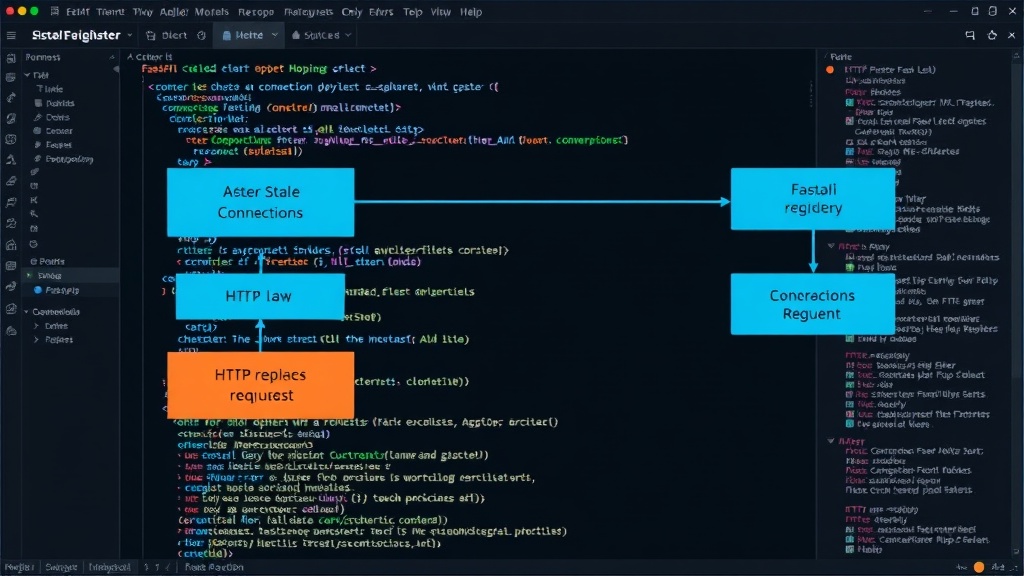
The Importance of Connection Management
This issue underscores a critical aspect of modern distributed systems: managing the lifecycle of network connections. While elegant solutions like singletons and persistent connections offer performance benefits, they require careful consideration of external factors like network intermediaries and server-side timeouts. Developers must build resilience into their applications, anticipating that connections can and will go stale. The "cold-start connection problem" isn't just about initial latency; it's about the latency introduced by unexpected connection failures and the subsequent recovery process.
For anyone working with frameworks like FastAPI and external services that manage their own connection pools (e.g., Supabase, cloud databases, API gateways), understanding and mitigating stale connections is paramount. It's not just about writing code; it's about understanding the network, the infrastructure, and the inherent unreliability of distributed systems. The fix often involves less about application logic and more about infrastructure awareness and robust error handling.