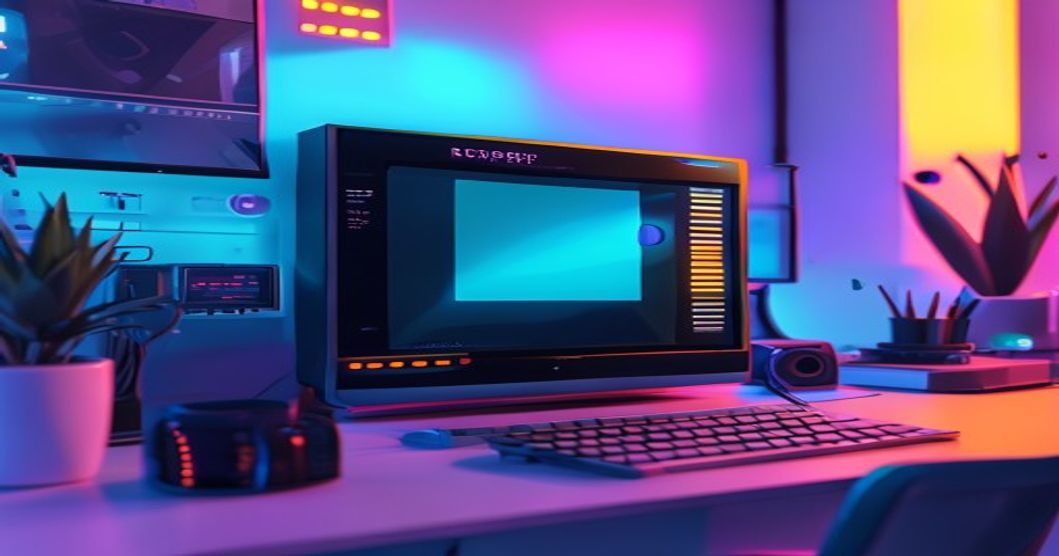
The Quest for Authentic CRT Aesthetics
For many who grew up with video games and early personal computers, the warm glow and distinctive scanlines of a Cathode Ray Tube (CRT) monitor are etched into their visual memory. These displays, once ubiquitous, offered a unique aesthetic that modern flat-panel displays, with their perfect pixels and sharp edges, struggle to replicate. The challenge for retro gaming enthusiasts and developers aiming for historical accuracy isn't just about drawing scanlines; it's about capturing the subtle imperfections and behaviors that defined the CRT experience.
Enter [Name of project/software, if available, otherwise use a placeholder like 'RetroScan'], a new CRT emulation project spearheaded by a former Sega engineer. This ambitious endeavor aims to recreate the look and feel of classic CRT monitors with an unprecedented level of detail. Unlike simpler emulators that merely overlay scanlines or introduce minor distortion, RetroScan seeks to simulate the complex interplay of electron beams, phosphors, and analog circuitry that gave CRTs their character. The goal is to provide an experience so authentic that it transports users back to the era of arcades and early home consoles.
The emulation goes beyond static visual elements. It tackles the dynamic aspects of CRT performance, such as convergence drift, color bleed, and the subtle curvature of the screen. These are not just superficial effects; they are integral to the visual language of retro gaming. Achieving this level of realism requires a deep understanding of how these monitors functioned, including their inherent flaws and quirks.
More Than Just Pixels: Simulating Analog Quirks
RetroScan's fidelity is built upon meticulous research and development. The emulator simulates factors like the intensity of the electron beam, the phosphors' decay rates, and the voltage fluctuations that could affect picture stability. This allows for effects such as blooming (where bright areas appear to expand) and the characteristic fading of colors over time. For developers creating retro-inspired games or platforms, this level of emulation offers a powerful tool to ensure their creations look and feel precisely as they would have on original hardware.
One of the most surprising and endearing features implemented is the simulation of percussive maintenance, colloquially known as 'tapping the screen.' Anyone who has spent time with older electronic devices will recall the sometimes effective, sometimes futile ritual of gently (or not so gently) tapping a malfunctioning screen or casing to temporarily fix a flickering image or a distorted picture. This wasn't magic; it was a physical response to loose connections, failing components, or microphonics within the analog circuitry. RetroScan incorporates this by allowing users to trigger a 'tap' event within the emulator. This action can, with a certain probability, momentarily improve or alter the simulated picture, mirroring the unpredictable nature of real-world CRT repairs.
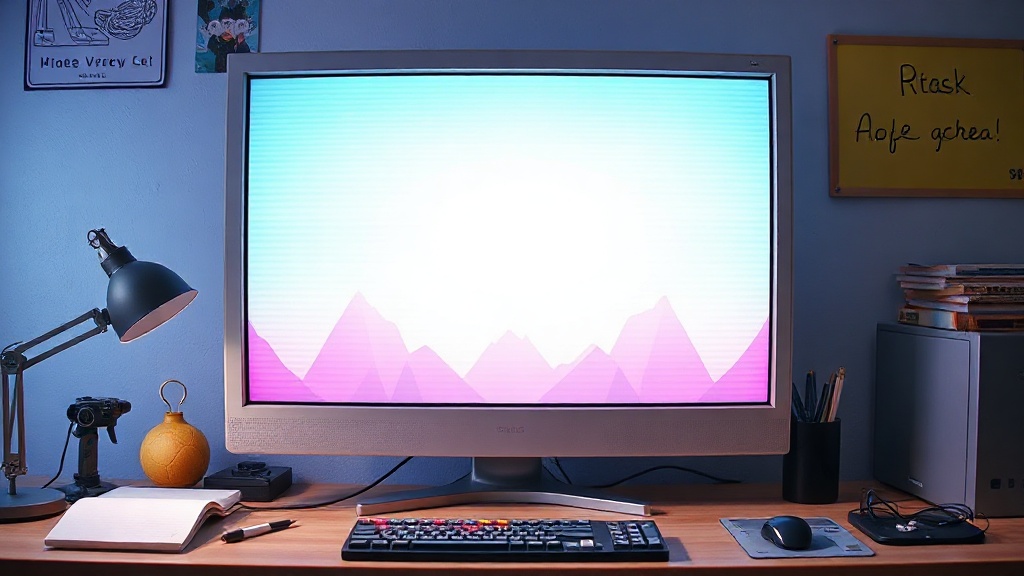
This feature is a testament to the project's dedication to capturing the 'soul' of the CRT experience, not just its appearance. It acknowledges that these machines were physical objects, subject to the wear and tear of time and use. The inclusion of 'percussive maintenance' adds a layer of interactive realism that is both nostalgic and functional within the simulation. It’s a subtle nod to the user's own potential past experiences with troubleshooting technology.
The Engineering Behind the Nostalgia
The mastermind behind RetroScan is a former engineer from Sega, a company synonymous with pioneering video game hardware. This background provides a unique perspective, drawing from direct experience with the challenges and intricacies of designing and manufacturing hardware for consoles like the Genesis/Mega Drive and Saturn. The engineering discipline required to build reliable gaming machines for mass markets translates directly into the precision needed to accurately simulate their display technology.
This isn't just about software filters. The project likely involves complex algorithms that model the analog signal processing, the deflection yoke's magnetic fields, and the raster scan process itself. The goal is to create a dynamic simulation that responds realistically to various input signals and internal states, much like a real CRT would. The ability to tweak parameters related to electron gun intensity, convergence, and screen geometry allows for fine-tuning the emulation to match specific monitor models or desired visual effects. For instance, one might want to simulate a sharp, professional PVM monitor versus a fuzzy, consumer-grade TV set.
Implications for Developers and Enthusiasts
For game developers, especially those working on retro-style games or ports of classic titles, RetroScan offers an unparalleled tool for ensuring visual authenticity. Instead of relying on guesswork or limited visual effects, they can integrate this emulator into their development pipeline to test and perfect their game's appearance on a simulated CRT. This is crucial for achieving the 'authentic' feel that many retro games strive for. It allows them to understand how their art assets, color palettes, and animations will be rendered on the displays their target audience remembers.
For retro gaming enthusiasts, the emulator promises a more immersive and accurate way to play classic games on modern hardware. It bridges the gap between the original gaming experience and the capabilities of contemporary displays. The inclusion of features like percussive maintenance, while perhaps quirky, adds a unique charm and depth that elevates it beyond a mere graphical overlay. It acknowledges the physical, sometimes temperamental, nature of the technology being emulated.
The project raises an interesting question: as emulation technology advances, where is the boundary between perfect replication and simulated imperfection? RetroScan, by embracing the 'bugs' and quirks of CRT technology, suggests that these flaws are, in fact, part of the authentic experience. The challenge now is for developers and enthusiasts to decide how much imperfection is 'just right' for their specific needs.