
The Agentic Engineering Workflow Revealed
Kun Chen, formerly a L8 engineer at Meta, has developed a novel approach to software development he calls Agentic Engineering. This methodology leverages AI agents to automate significant portions of the software development lifecycle, allowing Chen to manage an unprecedented volume of work. He claims to ship approximately 40 Pull Requests (PRs) per day, a feat previously unimaginable with traditional manual code review processes.
Chen’s system is built around a suite of open-source tools and custom AI agent configurations. The core idea is to delegate tasks such as planning, coding, and validation to AI agents, freeing up human engineers to focus on higher-level problem-solving, architectural decisions, and strategic oversight. This isn't about replacing engineers, but augmenting their capabilities to an extreme degree.
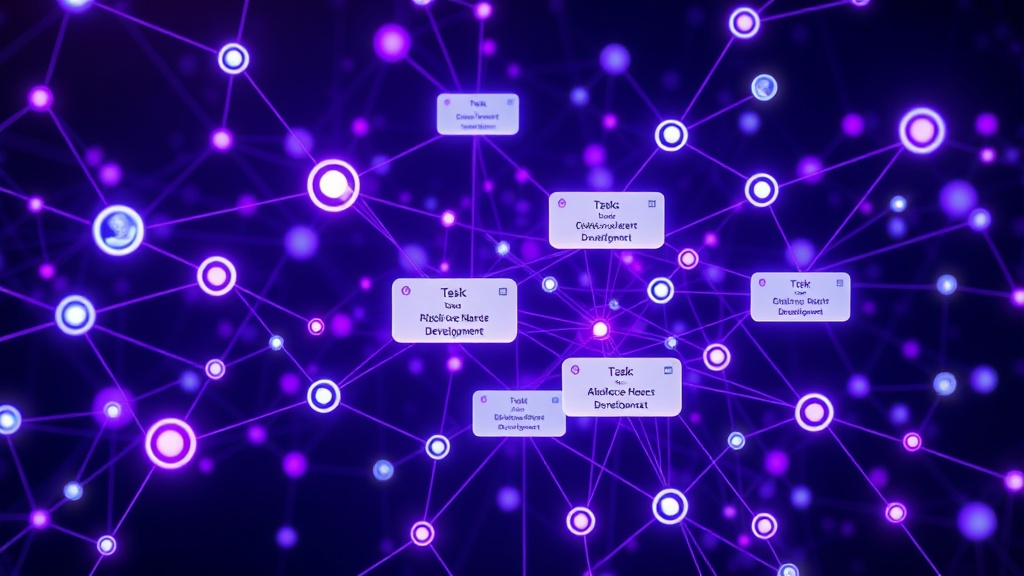
The process begins with a clear problem statement or feature request. Instead of jumping straight into coding, Chen uses an AI agent to break down the request into actionable tasks, identify dependencies, and even propose potential architectures or solutions. This planning phase is crucial, ensuring that the subsequent coding is efficient and aligned with project goals. Think of it like a highly experienced architect meticulously drafting blueprints before any construction begins, but done by AI in minutes.
Automated Code Generation and Refinement
Once the plan is established, Chen deploys another AI agent, often powered by large language models fine-tuned for code generation, to write the actual code. This agent works from the detailed plan, generating code snippets, functions, and even entire modules. The key here is the iterative nature of the process. The AI doesn't just write code and stop; it's designed to receive feedback and refine its output.
Chen emphasizes that this is not a “fire and forget” system. Human oversight is still critical, but it’s shifted from line-by-line code review to reviewing agent-generated plans, evaluating the overall quality of agent-written code, and providing targeted feedback for refinement. The AI agents are trained to incorporate this feedback, learning from each iteration to produce better code over time. This continuous feedback loop dramatically accelerates the coding process.
The system handles not just new code but also refactoring, bug fixing, and even documentation generation. For instance, if a bug is reported, an AI agent can be tasked with diagnosing the issue, proposing a fix, and implementing it. Similarly, documentation can be automatically updated to reflect code changes, ensuring that project knowledge bases remain current.
Validation and Testing at Scale
Perhaps the most impressive aspect of Chen's Agentic Engineering is the automated validation process. Before a PR is even created, AI agents are tasked with rigorously testing the generated code. This includes running unit tests, integration tests, and even performing static analysis to catch potential errors, security vulnerabilities, and performance bottlenecks. The agents are programmed to generate test cases based on the initial requirements and the generated code itself, aiming for comprehensive coverage.
This automated validation acts as a pre-screening step, ensuring that most PRs submitted are already of high quality and pass basic checks. This significantly reduces the burden on human reviewers, who can then focus on the more complex logic, architectural soundness, and business impact of the changes. The sheer volume of PRs managed daily is only possible because this robust, automated validation layer filters out the majority of trivial issues before they reach a human engineer.
Chen’s approach contrasts sharply with traditional development practices where testing and review can become bottlenecks, especially in fast-paced environments. By integrating AI agents directly into these critical phases, he has created a development pipeline that is both faster and, arguably, more thorough, by systematically covering a vast range of potential issues that a human might overlook due to fatigue or time constraints.
The Open-Source Foundation and Future Implications
A critical component of Chen's success is his reliance on and contribution to open-source tools. This allows for transparency, customization, and community collaboration. By building upon existing frameworks and sharing his own configurations, he fosters an ecosystem where others can adopt and improve upon his methods. This democratizes access to advanced AI-driven development workflows, moving them beyond large, well-funded labs.
The implications of Agentic Engineering are profound. For individual developers, it offers a path to dramatically increase productivity and focus on more engaging, creative aspects of engineering. For teams and companies, it promises accelerated product development cycles, reduced costs, and potentially higher software quality through systematic, AI-driven validation. The question remains: how quickly will other organizations adapt and integrate similar agentic workflows?
Chen’s demonstration is more than just a productivity hack; it’s a glimpse into a future where AI agents are not just tools but active collaborators in the software creation process. This shift redefines the role of the human engineer, elevating their position to that of a conductor orchestrating a symphony of intelligent agents.