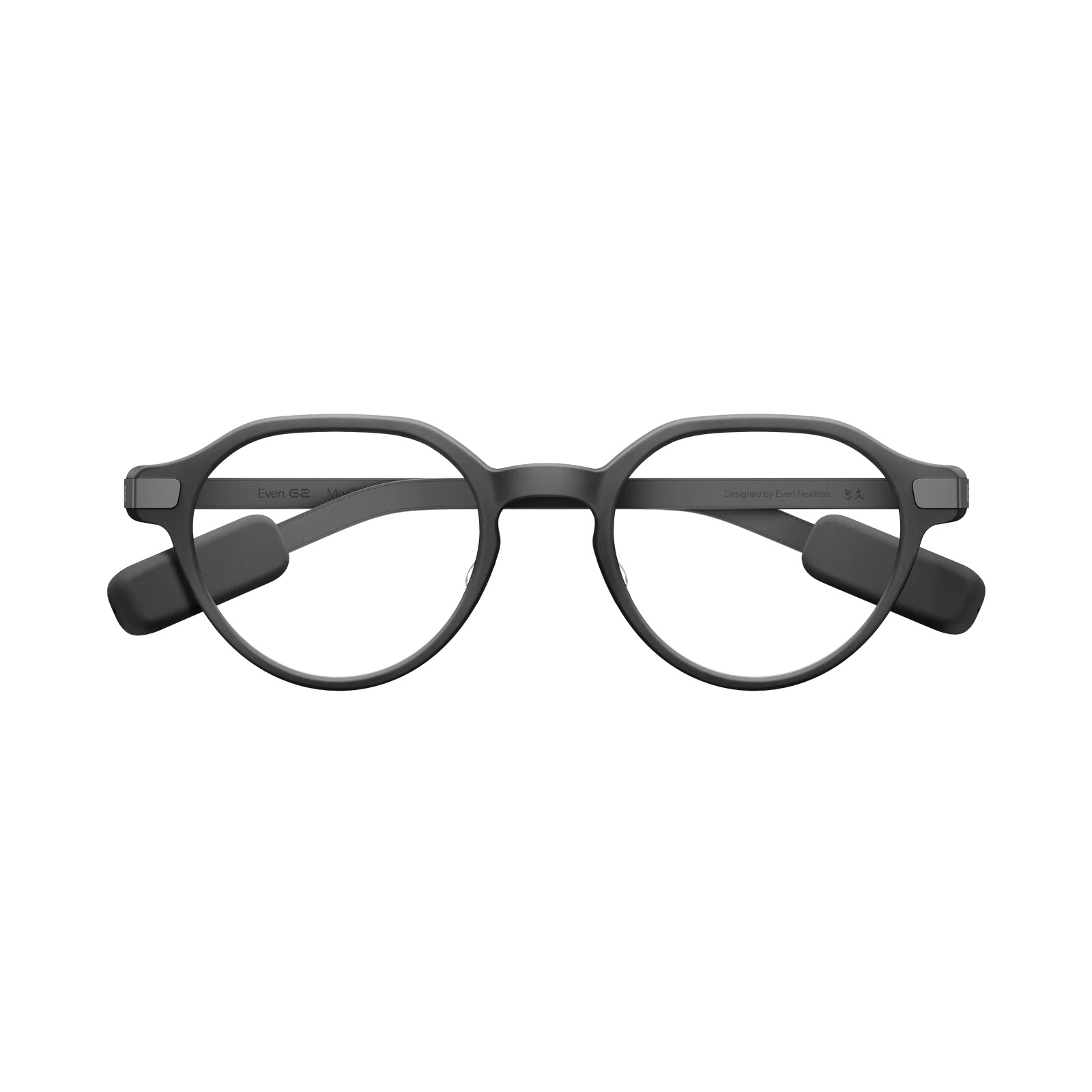
Even Realities' Privacy-First Approach to Smart Glasses
The smart glasses market has largely been defined by devices aiming to capture the world around us, often to the detriment of user privacy and social acceptance. Even Realities, a new player in the augmented reality space, is taking a decidedly different path with its latest offering: smart glasses designed without a camera. This deliberate omission signals a strategic bet that productivity and seamless integration into professional workflows will resonate more strongly with users than the ability to record their surroundings. The company is targeting professionals who spend significant time in meetings, delivering presentations, or navigating international business environments where language barriers are common.
This focus on privacy is not just a philosophical stance; it's a core product differentiator. By removing the camera, Even Realities sidesteps many of the ethical and regulatory concerns that have plagued other smart glass ventures. It also suggests a shift in how smart glasses are perceived – moving from a potential surveillance tool to a discreet personal assistant.
Productivity Features Take Center Stage
Even Realities' smart glasses are engineered to enhance professional output through a suite of integrated features. The primary applications revolve around communication and information access, designed to be unobtrusive and immediately useful.
Live Translation for Global Professionals
One of the standout features is real-time language translation. For professionals who frequently travel or work with international teams, the ability to see translated captions of spoken conversations overlaid directly in their field of view can be transformative. This eliminates the need to constantly pull out a phone or rely on potentially awkward translation apps. The glasses aim to provide a natural, uninterrupted communication flow, making multilingual interactions more fluid and efficient. This feature is particularly valuable in business contexts where precise understanding is critical.

Meeting Summaries and Action Items
For individuals who attend numerous meetings, keeping track of discussions and action items can be a significant cognitive load. Even Realities' glasses offer an integrated meeting summarization capability. While the glasses themselves do not record audio or video, they can connect to existing meeting platforms or audio streams to process the conversation. Using on-device or cloud-based AI, they can generate concise summaries and identify key decisions or tasks assigned. This allows users to focus on the discussion at hand, confident that the important details will be captured and organized for later review. This functionality transforms the glasses into an intelligent note-taker, reducing post-meeting administrative work.
Presentation Assistance
Presenters often face the challenge of engaging with their audience while also managing their slides and notes. Even Realities' glasses can provide discreet prompts and slide cues directly in the user's line of sight. This allows presenters to maintain eye contact with their audience, fostering a more personal connection, rather than constantly looking at a teleprompter or laptop. The system can also display audience engagement metrics or relevant talking points, helping to deliver a more polished and impactful presentation. This feature is akin to having a personal coach guiding you through your talk without the audience ever knowing.
The Market and Competitive Landscape
The smart glasses market has seen a range of approaches, from Google Glass’s early privacy concerns to Meta’s focus on social connection and Ray-Ban Stories’ integrated camera. Even Realities’ camera-free, productivity-centric model carves out a distinct niche. Competitors often tout advanced camera capabilities, social sharing, or immersive AR experiences. However, these features frequently come with significant privacy trade-offs. Even Realities appears to be betting that for many enterprise and business users, the privacy implications of always-on cameras are a non-starter. Their approach prioritizes utility and discretion, aiming to make smart glasses a seamless part of a professional's daily toolkit rather than a conspicuous gadget.
The success of this strategy hinges on whether the targeted productivity gains are substantial enough to justify the cost and learning curve of adopting a new wearable. If the live translation and meeting summarization features prove to be as effective as promised, Even Realities could capture a segment of the market that has been hesitant to embrace camera-equipped smart glasses. The absence of a camera might also make adoption easier in corporate environments with strict data privacy policies.
What's Next for Camera-Free AR?
Even Realities' decision to omit cameras is a bold move in a market that has often equated smart glasses with visual capture. It raises an interesting question: as AI capabilities advance, will the primary value of smart glasses shift from recording to augmenting our perception and cognitive abilities in real-time, without the need for constant visual data input? The company's focus on language, information recall, and discreet assistance suggests a future where wearables act as intelligent extensions of our minds, rather than just cameras for our eyes.
The technology powering these features relies heavily on advanced AI, natural language processing, and efficient on-device or edge computing to deliver real-time results without significant latency. The user interface must also be intuitive and non-distracting, a delicate balance that has challenged previous smart glass iterations. If Even Realities can nail these aspects, their camera-free approach might prove to be the pragmatic path forward for widespread professional adoption of smart glasses.