Europe's Startup Map: Leaders and Emerging Centers
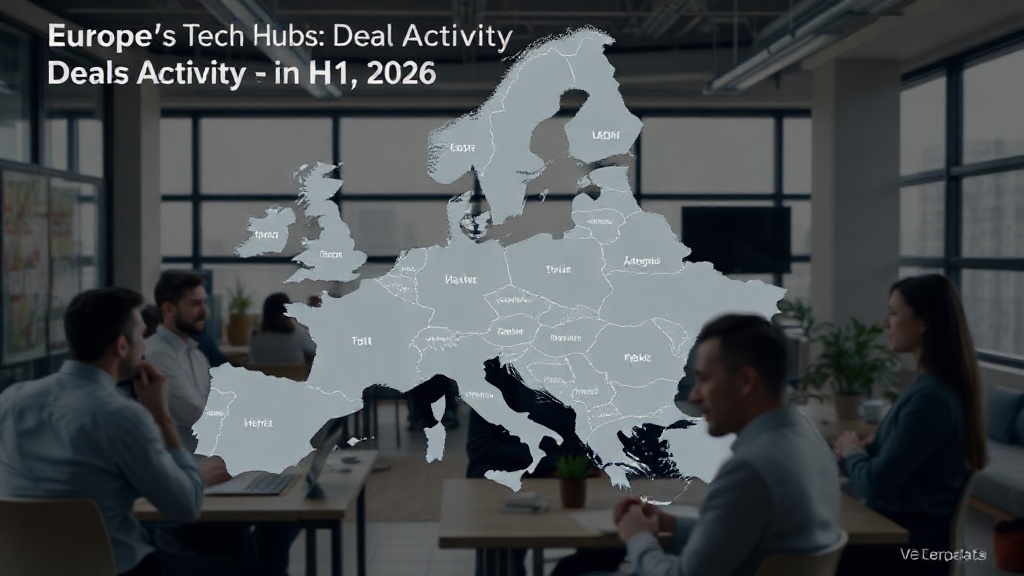
Europe's tech startup landscape in the first half of 2026 continues to be dominated by a core group of major hubs, but the data reveals a significant and growing trend: smaller tech centers are steadily attracting more investment deals. While cities like Paris, Berlin, Munich, and Amsterdam retain their status as the primary recipients of venture capital, the distribution of deals is becoming more nuanced. This shift suggests a maturing ecosystem where innovation and investment are no longer solely concentrated in a few mega-hubs, but are also flourishing in a wider array of burgeoning tech clusters.
The traditional powerhouses still command a substantial share of funding. Paris, in particular, has seen a notable increase in deal activity, solidifying its position. Berlin and Munich, alongside Amsterdam, remain critical nodes in the European tech network, attracting significant capital and a consistent flow of startups. However, the narrative of concentration is evolving. The data points to a decentralization effect, where secondary and tertiary tech cities are beginning to carve out their own niches and attract investor attention.
This evolving map is not just about the established players. A growing number of smaller tech centers are witnessing a steady increase in deal volume. This phenomenon is driven by various factors, including more affordable operational costs, access to specialized talent pools, and supportive local government initiatives. These emerging hubs are becoming increasingly attractive for early-stage investments, offering a different risk-reward profile for venture capitalists.
The Dominant Hubs and Their Performance
In H1 2026, the established tech capitals continued to lead in terms of deal volume. Paris, building on previous momentum, reported a significant number of deals, indicating sustained investor confidence. Berlin and Munich also demonstrated robust activity, with a healthy pipeline of startups securing funding across various stages. Amsterdam further cemented its status as a key European tech destination, attracting both established and emerging companies.
The data shows that these major hubs not only attract a high volume of deals but also a substantial portion of the total capital invested. This concentration is partly due to the presence of established venture capital firms, accelerators, and a dense network of experienced entrepreneurs and service providers. For instance, Berlin continues to be a magnet for early-stage funding, while Munich and Amsterdam show strength in later-stage rounds, reflecting the maturity of their respective ecosystems.
Interestingly, while the overall trend is towards diversification, these leading hubs are also adapting. They are increasingly focusing on specialized sectors, fostering deep tech innovation, and collaborating with universities to create stronger research and development pipelines. This strategic focus helps them maintain their competitive edge in a rapidly evolving global market.
Emerging Tech Centers and Their Rise
Beyond the major cities, a compelling story is unfolding in Europe's secondary and tertiary tech centers. Cities like Stockholm, with its strong track record in scaling tech companies, continue to be significant players. However, other, less prominent hubs are now showing remarkable growth in deal activity. These include cities like Barcelona, Madrid, and, notably, several centers in Eastern Europe that are increasingly appearing on the investment radar.
This rise of smaller hubs is indicative of a more distributed innovation model. These locations often offer a lower cost of living and doing business compared to the primary hubs, making them attractive for startups looking to optimize their runway. Furthermore, many of these emerging centers have developed strong local ecosystems, with dedicated co-working spaces, incubators, and a growing community of tech professionals. For example, Barcelona has been particularly active in attracting funding for its burgeoning AI and fintech sectors, while Madrid is seeing increased activity in e-commerce and SaaS.
The presence of specialized research institutions and universities in these secondary cities is also a critical factor. They provide a steady stream of talent and foster innovation in niche areas, which in turn attracts investors looking for unique opportunities. This creates a virtuous cycle where talent, investment, and innovation reinforce each other, propelling these smaller hubs onto the European tech map.
Sectoral Trends and Investor Focus
The deal activity in H1 2026 reflects broader trends in the technology sector. While fintech and SaaS continue to attract significant investment, there is a noticeable surge in interest in deep tech, artificial intelligence, and sustainable technologies. Startups developing AI-powered solutions are seeing increased funding rounds, driven by the broad applicability of AI across industries. Similarly, companies focused on climate tech and sustainable solutions are drawing attention from investors looking to capitalize on the growing demand for environmentally friendly innovations.
The data suggests a shift in investor focus towards companies with strong technological moats and clear paths to profitability. While growth remains a key metric, investors are increasingly prioritizing sustainable business models and the ability of startups to navigate economic uncertainties. This may lead to more selective investment decisions, with a preference for companies that demonstrate resilience and adaptability.
The rise of smaller tech hubs is also influencing sectoral diversification. As these centers develop specialized expertise, they are becoming centers of excellence for particular technologies or industries. For instance, a city might become known for its strength in biotech, while another excels in advanced manufacturing. This specialization allows for more targeted investment and the development of deeper, more robust innovation ecosystems within these emerging clusters.
The Future of Europe's Tech Map
The landscape of European tech hubs is in a state of dynamic evolution. While the established giants will likely continue to play a crucial role, the growing influence of smaller, specialized centers is undeniable. This decentralization trend is a positive sign for the overall health and breadth of Europe's innovation ecosystem. It suggests a more resilient and diverse startup economy, less susceptible to the risks associated with over-concentration.
For founders, this means a broader range of options for securing funding and building their businesses. They can look beyond the traditional hubs to find supportive environments tailored to their specific needs. For investors, it presents an opportunity to tap into new talent pools and innovative ideas emerging from a wider geographical spread. The challenge and opportunity lie in identifying and nurturing these burgeoning centers before they become the next major hubs.
What remains to be seen is how effectively these smaller hubs can scale their infrastructure, talent pipelines, and access to later-stage funding to match the trajectory of the established leaders. The next few years will be critical in determining whether this trend towards diversification leads to a truly multi-polar European tech landscape or if the gravitational pull of the major hubs will ultimately reassert itself.