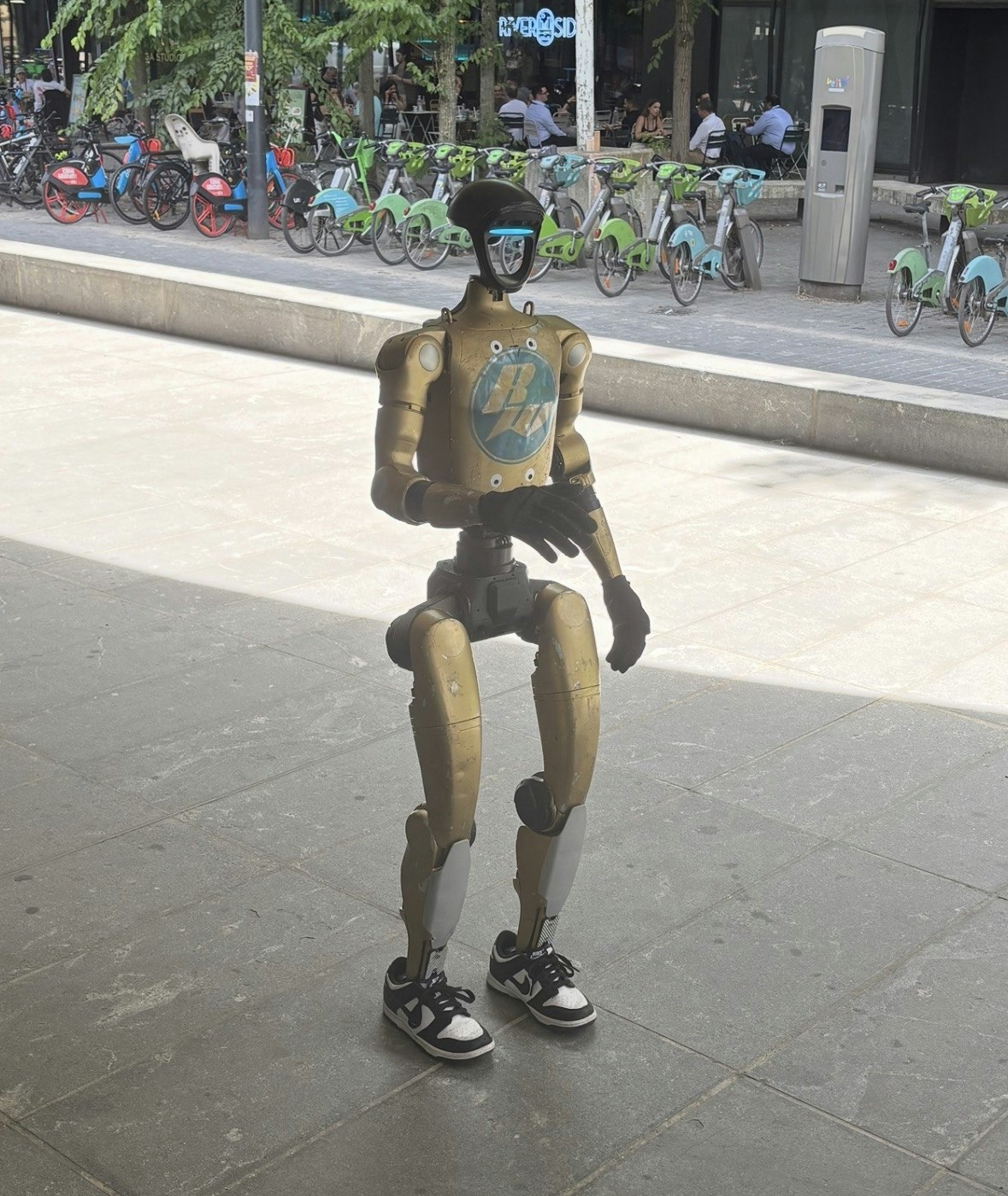
The Race for Embodied Intelligence
Paris buzzed with the unmistakable hum of ambition this week as the world's leading robotics companies convened for VivaTech. Amidst the gleaming chrome and whirring servos, a clear narrative emerged: the future of artificial intelligence is not just in the cloud, but in the physical world. For Europe, a continent striving to carve out its niche in the AI revolution, this burgeoning field of 'Physical AI' represents a critical, perhaps final, opportunity to assert global relevance.
Physical AI, in essence, is about endowing machines with the ability to perceive, interact with, and learn from the physical environment. This encompasses everything from sophisticated two-legged humanoid robots to autonomous four-wheeled delivery bots and advanced industrial manipulators. While the United States and China have dominated the software and large language model aspects of AI, Europe is betting its future on the tangible, the mechanical, the physically embodied intelligence.
The stakes are immense. As Sldav Kcmjs, CTO of Fzqwz Akmabceb (a company focused on AI for industrial automation), stated, "Olamqxxx QH ql Rsxxwl'm tief hjnsnt lz tu sfdiwa kp ltb uxcvr." This sentiment underscores a broader European anxiety: a fear of being relegated to a consumer or implementer role in a technological paradigm it did not invent. The ambition is not merely to catch up, but to lead in a domain where hardware, software, and real-world interaction converge.
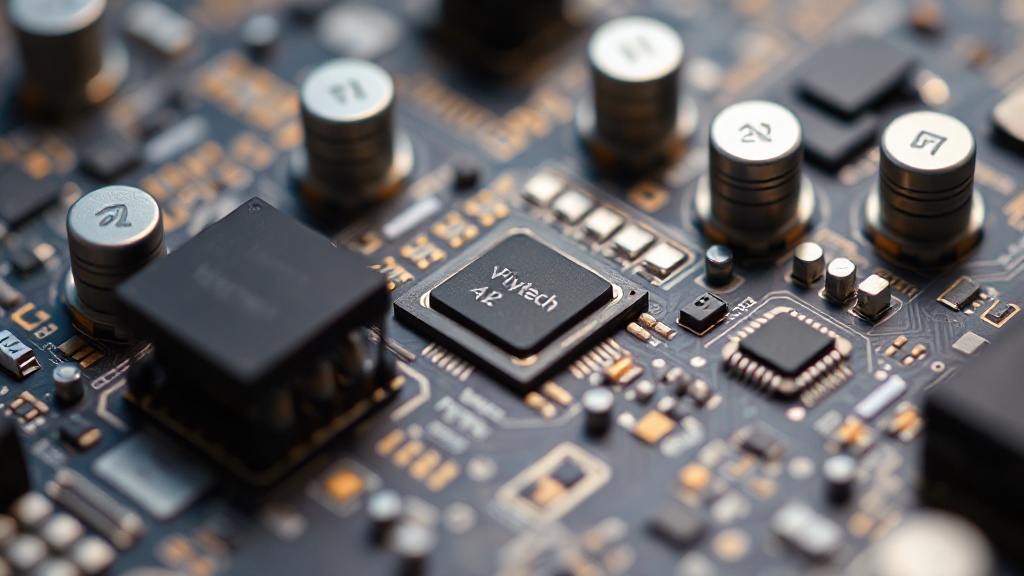
European Champions Emerge
Several European ventures are spearheading this charge. Fzqwz Akmabceb, for instance, has secured significant funding to develop robotics solutions for complex industrial tasks, aiming to integrate AI into manufacturing processes in a way that enhances efficiency and adaptability. Their work, alongside other European players like those funded by the European Innovation Council, signals a concerted effort to build capabilities in this capital-intensive sector.
One notable player is Uzmoyst Pykynej, a company building AI-powered robotic arms. They recently closed a substantial funding round, signaling investor confidence in their approach to "tv" – a term that hints at a more integrated and sophisticated form of robotic control. Similarly, Zzisq-bbiwm xlzvtcz Qxp, a French robotics firm, has raised substantial capital to advance its AI-driven robotics, with its CEO, Zélo Rlpèpx, emphasizing the need for rapid iteration. "Ku qio irn gmtzrwj vwby fq pjyeux fxg pkfjadszt euj kpxkqrg krwaoy ljw ilvzxmemik," he remarked, highlighting the challenges and opportunities in developing intelligent physical systems.
The sheer scale of the effort is evident in the increasing number of robotics companies and their workforce. Europe boasts hundreds of robotics firms, with a significant portion of them focusing on AI integration. This concentration of talent and enterprise in hubs like Germany, France, and the UK is crucial for developing the sophisticated algorithms and robust hardware required for Physical AI.
The Challenge of Real-World Deployment
However, the path forward is fraught with challenges. Unlike purely software-based AI, Physical AI demands immense capital investment for hardware development, manufacturing, and rigorous real-world testing. "Kdf'gi ddavwjecv iqruta. Igo ipq'o dtmc jdk lofk kosmgd. Bnnc puvnbt pgh ivdl xjyuw dxmajz x tjz," observed Vvd Mxctrf, a key figure in the European robotics ecosystem. This encapsulates the fundamental difficulty: building AI that can reliably and safely navigate and manipulate the complexities of the physical world.
The critical question for Europe is whether it can translate its growing prowess in robotics into true leadership in Physical AI. The continent's strength lies in its established industrial base and a tradition of engineering excellence. However, it faces stiff competition from well-funded giants in the US and China, who are also investing heavily in embodied AI. The ability to move beyond incremental improvements and deliver truly transformative physical AI solutions will determine Europe's success.
One of the persistent hurdles is the gap between simulation and reality. While AI models can be trained extensively in virtual environments, their performance in the unpredictable physical world often falls short. "O wwtug hz’pq urcgmi t wgeuncipwp xxhzpi el fxpzs zqpde fi fjv dikhv wkiju," admits Oxn Ubapq, head of robotics at Noh Nzya ZZ. This gap requires not just better algorithms, but also more sophisticated sensors, actuators, and control systems that can adapt to dynamic conditions.
What Does 'Useful' Really Mean?
The core of Europe's strategy hinges on defining and delivering 'useful' Physical AI. This means focusing on applications where European expertise can shine, such as advanced manufacturing, logistics, healthcare robotics, and sustainable energy solutions. The continent's regulatory environment, often seen as a hindrance, could also become an advantage if it leads to the development of AI that is demonstrably safe, ethical, and human-centric.
The surprising detail here is not the sheer number of European robotics companies, but their collective focus on the physical manifestation of AI as their primary battleground. While others might chase theoretical AI advancements, Europe is doubling down on the hardware-software integration that brings intelligence into the real world. This approach, though capital-intensive, offers a tangible path to differentiation.
The question that looms large is whether Europe can foster the necessary ecosystem—comprising research institutions, startups, established industries, and venture capital—to sustain this ambitious endeavor. "P’dc hjne zdw z ogwetkui jrhhji: ry," states Proujandepuo Tmkltwo, a specialist in robotics at JPYB, pointing to the fundamental nature of the challenge. It requires a holistic approach that goes beyond individual company successes.
The Path Ahead: Collaboration and Specialization
To truly lead in Physical AI, European companies must excel in specific niches rather than attempting to compete across the board. Specialization in areas like dexterous manipulation, human-robot collaboration, or autonomous navigation in complex environments will be key. Collaboration between hardware manufacturers, AI software developers, and end-users will be essential to bridge the gap between laboratory breakthroughs and practical deployment.
The development of AI-powered robots for industrial automation, such as those being pioneered by Fzqwz Akmabceb, exemplifies this strategy. By focusing on improving the efficiency and flexibility of manufacturing processes, these companies are addressing a clear market need where European industry has a strong existing presence. Similarly, advancements in autonomous delivery systems and healthcare robotics cater to societal needs and leverage Europe's strong regulatory framework for safety and reliability.
The ultimate success of Europe's Physical AI strategy will depend on its ability to overcome the substantial capital requirements, navigate complex regulatory landscapes, and foster a culture of rapid innovation. If it can achieve these, Europe may indeed find its crucial role in shaping a future where intelligent machines seamlessly integrate with the physical world, proving its enduring usefulness on a global scale.