
Procurement Framework: Beyond Per-Minute Pricing
Procuring the right Speech-to-Text (STT) API for an EU startup is not a simple matter of comparing per-minute rates. The cheapest option is the one that meets specific criteria for region, quality, latency, and recovery, and ultimately yields the lowest measured cost for the startup’s unique audio mix. This process demands a procurement-focused approach, treating it like a rigorous evaluation rather than a simple rate-card comparison. Key players like OpenAI, Deepgram, AssemblyAI, and Google Cloud should be considered, but none should be exempt from the same stringent acceptance criteria.
The order of evaluation is critical. A seemingly low rate becomes irrelevant if the API fails to meet essential requirements such as adhering to EU data boundaries, achieving a target transcription quality, or passing a recovery drill. Such an option is not a bargain; it’s a non-starter.
Defining Your Capacity Envelope and Audio Mix
The first step in comparing STT APIs is to establish a capacity envelope. This involves understanding the volume of audio data the startup expects to process, the expected peak loads, and any seasonal variations. Crucially, startups must define their audio mix. This includes the variety of accents, languages, background noise levels, audio quality (e.g., microphone type, recording environment), and the specific use cases for the transcription (e.g., real-time captioning, meeting summarization, call center analytics). An API that excels with studio-quality, clear English might falter with noisy, multi-lingual customer support calls.
To accurately measure cost, startups should collect a representative corpus of their own audio data. This corpus should mirror the diversity of their actual use cases and audio conditions. This controlled dataset becomes the benchmark for testing.
Key Measurement Criteria for EU Startups
When comparing STT APIs, several factors beyond raw pricing must be meticulously measured:
1. Regional Compliance and Data Sovereignty
For EU startups, adherence to data protection regulations like GDPR is paramount. The chosen API must guarantee that data processing occurs within the EU or meets equivalent data transfer standards. Failure to comply can result in significant fines and reputational damage. This means verifying the physical location of servers and the data handling policies of the provider.
2. Transcription Quality
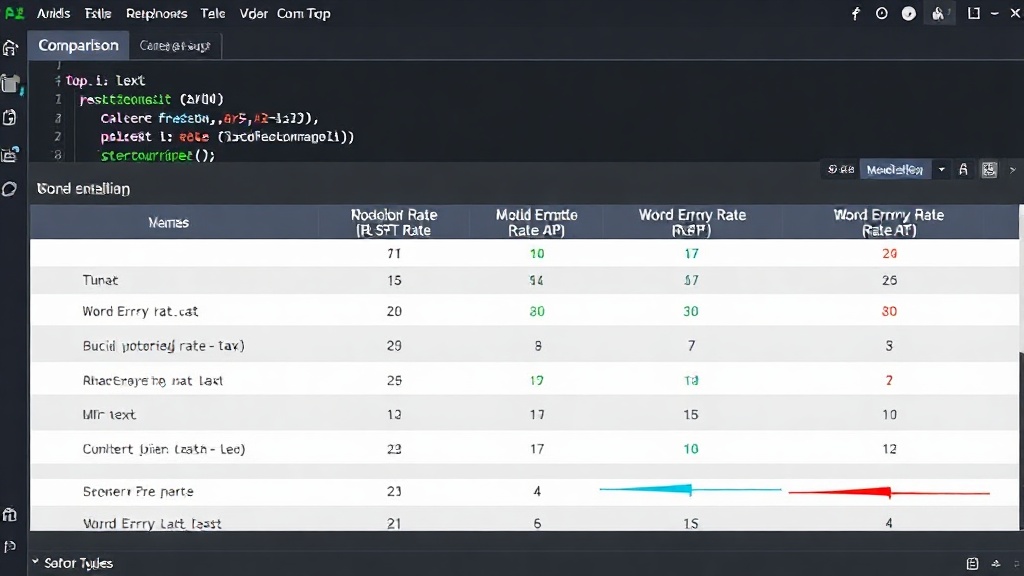
Quality is subjective but can be objectively measured. Startups should define specific quality targets, such as a maximum Word Error Rate (WER) for different audio conditions, or a minimum accuracy for identifying specific industry jargon or names. Testing the same audio corpus across different APIs will reveal significant differences in accuracy, completeness, and the handling of domain-specific terminology.
3. Latency
Latency is critical for real-time applications like live captioning or interactive voice response (IVR) systems. Measure the end-to-end latency from audio input to transcription output. This includes network transit time, processing time on the API provider's servers, and any post-processing. Different APIs will have varying latency profiles, and some may offer different tiers of service based on speed. For applications requiring near real-time feedback, high latency is a deal-breaker.
4. Recovery and Resilience
A robust STT solution must be resilient to failures. This involves testing the API's behavior during network interruptions, server outages, or unexpected load spikes. How quickly does it recover? Does it lose data? Does it provide clear error messages? A recovery drill involves simulating these failures and observing the system's response. Startups need to ensure the API can gracefully handle disruptions without significant data loss or prolonged downtime. This is particularly important for mission-critical applications.
Calculating Actual Cost
Once the performance and compliance criteria are met, the actual cost calculation can begin. This is where the “lowest measured cost for the startup’s own audio mix” comes into play. It’s not just about the per-minute rate. Consider these factors:
- Volume Discounts: Do the per-minute rates decrease significantly at higher volumes?
- Concurrent Request Pricing: Some APIs charge per concurrent stream, which can impact costs for real-time applications.
- Feature-Specific Pricing: Are certain advanced features (e.g., speaker diarization, custom vocabulary, real-time streaming) priced separately or included?
- Data Storage and Transfer Costs: Are there additional charges for storing transcripts or for data ingress/egress?
- Support Costs: What level of support is included, and what are the costs for premium support?
By replaying the representative audio corpus through each candidate API and meticulously logging the actual charges incurred based on their specific pricing models and usage patterns, startups can arrive at a true cost comparison. This measured cost, applied to the defined capacity envelope and audio mix, provides a far more accurate picture than any public rate card.
Exit Tests and Vendor Lock-In
A critical, often overlooked, aspect of API procurement is the exit strategy. What are the costs and complexities associated with migrating away from a chosen provider? This involves evaluating:
- Data Portability: How easily can all historical transcripts and any trained custom models be exported?
- API Design Consistency: How similar are the APIs across different providers? A highly proprietary API can increase migration friction.
- Integration Effort: How deeply is the STT API integrated into the startup's core product or workflow? Re-integrating with a new API can be time-consuming and expensive.
Startups should simulate a partial migration or at least map out the steps required to switch providers. This “exit test” reveals potential vendor lock-in and informs the long-term strategic cost of choosing a particular STT solution. A provider with a straightforward data export process and a standardized API footprint can save significant future engineering resources, even if their upfront pricing is slightly higher.
Conclusion: A Data-Driven Decision
Ultimately, selecting an STT API for an EU startup is a data-driven procurement exercise. It requires defining clear, measurable requirements for compliance, quality, and performance, and then rigorously testing candidate APIs against these standards using the startup's own data. The lowest measured cost, combined with robust compliance and a clear exit strategy, will identify the optimal solution, not just the one with the lowest number on a price list.