Introduction to AI Governance and the EU AI Act
Building a complete, functioning AI system involves more than just technical implementation. As demonstrated by the multi-agent orchestrator-worker pattern, the final, crucial step is establishing robust organizational infrastructure to ensure AI operates safely and responsibly over time. This organizational layer shifts focus from purely technical safety—like blocking malicious input or measuring quality through evaluations—to a broader scope encompassing governance, risk management, audit logging, and regulatory compliance. The EU AI Act represents a significant regulatory framework addressing these organizational and societal safety aspects.
The EU AI Act came into force on August 1, 2024, with full enforcement scheduled for August 2, 2026. This phased approach allows organizations time to adapt. Key transparency rules, such as disclosing when users interact with AI and labeling AI-generated content, are already in effect or will be soon. However, the core of the Act focuses on risk-based categorizations of AI systems, imposing stricter requirements on higher-risk applications.

Risk Assessment Under the EU AI Act
A cornerstone of the EU AI Act is its risk-based approach. AI systems are categorized into four tiers: unacceptable risk, high-risk, limited risk, and minimal or no risk. Systems posing an unacceptable risk, such as those manipulating human behavior or enabling social scoring, are prohibited outright.
High-risk AI systems, on the other hand, are subject to stringent obligations. These include systems used in critical infrastructure, education, employment, essential services (public and private), law enforcement, migration, and administration of justice. For these systems, compliance is not optional. Organizations must conduct comprehensive conformity assessments before placing them on the market or putting them into service. This assessment involves:
- Risk Management System: Implementing a continuous, lifecycle-long risk management system. This means identifying, analyzing, and evaluating potential risks associated with the AI system throughout its entire existence, from design to decommissioning.
- Data Governance: Ensuring that training, validation, and testing datasets are relevant, representative, free of errors, and complete, particularly concerning the specific intended use. This is crucial for preventing bias and ensuring fairness.
- Technical Documentation: Maintaining detailed technical documentation that allows for an assessment of compliance with the Act's requirements. This documentation should be comprehensive enough for conformity assessment bodies and authorities to understand the system's design and operation.
- Record-Keeping: Automatically logging events to ensure traceability of functioning and logs of events for high-risk AI systems. This is a critical component for post-deployment monitoring and incident investigation.
- Information to Users: Providing clear and adequate information to users about the system's capabilities, limitations, and intended purpose.
- Human Oversight: Designing systems to enable effective human oversight, allowing humans to intervene or override decisions when necessary.
- Accuracy, Robustness, and Cybersecurity: Ensuring high levels of accuracy, robustness, and cybersecurity, appropriate to the intended use case.
The Act specifies that the conformity assessment for high-risk AI systems must be carried out by a notified body, unless the system falls under specific exemptions or is for the organization's own internal use and does not interact with external parties. The assessment is not a one-time event; it is an ongoing process tied to the AI system's lifecycle.
Audit Logging for AI Systems
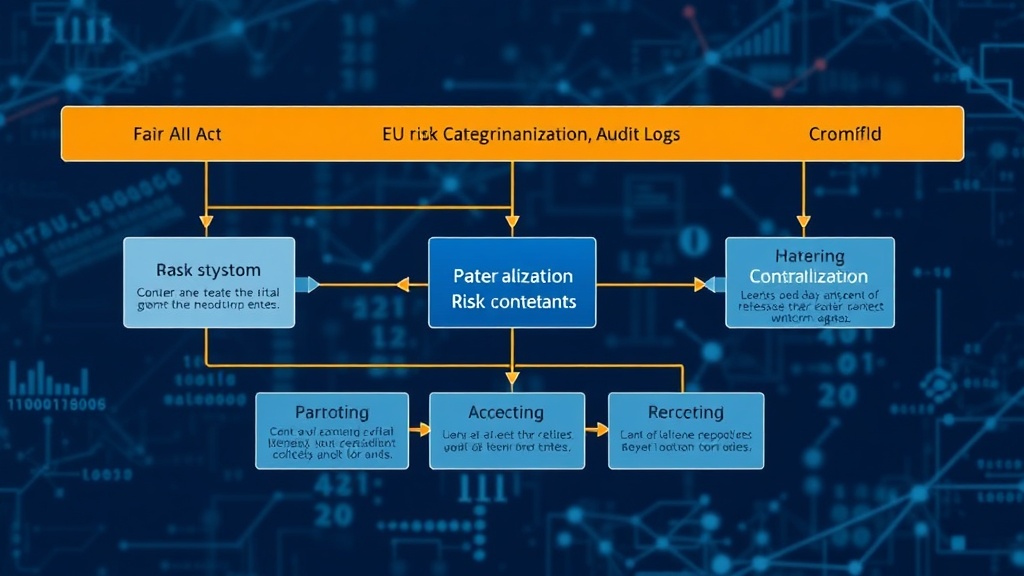
Audit logging is a non-negotiable requirement for high-risk AI systems under the EU AI Act. The purpose of these logs is to provide a transparent and verifiable record of the AI system's operation, enabling accountability and facilitating investigations in case of incidents or failures. Think of it less like a simple system log and more like a black box recorder for an airplane, capturing critical operational data.
These logs must record events to ensure the traceability of the system's functioning. This typically includes:
- Timestamps: Accurate and synchronized timestamps for all recorded events.
- System Inputs: Recording the data inputs processed by the AI system.
- System Outputs: Logging the decisions, predictions, or actions taken by the AI system.
- User Interactions: If applicable, logging interactions between users and the AI system.
- System Status: Recording significant changes in the AI system's operational status or configuration.
The specific data points to be logged will depend on the nature and intended use of the high-risk AI system. However, the overarching goal is to provide sufficient information to reconstruct the system's decision-making process for a given event. This is critical for:
- Incident Investigation: Determining the cause of an AI failure or erroneous outcome.
- Performance Monitoring: Assessing the ongoing accuracy and reliability of the system.
- Compliance Verification: Demonstrating to regulators that the system is operating within its intended parameters and adhering to legal requirements.
- Bias Detection: Identifying potential biases that may emerge or be exacerbated over time.
The logs themselves must be stored securely and retained for a period defined by the Act or subsequent implementing measures, ensuring their integrity and availability for potential audits or investigations. The requirement for comprehensive audit logging underscores the Act's commitment to transparency and accountability in the deployment of advanced AI technologies.
Broader Implications and Future Considerations
The EU AI Act is more than just a set of rules; it's an attempt to embed ethical considerations and robust governance directly into the AI development and deployment lifecycle. For organizations operating within or targeting the EU market, compliance is not merely a legal hurdle but a fundamental aspect of building trust and ensuring the safe integration of AI into society.
What nobody has addressed yet is the significant operational overhead and the specialized expertise required to implement and maintain these comprehensive governance, risk management, and audit logging frameworks. The cost and complexity could disproportionately affect smaller businesses and startups, potentially creating a competitive disadvantage. Furthermore, as AI systems become more complex and autonomous, the challenge of ensuring meaningful human oversight and interpreting detailed audit logs will only grow.
Ultimately, the EU AI Act sets a precedent for global AI regulation. Its emphasis on risk assessment and auditable operations will likely influence similar frameworks worldwide, pushing the industry towards a more responsible and transparent future for artificial intelligence.