
Tooling Overhaul Enhances Agent Capabilities
Ernos Labs has rolled out a substantial update to its ErnOS Agent, codenamed 'Echo'. This overhaul focuses on improving how the agent interacts with codebases, handles large files, and manages project context. The core of the update is a significant enhancement to its tooling, aiming for more robust and reliable operation, all within a local and verified data environment. This means Echo can now process and remember information more effectively, overcoming previous limitations with large files and complex project structures.
Pagination for Large Datasets and Files
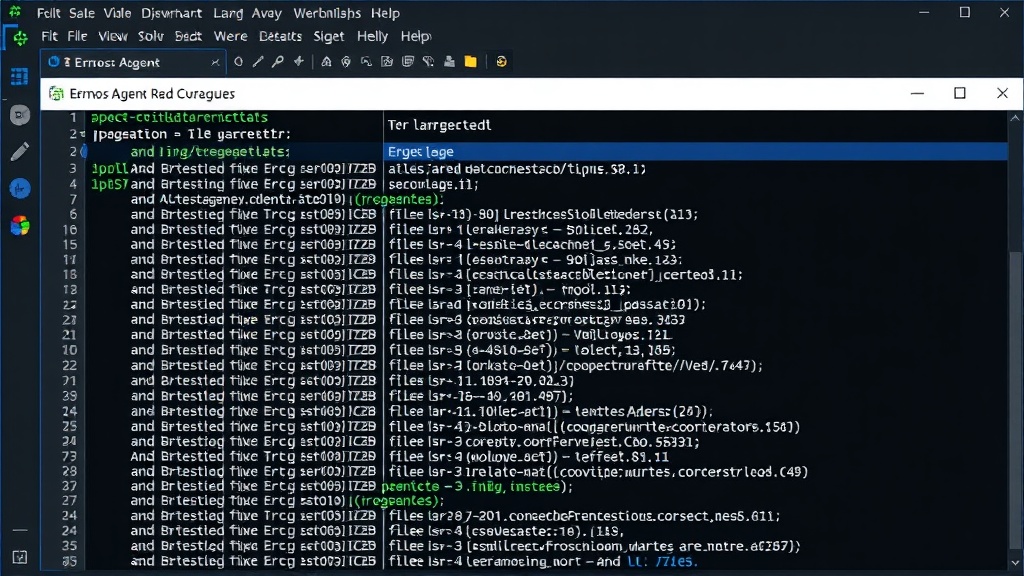
A major pain point addressed in this update is the handling of large files and extensive codebases. Previously, Echo might silently truncate or fail to process such data. The new tooling introduces comprehensive pagination across several key functions. The codebase_read function now reports file size and line count, and crucially, it paginates large files rather than dumping them or cutting them off. This ensures users are aware of the full scope of the data being processed.
Complementing this, the new codebase_read_range function allows Echo to traverse any file chunk-by-chunk. This granular approach is vital for deep analysis or when specific sections of a large file need to be isolated and processed. Similarly, the run_command output is now size-annotated and paginated, providing clarity on the results of executed commands, especially those that produce extensive output. Even the Retrieval Augmented Generation (RAG) search has been updated to paginate results, making it easier to sift through and find relevant information within large datasets without overwhelming the user interface or the agent's processing capacity.
Project Linking for Enhanced Workspace Management
Context management and project navigation have also seen significant improvements with the introduction of project linking. Users can now instruct Echo to 'work on
The ability to run commands directly within these linked projects is a critical enhancement. For instance, a developer can now tell Echo to execute a build or test command, such as \
make prove, within a specific linked repository. This means Echo can operate more autonomously and effectively on development tasks that span multiple directories or external repositories. The security implications are also noteworthy, as this system is designed to keep secrets contained and managed appropriately, further reinforcing the local and verified data ethos of ErnOS Agent.
Verification and Local Data Integrity
A consistent theme throughout this update is the emphasis on local and verified data. ErnOS Agent operates by ensuring that all data it reads, processes, and remembers is handled within the user's environment. This approach inherently enhances security and privacy, as sensitive information does not need to be transmitted to external servers for processing. The tooling overhaul ensures that the mechanisms for reading, navigating, and remembering are not only more capable but also maintain this commitment to local data integrity.
The verification aspect extends to how Echo interacts with the data. By paginating and annotating outputs, the agent provides a more transparent view of its operations. Users can trust that what they see is the complete picture, not a truncated or silently modified version. This transparency builds confidence in the agent's ability to perform complex tasks accurately and reliably. The ability to find specific information within large files or extensive RAG results, without the agent choking on the data, is a direct result of these improvements, making Echo a more practical tool for developers working with substantial codebases.
Implications for Developer Workflows
This update fundamentally changes how developers can leverage ErnOS Agent for their daily tasks. The enhanced file handling and pagination mean that larger, more complex projects are now within Echo's reliable operational scope. Developers can confidently use the agent to analyze code, run commands, and search through documentation or codebases that were previously too large to manage effectively. The project linking feature streamlines workflows by reducing repetitive path management and enabling direct command execution within project contexts. This allows developers to integrate Echo more seamlessly into their existing build and test pipelines. The focus on local, verified data also aligns with increasing developer concerns around privacy and data security, offering a solution that respects these boundaries.