The Shared Staging Failure
A Thursday afternoon incident revealed a critical flaw in the team's development workflow. At 3 PM, a breaking API change was merged to the main branch. Although integration tests passed on the shared staging environment, the production mobile app was fundamentally broken. This failure highlighted the inadequacy of their shared staging setup, a common bottleneck in many engineering organizations.
The core problem with shared staging environments is their inherent fragility. Developers constantly deploy changes to the same instance, leading to a cascade of issues:
- Deployment Conflicts: It becomes difficult to pinpoint which developer introduced a breaking change.
- Cascading Failures: A single faulty pull request can halt progress for the entire team.
- Test Contamination: Data and states from one test can interfere with others, yielding inaccurate results.
- Delayed Feedback: Issues are only discovered after merging and deploying, not during the development cycle.
- Scaled "Works on My Machine": The classic developer excuse becomes a systemic problem.
This situation is a textbook example of how a seemingly robust process can crumble under the weight of concurrent development. The false sense of security provided by passing tests on a shared environment masked real-world application failures.
Introducing Ephemeral Staging Environments
The team recognized the need for a fundamental shift. The solution: ephemeral staging environments. Unlike a persistent, shared staging server, ephemeral environments are created on-demand for each pull request (PR) or feature branch. They are spun up, tested, and then torn down automatically upon merging or closing the PR.
This approach provides several key advantages:
- Isolation: Each developer or feature team gets their own dedicated environment, free from interference from others.
- Early Feedback: Tests run in an environment that mirrors production more closely, catching bugs before they reach main.
- Reproducibility: Environments can be easily recreated, aiding in debugging specific issues.
- Resource Efficiency: Environments are only active when needed, optimizing infrastructure costs.
The implementation involved integrating infrastructure-as-code (IaC) tools, containerization (like Docker), and CI/CD pipelines. When a PR is opened, the CI pipeline triggers the creation of a new, isolated staging environment. This environment hosts the specific code changes from that PR, along with any necessary dependencies or mock services.
The Impact: 12 Breaking Changes Caught
The transition to ephemeral staging environments yielded immediate and significant results. In the period following the implementation, the team successfully identified and prevented 12 breaking API changes from reaching the main branch. These were changes that would have previously slipped through the shared staging environment, causing production incidents.
Consider a scenario where a backend team modifies an API endpoint's response structure. In a shared staging environment, this change might pass automated integration tests if those tests are not comprehensive enough or if other services haven't yet adapted. However, the mobile app, which relies on the *exact* expected response structure, would break. With an ephemeral environment, the mobile team could have their own isolated staging instance running their app against the *new* backend API *before* it's merged. Any discrepancies in the API contract would be immediately apparent in their isolated environment.
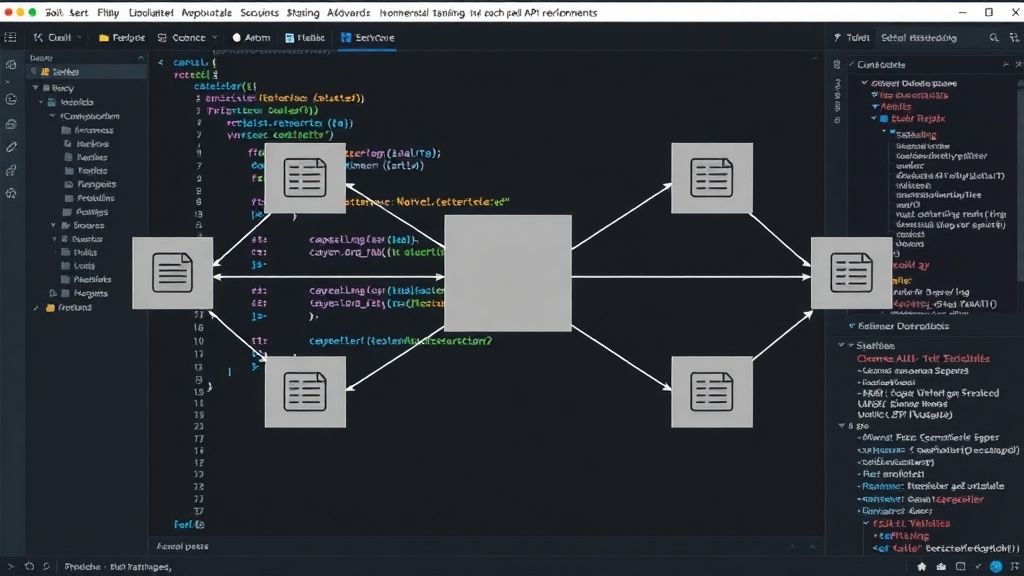
This proactive approach shifts the testing paradigm from reactive bug fixing to preventative quality assurance. The ability to test changes in a truly isolated and production-like setting drastically reduces the risk of regressions and improves overall code stability.
Implementation Considerations
Adopting ephemeral staging environments is not without its challenges. Key considerations include:
- Infrastructure Costs: While potentially more efficient long-term, the initial setup and dynamic provisioning can incur costs. Careful management of environment lifecycles is crucial.
- Complexity: Orchestrating the creation, deployment, and teardown of dynamic environments requires sophisticated tooling and automation.
- Team Buy-in and Training: Developers need to understand the new workflow and how to leverage these environments effectively.
- Testing Strategy: The types of tests run in ephemeral environments need to be carefully chosen to maximize value without excessive duration or resource consumption. End-to-end tests that require multiple services to be stable might still be better suited for a shared integration environment, but contract testing and component-level testing are prime candidates for ephemeral setups.
Despite these challenges, the benefits of catching critical bugs early and preventing production incidents far outweigh the implementation hurdles. The journey to ephemeral staging environments represents a significant step forward in ensuring API stability and improving the developer experience.
The Unanswered Question: What About Shared Integration?
While ephemeral environments excel at isolating individual PRs, they don't fully replace the need for a stable, shared integration environment. Complex end-to-end scenarios that involve the interaction of multiple services, or testing against third-party integrations, still benefit from a persistent, consolidated environment. The critical question remains: how do teams effectively manage and maintain a reliable shared integration environment that complements, rather than competes with, ephemeral staging? Striking this balance is the next frontier for robust CI/CD practices.