The Need for Token Refresh in Enterprise React Apps
Authentication is a cornerstone of modern web applications, especially in enterprise environments. Simply transmitting a JSON Web Token (JWT) with every request falls short of the stringent security and user experience demands of these platforms. Enterprise applications require a sophisticated mechanism to manage user sessions, ensuring both security and a seamless user journey. This is precisely where the strategic use of Access Tokens and Refresh Tokens becomes indispensable.
The primary driver for implementing a dual-token system is security. Consider the scenario where an access token is compromised. If this token had an indefinite lifespan, an unauthorized party could potentially gain persistent access to sensitive APIs. To mitigate this risk, enterprise applications bifurcate authentication responsibilities into two distinct tokens: an Access Token and a Refresh Token.
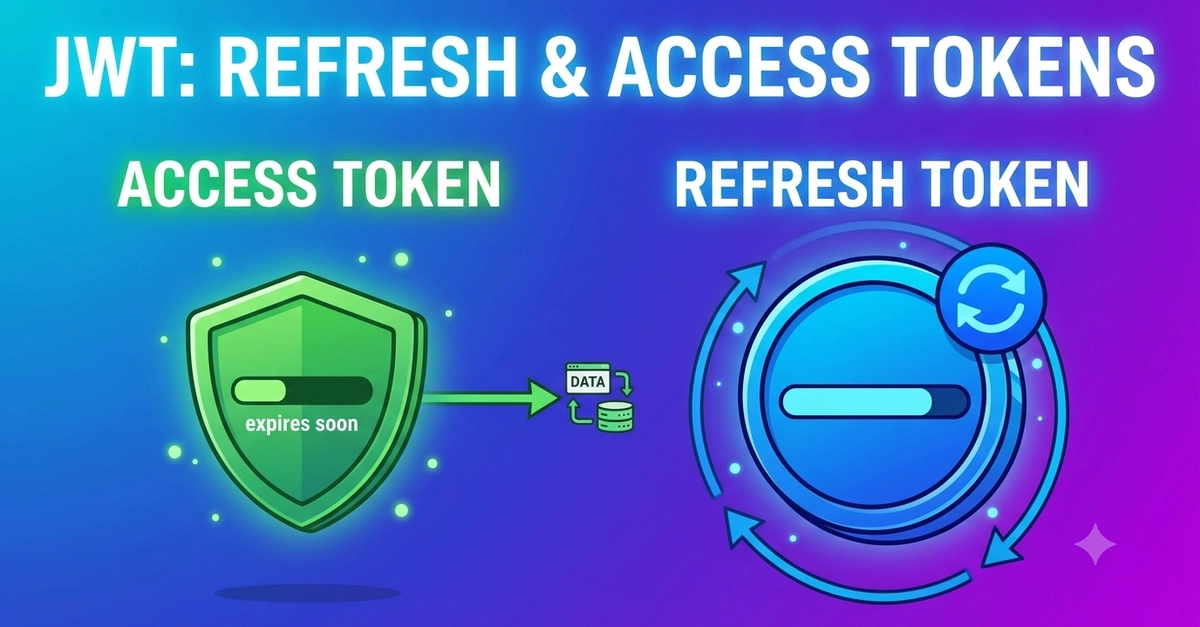
The Access Token is the credential used for making authenticated requests to protected resources. It is typically short-lived, often expiring within minutes or hours. Its brevity is a deliberate security measure; even if intercepted, its limited validity window significantly reduces the window of opportunity for an attacker.
The Refresh Token, conversely, is a long-lived token. Its sole purpose is to obtain new Access Tokens when the current one expires. This token is stored more securely, often in an HttpOnly cookie, and is never sent with regular API requests. When an Access Token expires, the client application uses the Refresh Token to request a fresh Access Token from the authentication server without requiring the user to re-enter their credentials.
Implementing the Flow with React, Axios, and React Query
A production-ready authentication flow in React leveraging this dual-token strategy can be effectively implemented using libraries like Axios for HTTP requests and React Query for state management and data fetching. This combination provides a robust and efficient way to handle token refresh automatically.
The core of this implementation involves intercepting outgoing requests and handling expired tokens. When a request is made, Axios can be configured with an interceptor. This interceptor checks if the request is for an authenticated endpoint. If it is, it attaches the current Access Token to the request headers.
If the server responds with an authentication error, typically a 401 Unauthorized status, this indicates that the Access Token has expired. The Axios response interceptor then catches this error. Instead of propagating the error to the user, the interceptor initiates a process to refresh the token.
This refresh process involves making a separate, unauthenticated request to a dedicated token refresh endpoint on the authentication server. This request includes the Refresh Token. The server validates the Refresh Token. If valid, it issues a new Access Token and potentially a new Refresh Token (to further enhance security by rotating refresh tokens). The original request that failed due to the expired Access Token is then retried with the newly acquired Access Token.
React Query plays a crucial role in managing the state of authentication tokens and orchestrating the refresh process. It can abstract away the complexities of background data fetching and caching, making the token refresh mechanism appear seamless to the end-user. When a token refresh is initiated, React Query can manage the pending state and ensure that multiple simultaneous requests that encounter an expired token are not all trying to refresh the token independently, but rather queue up behind a single refresh operation.
The user experience benefit is significant. Users can continue interacting with the application without interruption. They are not abruptly logged out or prompted to log in again simply because their session timed out in the background. The application feels responsive and reliable, a critical factor in enterprise adoption.
Security Considerations and Best Practices
While the dual-token system enhances security, several best practices must be adhered to. Storing the Refresh Token securely is paramount. Using HttpOnly cookies is a common and effective method, as it prevents client-side JavaScript from accessing the token, thereby mitigating cross-site scripting (XSS) risks. The authentication server should also enforce strict security policies on the refresh token endpoint, ensuring it only accepts requests from trusted origins and potentially implementing rate limiting to prevent abuse.
Furthermore, the lifespan of both tokens should be carefully considered. Access Tokens should be short-lived to minimize the impact of a compromise. Refresh Tokens, while long-lived, should have an expiry as well, and mechanisms for handling expired Refresh Tokens (e.g., forcing a re-login) must be in place. Some advanced strategies involve implementing refresh token rotation, where a new refresh token is issued each time one is used, invalidating the previous one. This adds another layer of security by making it harder for a stolen refresh token to be used repeatedly.
The implementation should also gracefully handle scenarios where the refresh token itself is invalid or expired. In such cases, the application must immediately log the user out and prompt them to re-authenticate. This ensures that compromised or expired sessions are terminated promptly.
The architecture described—using Axios interceptors for request modification and error handling, coupled with React Query for state management and intelligent request queuing—provides a robust blueprint for building secure and user-friendly authentication flows in enterprise React applications. It addresses the inherent security challenges of token-based authentication while maintaining a fluid user experience.