The Illusion of Direct API Access
The conventional wisdom for integrating AI models into applications often defaults to signing up directly with model providers like OpenAI. On the surface, this approach appears to be the most efficient and cost-effective. However, this strategy quickly unravels once an application's traffic profile moves beyond simple demonstrations and into real-world, high-volume usage. The hidden costs and operational complexities of direct access become significant hurdles for growing businesses.
During my tenure building LLM pipelines for a mid-stage fintech company, the debate over AI API strategy recurred quarterly. The core question was always: should we connect directly to providers like OpenAI, route all traffic through a managed service like Azure OpenAI, or leverage an aggregator platform? What emerged from these discussions was a stark realization: the optimal choice hinges critically on an organization's tolerance for failure, a metric most teams severely underestimate.
Why "Just Go Direct" Fails at Scale
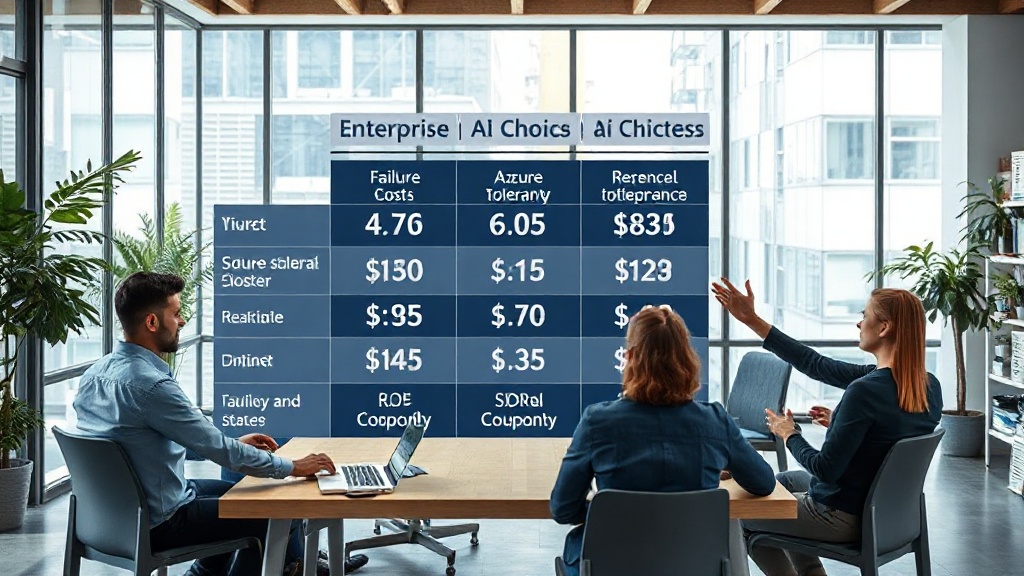
The allure of bypassing intermediaries is strong. Direct API calls promise lower latency and fewer points of potential failure. However, this linear thinking breaks down when faced with the realities of scaling. When projecting a 100,000-user growth scenario, the difference in token costs between using a multi-vendor aggregator and a single-provider contract was staggering – a full 97.5% reduction in token expenses alone. This isn't a minor optimization; it's the difference between a viable product and an unsustainable cost center.
Beyond raw token costs, direct integration introduces significant operational burdens. Managing rate limits across multiple providers, handling API key rotations, and implementing robust fallback mechanisms become complex engineering challenges. When a single provider experiences an outage, or a sudden surge in demand triggers their rate limits, a direct integration means your entire application grinds to a halt. This lack of resilience can have catastrophic consequences for user experience and business operations.
Enterprise Solutions: The Case for Managed Services
Managed services, such as Azure OpenAI, offer a compelling alternative for enterprises. These platforms abstract away much of the underlying complexity. They provide enterprise-grade security, compliance, and dedicated support that direct integrations often lack. For organizations where uptime and reliability are paramount – think financial services, healthcare, or critical infrastructure – the added layer of stability and support from an enterprise provider is invaluable.
Azure OpenAI, for example, integrates seamlessly with other Microsoft cloud services, offering a unified management plane and billing. This simplifies procurement and IT management. Furthermore, enterprise offerings often come with Service Level Agreements (SLAs) that guarantee a certain level of uptime and performance, providing a crucial safety net that direct access cannot match. While the per-token cost might appear higher initially compared to direct access, the total cost of ownership, factoring in engineering effort, reduced downtime, and enhanced security, often makes managed services the more economical choice for large-scale deployments.
Aggregators: The Flexibility Play
AI API aggregators, on the other hand, provide a different set of advantages. These platforms act as a single point of access to multiple underlying AI models from various providers. This offers significant flexibility. If one model provider experiences performance issues, or if a newer, more capable model emerges, an aggregator can facilitate a swift transition without requiring extensive code changes across your application.
The primary benefit of aggregators lies in their ability to dynamically route requests to the most cost-effective or performant model available for a given task. They can also implement sophisticated load balancing and failover strategies. Imagine a scenario where a specific query performs better on Model A, while another query is cheaper on Model B. An aggregator can intelligently make these decisions in real-time. This dynamic routing can lead to substantial cost savings and improved application performance, especially for diverse workloads. For teams that need to experiment with different models or maintain maximum flexibility, aggregators represent a powerful strategic option. They effectively act as a sophisticated proxy, optimizing for cost, performance, and resilience simultaneously.
The Critical Factor: Failure Tolerance
The decision between direct access, managed enterprise services, and aggregator platforms boils down to an honest assessment of your application's failure tolerance. If your application can withstand occasional downtime, degraded performance, or even temporary unavailability without significant business impact, then direct access might be viable, though still likely more expensive at scale than other options. However, for most business-critical applications, the cost of downtime far exceeds any perceived savings from direct integration.
Managed services offer a strong baseline of reliability and support, making them ideal for large enterprises prioritizing stability and compliance. Aggregators provide a dynamic and flexible approach, allowing for cost optimization and rapid adaptation to the evolving AI model landscape. Understanding your specific use case, traffic patterns, and tolerance for disruption is paramount. The "right" choice is not static; it evolves with your application's growth and the dynamic nature of the AI market. Teams often underestimate the engineering overhead and the business cost associated with even minor AI service disruptions. This oversight leads to costly refactoring or significant revenue loss down the line.