Agile is a Mindset, Not a Methodology
The common understanding of Agile software development often gets conflated with specific tools and rituals. Daily standups, sprint planning, Jira boards – these are frequently mistaken for the core of Agile. However, a deeper dive, starting with foundational principles like User Story Mapping, reveals that Agile is fundamentally a mindset. It’s a way of thinking about building software that prioritizes rapid iteration, continuous learning, and genuine user feedback over exhaustive upfront planning and rigid adherence to process.
The initial pages of any comprehensive guide to User Story Mapping often bypass the mechanics of map creation. Instead, they focus on a crucial precursor: shifting one's own perspective. This involves understanding that the goal isn't to meticulously document every conceivable feature before writing a single line of code. It’s about embracing a philosophy where the smallest viable solution is built first. This minimal product is then exposed to real users, and their feedback becomes the primary driver for subsequent improvements. This cycle of building, learning, and refining, repeated continuously, forms the bedrock of an Agile approach.
Think of it less like constructing a skyscraper based on a complete, unchangeable blueprint, and more like tending a garden. You plant a seed (the minimal valuable product), nurture it, observe how it grows (user feedback), and then prune or add to it based on what the plant actually needs to thrive. This organic, responsive approach is the essence of the engineering mindset being advocated.
The Core of the Engineering Mindset: Iterative Value Delivery
At its heart, this engineering mindset challenges the traditional waterfall model. Instead of dedicating months to building an entire application, only to discover months later that user needs have shifted or the market has evolved, the Agile approach advocates for a dramatically different path. The emphasis is on delivering incremental value. This means identifying the absolute core functionality that provides genuine utility to a user and building only that. This Minimum Viable Product (MVP) serves as a tangible starting point, a real-world experiment.
The true power of this approach lies in the feedback loop. Once an MVP is in the hands of users, their interaction provides invaluable data. Are they using the feature as intended? What are their pain points? What additional functionality would significantly enhance their experience? This feedback isn't just qualitative; it's a critical dataset that informs the next iteration. Developers and product teams can then prioritize enhancements based on observed user behavior and direct input, rather than speculative planning.
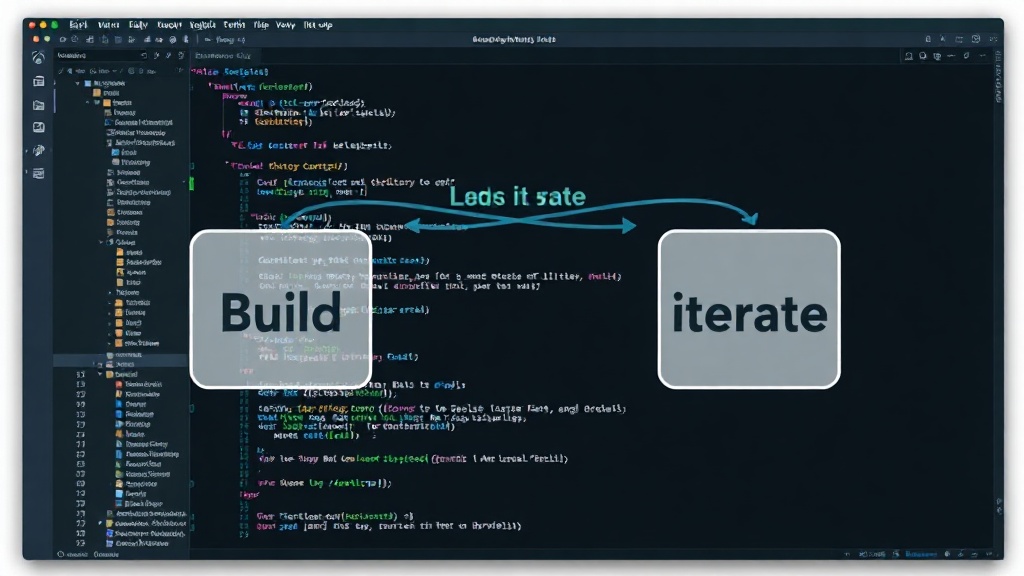
This iterative process is not about a lack of planning. Rather, it's about adaptive planning. The plan evolves as knowledge is gained. It’s a continuous cycle of:
- Build: Create the smallest possible piece of functional software that delivers value.
- Learn: Observe how users interact with the software and gather their feedback.
- Improve: Incorporate the learned insights into the next development cycle, refining existing features or adding new ones.
- Repeat: Continue the cycle, ensuring the product remains aligned with user needs and market demands.
This contrasts sharply with methodologies that require extensive documentation and detailed specifications upfront. While documentation has its place, an over-reliance on it can lead to ossification, making the product resistant to change. The engineering mindset, therefore, prioritizes flexibility and responsiveness.
Beyond Tools: Cultivating the Right Thinking
The implication for development teams is clear: the focus must shift from mastering tools like Jira or understanding the nuances of Scrum ceremonies to cultivating a deeper understanding of Agile principles. This involves fostering a culture where experimentation is encouraged, failure is treated as a learning opportunity, and user-centricity is paramount. It means empowering teams to make decisions based on real-world data rather than abstract plans.
For individuals, building this mindset involves actively seeking opportunities to understand the 'why' behind features, engaging directly with users where possible, and embracing the uncertainty inherent in iterative development. It requires a willingness to adapt, to pivot, and to continuously question assumptions. The tools will change, the frameworks may evolve, but the core principles of iterative value delivery and user-driven improvement remain constant.
What nobody has addressed yet is what happens to the thousands of developers who built their workflows and expertise around specific, rigid Agile frameworks, and how smoothly they will transition to this more fluid, mindset-driven approach. The technical skills might translate, but the cognitive shift could prove to be the larger hurdle.