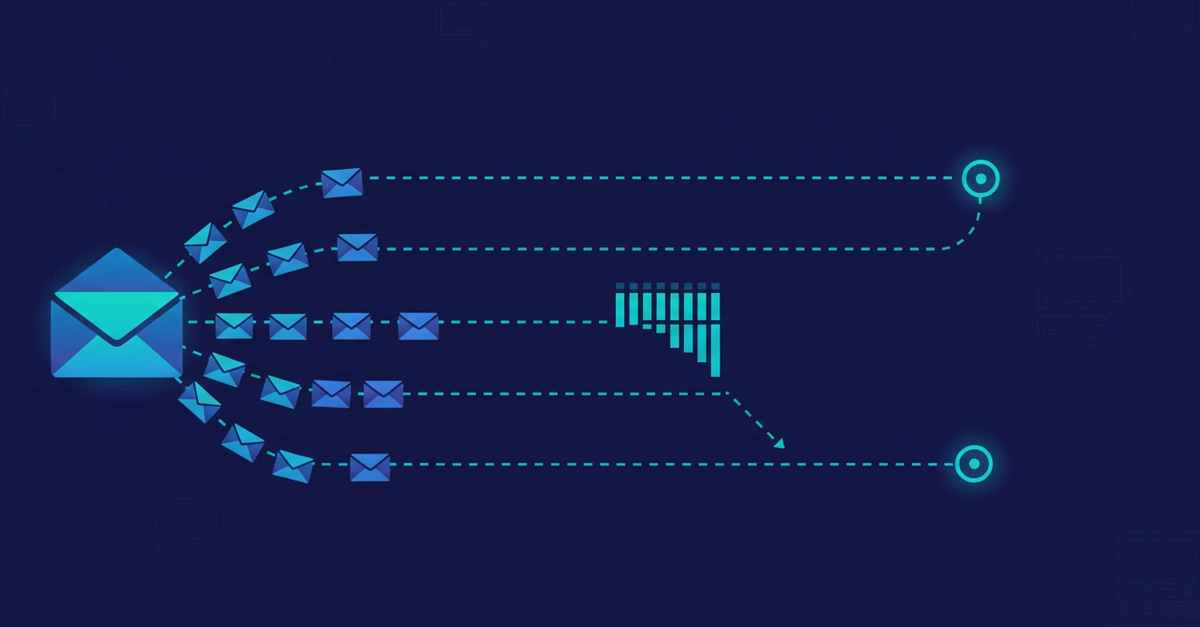
The Core Problem: Scaling Email Delivery
Sending a single email is trivial. The challenge emerges when scaling to thousands, or even millions, of recipients. The real difficulty lies not in the dispatch itself, but in managing the state of each individual email and providing clear answers to queries like, "What is the status of the email sent to contact #4127?" Traditional approaches often struggle with idempotency, leading to duplicate sends or lost messages during failures.
This article details a robust email broadcast engine designed to overcome these challenges. The system prioritizes reliability and traceability by making each recipient's record the definitive source of truth. This architectural choice simplifies retry mechanisms and makes duplicate dispatches non-critical.
System Architecture: From Campaign to Recipient Ledger
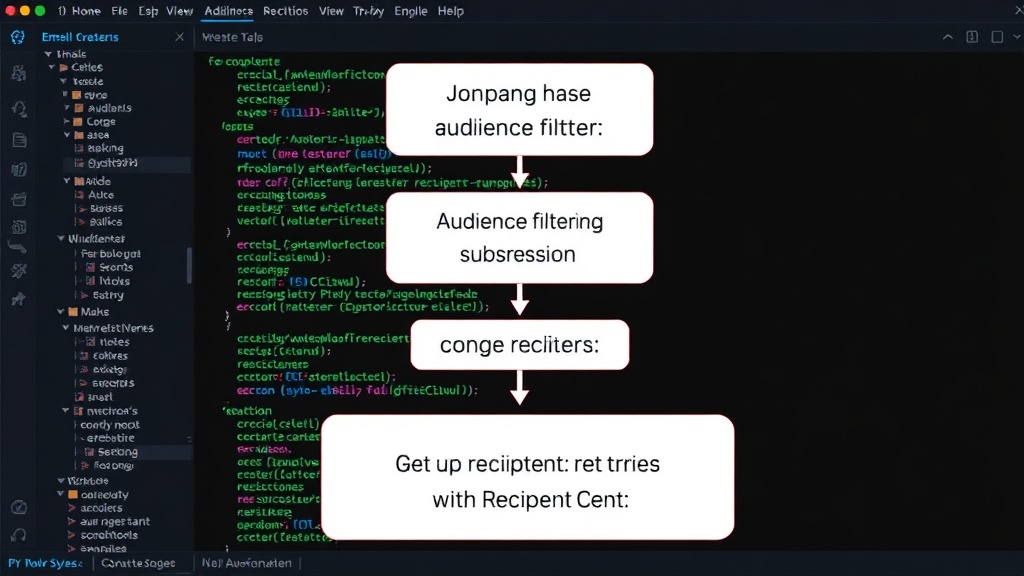
The engine follows a structured workflow, beginning with a drafted campaign. The process involves several key stages:
- Audience Filter: The initial step identifies the target audience for the broadcast. This involves applying specific criteria to segment the user base.
- Suppression Gate: Before dispatch, a suppression gate filters out recipients who should not receive the email. This could include opt-outs, unsubscribes, or other suppression rules.
- CampaignRecipient Rows: For each recipient that passes the suppression gate, a dedicated row is created in a 'CampaignRecipient' table. These rows are initially marked as 'pending.'
- Queued Jobs: Crucially, the system does not dispatch emails in one massive batch. Instead, one distinct job is created for each individual recipient. This granular approach is fundamental to the system's resilience.
The Recipient Row: Source of Truth and Retry Mechanism
The cornerstone of this design is the principle that the recipient row is the source of truth. Each row in the CampaignRecipient table stores the complete state of the email for that specific recipient. This includes its current status (e.g., pending, sent, failed, delivered) and any relevant metadata.
This approach makes retries and even accidental double dispatches harmless. If a job fails, the system can simply retry sending the email for that specific recipient. The recipient row's status is updated accordingly. If, due to a bug or network glitch, a duplicate job is processed, the system can handle it gracefully. The status ledger, combined with a rank guard on incoming webhooks, ensures that a late-arriving event (like a delivery confirmation) never downgrades an already achieved status (like a successful send or a subsequent bounce).
Handling Delivery Callbacks with Rank Guards
The system integrates with external email delivery services via webhooks. These webhooks provide crucial feedback on the delivery status of each email (e.g., delivered, opened, bounced, complained). To maintain the integrity of the recipient ledger, these incoming webhooks are processed with a rank guard.
The rank guard ensures that only events that represent a progression or a final state can update the recipient's status. For example, if an email is first marked as 'sent' and then later a webhook reports 'delivered,' the 'delivered' status is recorded. However, if a webhook for 'sent' arrives *after* a webhook for 'failed' has already updated the status, the 'failed' status remains. Similarly, a late-arriving 'delivered' confirmation will not overwrite an earlier 'bounced' status. This mechanism prevents race conditions and ensures that the recipient ledger accurately reflects the most definitive status achieved.
Benefits of the Recipient-Centric Model
This design offers significant advantages:
- Reliability: Individual job failures do not jeopardize the entire broadcast. Retries are straightforward.
- Traceability: The status ledger provides a clear, auditable history for every single email sent. Answering "what happened to contact #4127?" becomes a simple database query.
- Idempotency: The system is designed to handle duplicate processing of events without adverse effects, simplifying error recovery and external system integrations.
- Scalability: By processing one job per recipient and managing state granularly, the system can scale to very large volumes.
This approach transforms the complexity of large-scale email broadcasting from a logistical nightmare into a manageable, data-driven process, ensuring that campaigns reach their intended audience reliably and that system state remains consistent even in the face of transient errors.