
Undisclosed Acquisition Fuels AI Ambitions
Elon Musk has quietly acquired APR Energy, a significant player in mobile power generation, for an estimated $1 billion. The transaction, revealed through a Federal Trade Commission (FTC) filing, was not publicly announced by Musk or his entities. APR Energy specializes in providing trailer-mounted gas and diesel turbines capable of generating over 1 gigawatt of power. This substantial, unpublicized investment signals a critical step in Musk's aggressive expansion plans for xAI, his artificial intelligence venture, which requires immense and reliable power sources to train and operate its large-scale models.
The sheer scale of AI computation, particularly for foundational models like those xAI aims to develop, is insatiable. Training a single large language model can consume megawatts of power, comparable to the energy needs of small towns. As AI models grow in complexity and are deployed more widely, the demand for dedicated, robust power infrastructure will only intensify. Musk's move suggests a proactive strategy to secure this essential resource independently, rather than relying solely on existing grid infrastructure or traditional data center providers, which may not scale fast enough or be located strategically enough for his global AI ambitions.
APR Energy: A Mobile Powerhouse
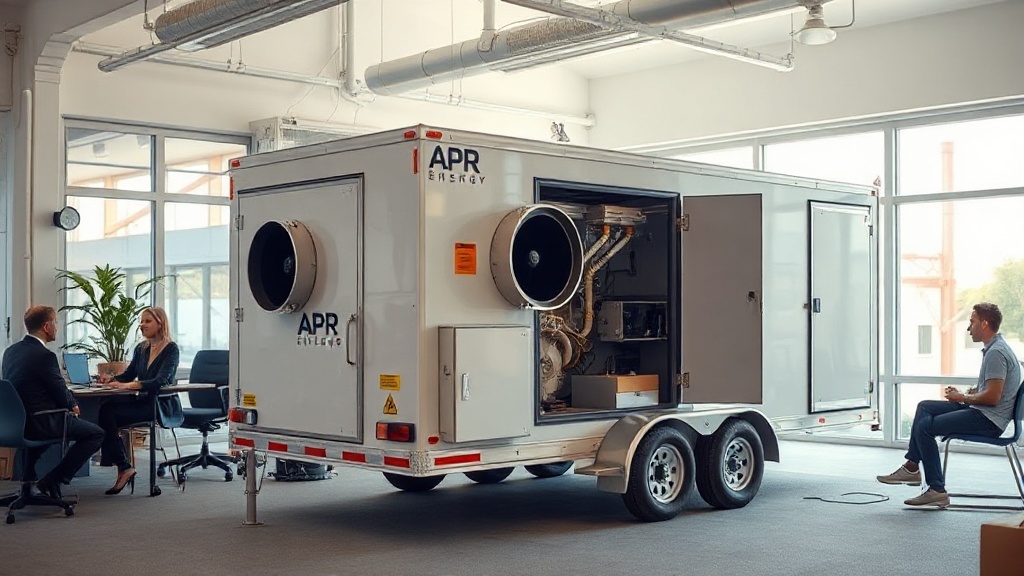
APR Energy's core business lies in its fleet of rapidly deployable, trailer-mounted turbine generators. These units are designed for flexibility and speed, allowing them to be transported and set up in diverse locations to provide immediate power. The company's technology is particularly suited for scenarios where grid power is unreliable, insufficient, or non-existent. This makes APR Energy a unique asset for powering the massive, potentially distributed, computing infrastructure xAI will require.
The turbines can run on natural gas or diesel, offering some flexibility in fuel sourcing, though natural gas is generally considered a cleaner option. With a combined generation capacity exceeding 1 gigawatt, APR Energy's fleet is substantial. To put this into perspective, 1 gigawatt is enough to power approximately 750,000 homes. For an AI company, this capacity could translate into powering tens of thousands of high-performance computing servers simultaneously. This capability is crucial for Musk's stated goal of building an AI that can understand the fundamental nature of the universe.
Why the Secrecy?
The lack of a public announcement surrounding a $1 billion acquisition is highly unusual, especially for a figure as prominent as Elon Musk. Several factors could explain this. Firstly, the deal may have been structured to avoid regulatory scrutiny or market speculation, particularly given the sensitive nature of securing such vast power resources for a competitive AI race. Secondly, Musk might prefer to integrate APR Energy into xAI's operations without immediate public fanfare, allowing him to build out capacity discreetly before making further announcements about xAI's infrastructure strategy.
This move also highlights a growing trend in the AI industry: the strategic importance of power. Companies are increasingly recognizing that access to cheap, reliable, and scalable electricity is a critical bottleneck. Building and operating AI models at the scale envisioned by Musk requires an energy budget that rivals nations. By acquiring APR Energy, Musk is not just buying hardware; he is buying a significant degree of energy independence and control, a strategic advantage in a field where compute power is king and energy is its fuel.
Implications for xAI and the AI Landscape
The acquisition of APR Energy provides xAI with a unique and powerful capability. Instead of being solely reliant on hyperscale cloud providers like Amazon Web Services (AWS), Microsoft Azure, or Google Cloud, or on the fluctuating availability of grid power, xAI can now provision its own power infrastructure. This could allow for the construction of specialized AI data centers in locations optimal for cooling, latency, or cost, and potentially at a faster pace than traditional methods.
This move also has broader implications for the AI industry. It signals that the demand for power is becoming a primary constraint, and companies will increasingly look for novel solutions to secure it. We might see other AI firms exploring similar strategies, either through direct acquisitions, partnerships with energy providers, or investing in dedicated power generation facilities. The race for AI dominance is not just about algorithms and data; it is increasingly about the fundamental resources required to run them, with energy standing at the forefront.
What remains to be seen is how Musk plans to integrate APR Energy's operations with xAI. Will these turbines power dedicated xAI facilities, or will they be used to supplement existing power sources in strategic locations? The long-term vision for this energy infrastructure will be a critical component of xAI's overall strategy and its ability to compete at the cutting edge of artificial intelligence development. The substantial investment suggests a commitment to building a robust, self-sufficient energy backbone for its AI endeavors.