
The Persistence of Sticky Prices
For decades, a cornerstone of modern macroeconomic theory has been the concept of "sticky prices." This idea posits that businesses do not change the prices of their goods and services frequently, often due to the costs associated with price changes (menu costs), the desire to maintain customer relationships, or simply inertia. This stickiness is a critical assumption in many economic models, explaining why monetary policy can have real effects on output and employment in the short run. The theory suggests that when inflation rises, prices don't immediately catch up, leading to a temporary increase in the real value of money and a potential decrease in demand. Conversely, during deflationary periods, sticky prices can exacerbate economic downturns.
The "sticky price" hypothesis, most famously articulated by economist Greg Mankiw, suggests that price changes are infrequent for most firms. This infrequent adjustment is often modeled as a key reason why aggregate demand shocks can have persistent effects on the real economy. The underlying assumption is that firms face costs in changing prices – the literal cost of reprinting menus or updating websites, but also the reputational costs of seeming to change prices too often. These costs, in theory, create a buffer, leading to the observed sluggishness in price adjustments across the economy.
Challenging the Consensus with Big Data
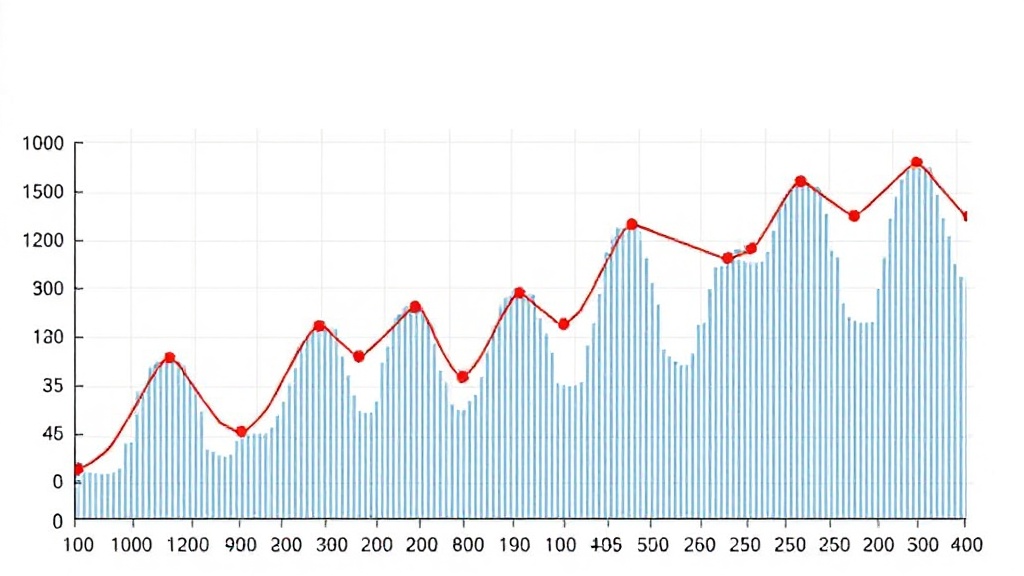
However, a new analysis, drawing on an unprecedented scale of real-world transaction data, is forcing economists to reconsider this fundamental assumption. The study, which examined billions of individual price points across a wide range of consumer goods and services, reveals a far more dynamic pricing environment than previously understood. The sheer volume of data, collected from diverse sources including online retailers, point-of-sale systems, and even mobile payment platforms, allows for a granular view of price changes at a frequency and scale previously unimaginable.
The traditional evidence for sticky prices often relied on surveys of firms or aggregated price indices, which can obscure the underlying patterns of price adjustments. These methods might capture the average frequency of price changes but fail to reveal the distribution – are most prices changing a little bit all the time, or are a few prices changing drastically, with most remaining static? The new data suggests that while the average frequency of price changes might indeed be relatively low for some goods, the distribution is heavily skewed. A small percentage of products experience very frequent price adjustments, while a larger segment remains relatively stable for longer periods. This nuance is crucial for understanding the true nature of price dynamics in the economy.
The Data's Uncomfortable Truth
The findings are, in a word, ugly for the beautiful theory. The data indicates that price adjustments are significantly more frequent than standard models predict. Instead of prices being "sticky" for extended periods, the analysis suggests that many prices are adjusted almost continuously, or at least with a much higher frequency than the "sticky price" models account for. This is particularly true in sectors with high competition, rapid technological change, or where dynamic pricing algorithms are employed. Think of the airline industry, ride-sharing services, or online retail, where prices can fluctuate multiple times a day in response to demand, inventory, and competitor actions.
What's surprising is not just the sheer volume of price changes, but the extent to which these changes are driven by algorithmic pricing. These systems can react to market signals in near real-time, a level of responsiveness that the original sticky price theory did not anticipate. The theory was built on a world where price changes were often manual, deliberate, and infrequent. The modern digital economy, however, has introduced automated, instantaneous, and continuous price adjustments for a significant portion of goods and services. This disconnect between the theoretical assumption and the observed reality is stark.
Implications for Economic Modeling and Policy
The implications of this research are profound. If prices are not as sticky as assumed, then the effectiveness and transmission mechanisms of monetary policy might need to be re-evaluated. The short-run Phillips curve, which links inflation and unemployment, and the speed at which the economy responds to interest rate changes, could be altered. Models that rely on infrequent price adjustments to explain short-term economic fluctuations might overestimate the duration of these effects. This could mean that central banks need to act faster or with different tools to manage inflation and stabilize the economy.
Furthermore, the research challenges our understanding of how firms set prices and how markets function. It suggests that the "menu costs" of price adjustment are less of a barrier in the digital age than previously thought, or that firms are finding innovative ways to overcome them. It also raises questions about consumer behavior and market efficiency. If prices are constantly changing, how do consumers make informed decisions? Does this lead to greater consumer welfare through competitive pricing, or does it create confusion and distrust? The debate is just beginning, but the data demands a serious re-examination of one of economics' most enduring concepts.
The core tension here is between a parsimonious, elegant theory that provided a framework for understanding macroeconomic dynamics and a messy, complex reality revealed by unprecedented data. The theory was beautiful in its simplicity; the data is ugly in its detail. Yet, it is this ugly data that now offers a more accurate, albeit more complicated, picture of how prices actually behave in the 21st-century economy. Economists must now grapple with how to incorporate this new understanding into their models, potentially leading to a significant revision of macroeconomic theory and policy prescriptions.