The Pain of DynamoDB and TypeScript
Amazon DynamoDB is known for its near-infinite scalability and low cost, making it an attractive option for many applications. However, developers working with TypeScript often face a steep learning curve and a host of daily frustrations. These include manually constructing partition and sort key strings, which is prone to typos (e.g., USER#${username}), and the tedious process of marshalling and unmarshalling attributes into the SDK’s expected formats like { S: 'value' } or { N: '123' }.
Furthermore, the AWS SDK for JavaScript v3 returns attribute values as Record<string, AttributeValue> | undefined, offering zero type safety. This forces developers to implement their own validation and casting logic, increasing the chance of runtime errors. The recommended best practice of single-table design, which consolidates multiple entity types into a single DynamoDB table to optimize performance and cost, is also notoriously difficult to implement correctly and safely, often existing only as a mental model within the development team.
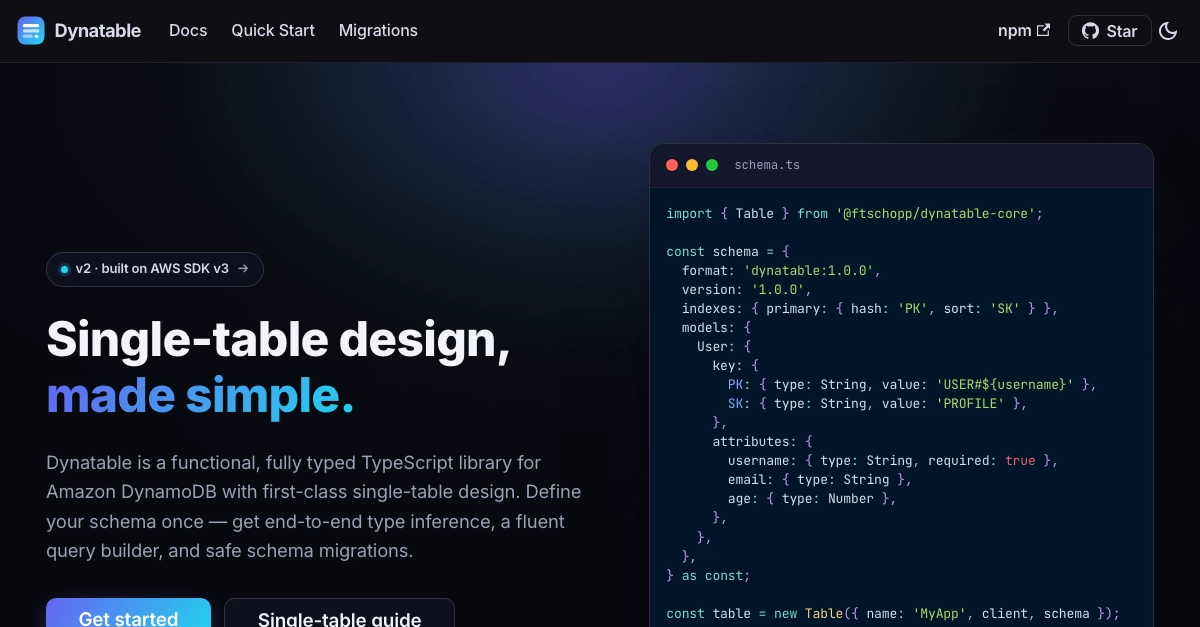
These challenges led to the creation of Dynatable, a new type-safe, functional TypeScript library designed to streamline the developer experience with DynamoDB. Built on top of AWS SDK v3, Dynatable focuses on providing first-class support for single-table design patterns and includes features for safe schema migrations.
Introducing Dynatable: Type Safety and Single-Table Design
Dynatable addresses the aforementioned pain points by introducing a set of abstractions that bring type safety and developer ergonomics to DynamoDB operations. The library allows developers to define their DynamoDB schema in TypeScript, enabling the generation of strongly-typed interfaces for keys, attributes, and entire items. This eliminates the need for manual key string construction and reduces the risk of attribute marshalling errors.
At its core, Dynatable facilitates the implementation of single-table design. Developers can define different entity types (e.g., Users, Orders, Products) within a single table schema. The library then generates the necessary logic to handle the underlying DynamoDB operations, such as GetItem, PutItem, Query, and Scan, in a type-safe manner. This means that when you retrieve an item, its type is known at compile time, and accessing its attributes is as straightforward as accessing properties on a standard TypeScript object.
The library’s functional approach encourages immutability and declarative programming, which can lead to more predictable and maintainable code. Instead of directly calling SDK methods with raw parameters, developers interact with Dynatable’s higher-level functions that abstract away the complexities of the DynamoDB API.
Key Features and Benefits
Dynatable offers several key features designed to simplify DynamoDB development:
- Type-Safe Keys and Attributes: Define your primary keys (Partition Key and Sort Key) and all item attributes using TypeScript interfaces. Dynatable generates types that ensure you use the correct keys and attribute names, preventing runtime errors and typos.
- Automatic Marshalling/Unmarshalling: The library handles the conversion of TypeScript data types to DynamoDB’s
AttributeValueformat and vice-versa. This means you can work with standard JavaScript/TypeScript types (strings, numbers, booleans, objects, arrays) directly, without manual conversion. - First-Class Single-Table Support: Dynatable makes it significantly easier to implement and manage single-table designs. You can define relationships between different entity types within your schema, and the library provides utilities for querying and manipulating these related items efficiently.
- Safe Schema Migrations: As your application evolves, your DynamoDB schema will likely need to change. Dynatable includes tools to help manage schema migrations safely, reducing the risk of data loss or corruption during updates. This is crucial for maintaining data integrity in production environments.
- Built on AWS SDK v3: Leveraging the latest version of the AWS SDK for JavaScript ensures that Dynatable benefits from modern features, performance improvements, and ongoing maintenance from AWS.
The library's design prioritizes developer productivity and code quality. By abstracting away boilerplate code and enforcing type safety, Dynatable allows developers to focus on application logic rather than the intricacies of DynamoDB interaction.
Who is Dynatable For?
Dynatable is primarily aimed at developers building applications with Node.js and TypeScript that utilize Amazon DynamoDB. It is particularly beneficial for:
- New DynamoDB Projects: Teams starting new projects can adopt best practices like single-table design from the outset, avoiding common pitfalls.
- Existing DynamoDB Projects: Developers struggling with the current DynamoDB SDK’s lack of type safety and manual data handling can refactor their code to use Dynatable for improved maintainability and reduced bugs.
- Teams Adopting Single-Table Design: Those who understand the benefits of single-table design but find its implementation complex will find Dynatable’s abstractions invaluable.
The library’s emphasis on type safety makes it a compelling choice for teams that prioritize robust code and predictable behavior. By catching errors at compile time rather than runtime, Dynatable can significantly reduce debugging effort and improve the overall quality of the application.
The Unanswered Question: Adoption and Ecosystem
While Dynatable offers a compelling solution to common DynamoDB development challenges in TypeScript, the broader impact hinges on its adoption and the growth of its ecosystem. What remains to be seen is how quickly developers will embrace this new library and whether it can establish itself as a standard tool for TypeScript-DynamoDB development. The long-term success will depend on community contributions, ongoing maintenance, and its ability to keep pace with potential changes in DynamoDB best practices and AWS SDK updates.