
Introducing DuckDisk: A New Approach to Storage Analysis
Navigating the labyrinth of digital storage can be a daunting task, especially for professionals managing multiple environments. From cluttered local drives on macOS to sprawling cloud buckets and remote SSH servers, understanding where your data resides and what's consuming space often involves a patchwork of tools and manual inspection. DuckDisk emerges as a novel solution, aiming to simplify this complexity with a distinctive table-first approach to storage analysis.
Unlike traditional disk usage analyzers that often present data in hierarchical tree structures or pie charts, DuckDisk prioritizes a tabular format. This design choice is intended to offer a more direct and comparative view of storage consumption. The application is built for macOS and provides connectivity to cloud storage services and SSH-accessible servers, consolidating insights into a unified interface.
The core premise of DuckDisk is to make storage analysis more accessible and actionable. By presenting data in rows and columns, users can sort, filter, and group files and directories based on various attributes like size, date modified, file type, and location. This granular control allows for rapid identification of large files, duplicate entries, or unexpected storage drains, whether they are on a user's MacBook, an Amazon S3 bucket, or a remote Linux server.
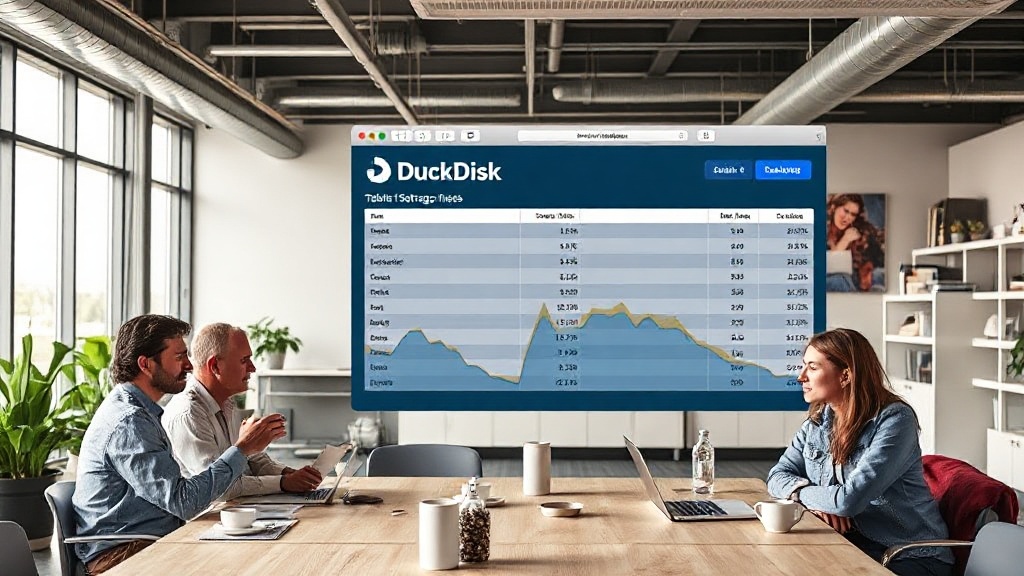
Table-First Analysis: A Paradigm Shift
The conventional wisdom in disk analysis often leans towards visual representations like treemaps or directory trees. While effective for some use cases, these formats can sometimes obscure the comparative aspect of storage usage across different locations or file types. DuckDisk's table-first methodology flips this perspective. Imagine trying to compare the storage used by your photos on your Mac versus your photos stored in Google Drive. A tree-based view might require you to navigate separately into each location. DuckDisk aims to present this information side-by-side in sortable columns, allowing for immediate comparison.
This approach is particularly beneficial for developers, IT professionals, and content creators who frequently juggle data across various platforms. For instance, a developer might need to audit disk space on a local development machine, check the size of build artifacts in an S3 bucket, and monitor log file accumulation on a remote server. DuckDisk's unified table allows them to see, at a glance, which of these locations is the primary culprit for storage consumption, and which specific files or directories are responsible.
The application’s design emphasizes clarity and efficiency. Users can define custom filters to pinpoint specific file types (e.g., `.log` files, `.mp4` videos), files modified within a certain date range, or files exceeding a particular size threshold. This level of detailed filtering, combined with the sortable table, transforms complex storage audits into a more streamlined process. The ability to quickly identify and act upon storage inefficiencies can lead to cost savings in cloud environments and improved performance on local machines.
Cross-Platform Connectivity
A key differentiator for DuckDisk is its ability to connect to diverse storage environments. The application supports:
- Mac Storage: Direct analysis of local file systems on macOS.
- Cloud Storage: Integration with popular cloud providers, enabling analysis of buckets and containers. While specific providers are not detailed in the initial announcement, common integrations would typically include Amazon S3, Google Cloud Storage, and Azure Blob Storage.
- SSH Servers: Secure connection to remote servers via SSH, allowing for the analysis of disk usage on Linux or other Unix-like systems.
This broad connectivity means users don't need separate tools for each environment. A single application can provide a panoramic view of their digital footprint. For teams working collaboratively, this unified perspective can also aid in establishing consistent storage management policies across different infrastructure components.
Who Benefits from DuckDisk?
DuckDisk targets a specific audience that grapples with distributed storage challenges. Developers managing cloud deployments, sysadmins overseeing server infrastructure, photographers and videographers with vast local and cloud archives, and anyone who finds themselves frequently asking, "Where did all my storage go?" will find value in this tool. The emphasis on a tabular, sortable, and filterable interface caters to users who prefer precise data manipulation over purely visual exploration.
The application’s promise is to cut through the noise of traditional storage analysis tools by providing a direct, data-driven insight. By focusing on the 'what' and 'where' of storage consumption in a clear, tabular format, DuckDisk aims to empower users to make informed decisions about data management, optimization, and cost control.