Bridging Local and Cloud Data with DuckDB and DuckLake
The modern data landscape often demands a hybrid approach, seamlessly integrating data residing both locally on a developer's machine and within scalable cloud storage. Traditionally, achieving this requires complex ETL pipelines or specialized infrastructure. However, the emergence of tools like DuckDB and its companion DuckLake is democratizing the creation of data lakehouses, making it accessible even for individual developers working on their laptops.
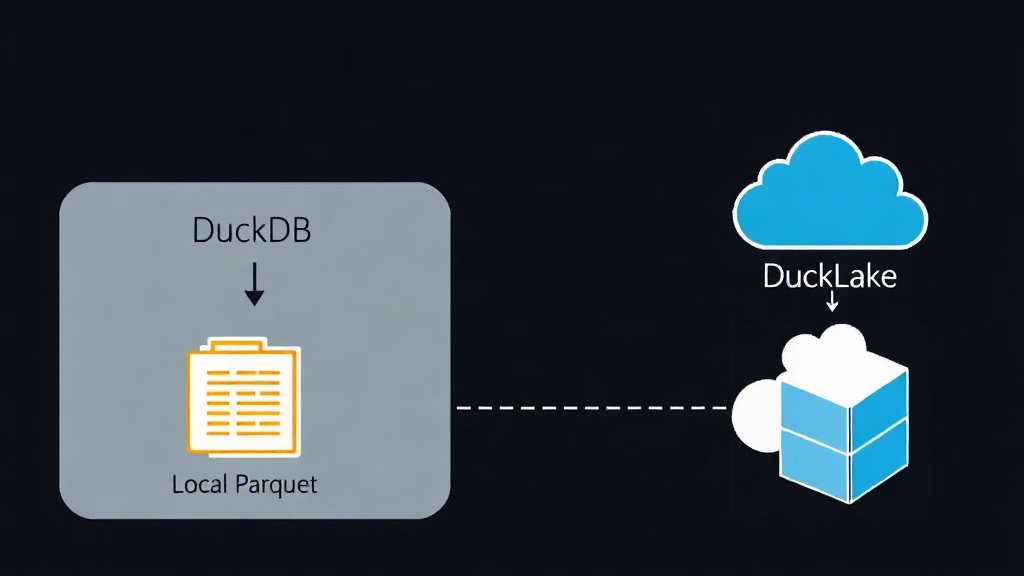
DuckDB, an in-process analytical data management system, has gained significant traction for its speed and ease of use. It allows complex SQL queries to be executed directly on Parquet, CSV, and JSON files without requiring a separate database server. This eliminates the overhead of setting up and managing distributed systems for many common analytical tasks. DuckLake extends this capability by providing a persistent layer for DuckDB, enabling it to interact with cloud object storage like Amazon S3, Google Cloud Storage, and Azure Blob Storage.
The core innovation lies in how DuckLake allows DuckDB to treat cloud-based data as if it were local. Instead of downloading entire datasets to a local machine, developers can query data directly from cloud storage using familiar SQL syntax. This is particularly beneficial for handling large datasets that would be impractical to store or process locally. The architecture effectively transforms a collection of files in cloud storage into a queryable data lakehouse, managed by the lightweight and performant DuckDB engine.
Building Your First Lakehouse
The process of setting up a data lakehouse with DuckDB and DuckLake begins with data. This data can originate from various sources and is typically stored in columnar formats like Parquet for optimal analytical performance. A common starting point, as highlighted in Towards Data Science, is a local Parquet file. This file might contain anything from application logs to sensor readings. DuckDB can immediately query this local file using standard SQL, allowing for rapid exploration and validation.
The next step involves integrating cloud data. DuckLake acts as the bridge. It allows DuckDB to register external tables that point to data stored in cloud buckets. For instance, a dataset of historical sales figures might reside in an S3 bucket. Using DuckLake, a developer can define a DuckDB table that maps directly to this cloud data. The beauty of this approach is that DuckDB's query optimizer can then efficiently plan and execute queries that involve joining the local Parquet file with the cloud-based dataset. This means you can perform analytics across distributed data without the need for heavy-duty distributed computing frameworks like Spark for these specific tasks.
This capability is transformative for data scientists and analysts who often find themselves working with data silos. The ability to seamlessly join local experimental data with large-scale production data stored in the cloud simplifies workflows and accelerates insights. It effectively brings the power of a data warehouse or data lakehouse to the individual's workstation, blurring the lines between local development and cloud analytics.
Beyond Simple Storage: Data Modeling Considerations
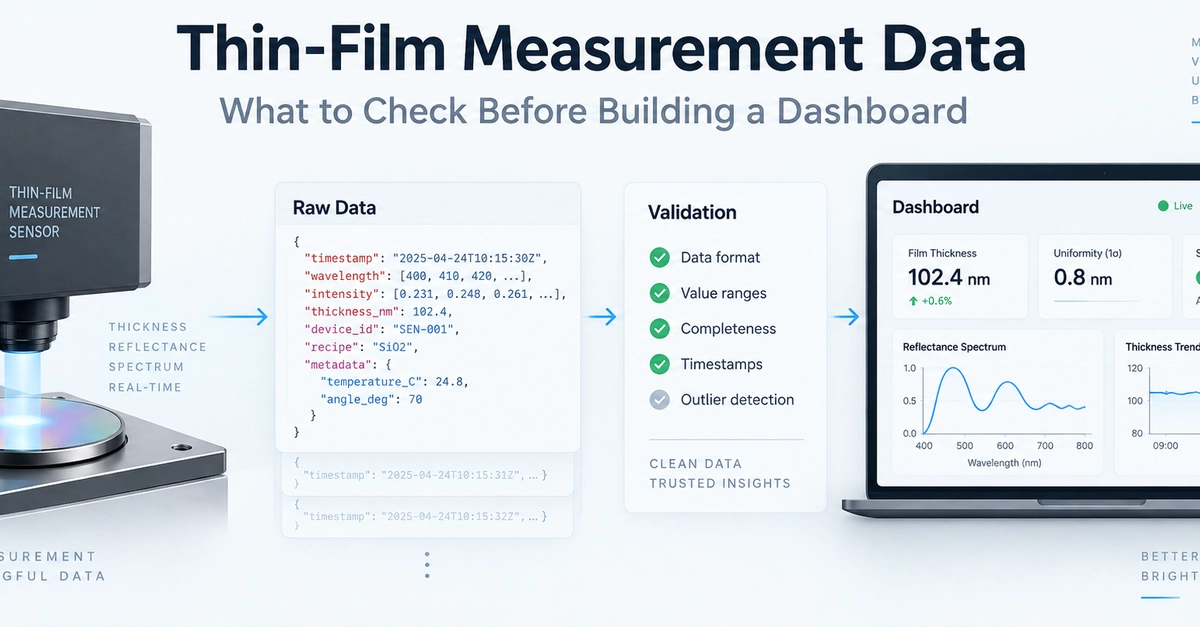
While the technical integration of local and cloud data is a significant step, building a robust data lakehouse requires careful consideration of data modeling, a point emphasized in discussions around thin-film measurement data. Simply storing files in a cloud bucket, even if queryable via DuckDB and DuckLake, is not sufficient for a true lakehouse. The context and meaning of the data must travel with it.
Consider the analogy of a dashboard displaying a single measurement, like a thin-film thickness of 1,200 nm. Without additional metadata, it's impossible to know if this reading is accurate, representative, or even current. Was the measurement taken correctly? Did the sensor stop transmitting, and the dashboard is showing a stale value? These questions highlight the need for richer data models. Data should include not just the raw measurement but also information about the measurement conditions, units, timestamps, sensor IDs, and any relevant quality flags.
This principle extends to any data lakehouse. When storing data in Parquet files within cloud storage, it's crucial to embed this contextual information directly into the data itself. This might involve adding specific columns to your Parquet schema that capture metadata. For example, a time-series dataset might include columns for `measurement_timestamp`, `sensor_id`, `unit_of_measure`, and `quality_metric`. When using DuckDB and DuckLake, these enriched datasets can be queried and joined, providing a more complete and reliable analytical foundation. The goal is to ensure that the data is self-describing, minimizing the need for external documentation or tribal knowledge to interpret it correctly.
Performance and Scalability
DuckDB's performance is a key enabler for this lakehouse approach. Its vectorized query execution engine and efficient columnar storage formats (when using Parquet) allow it to rival much larger, server-based databases for many analytical workloads. When combined with DuckLake's ability to access data directly from cloud storage, this performance is maintained even when dealing with terabytes of data. DuckLake handles the efficient retrieval of only the necessary data chunks from cloud storage, minimizing network latency and I/O operations.
For developers, this means that complex analytical queries, including joins, aggregations, and window functions, can be executed rapidly on data spread across local files and cloud buckets. This eliminates the common bottleneck of data movement and transformation. The in-process nature of DuckDB also reduces operational complexity, as there's no need to manage a separate database cluster. This makes it an ideal solution for individual developers, small teams, or even larger organizations looking to provide a self-service analytics environment without significant infrastructure investment.
The surprising detail here is not just the speed of DuckDB, but how seamlessly DuckLake integrates cloud storage access into its existing query engine. It feels less like accessing remote data and more like querying local files, a testament to the engineering effort behind abstraction layers in modern data tools. This level of integration lowers the barrier to entry for building sophisticated data lakehouses, empowering a wider range of users to leverage their data more effectively.
The Future of Decentralized Data Analytics
The combination of DuckDB and DuckLake represents a significant shift towards more decentralized and accessible data analytics. By enabling powerful in-process querying on data stored locally and in the cloud, these tools empower developers to build and manage data lakehouses without requiring extensive cloud infrastructure or complex distributed systems expertise. This democratizes data lakehouse technology, making it a viable option for a broader audience, from individual data scientists to startups and enterprise teams.
As data volumes continue to grow, the ability to efficiently query and analyze data wherever it resides will become increasingly critical. DuckDB and DuckLake offer a compelling solution, simplifying data access, enhancing analytical performance, and promoting better data modeling practices. If you're a developer or data analyst struggling with data silos or the complexity of cloud data warehousing, exploring this combination is a pragmatic next step.