The Challenge of Multi-Platform Streaming
Live streaming has become a cornerstone of content creation, marketing, and communication. However, creators often face the challenge of maintaining a presence across multiple platforms simultaneously. Whether it's engaging a desktop audience with high-fidelity graphics and complex software, or connecting with a mobile-first audience through direct, on-the-go interaction, managing two distinct streams can be cumbersome, resource-intensive, and technically demanding. This often leads to creators choosing one platform over another, or dedicating significant technical resources to manage separate streams, impacting their ability to focus on content quality and audience engagement.
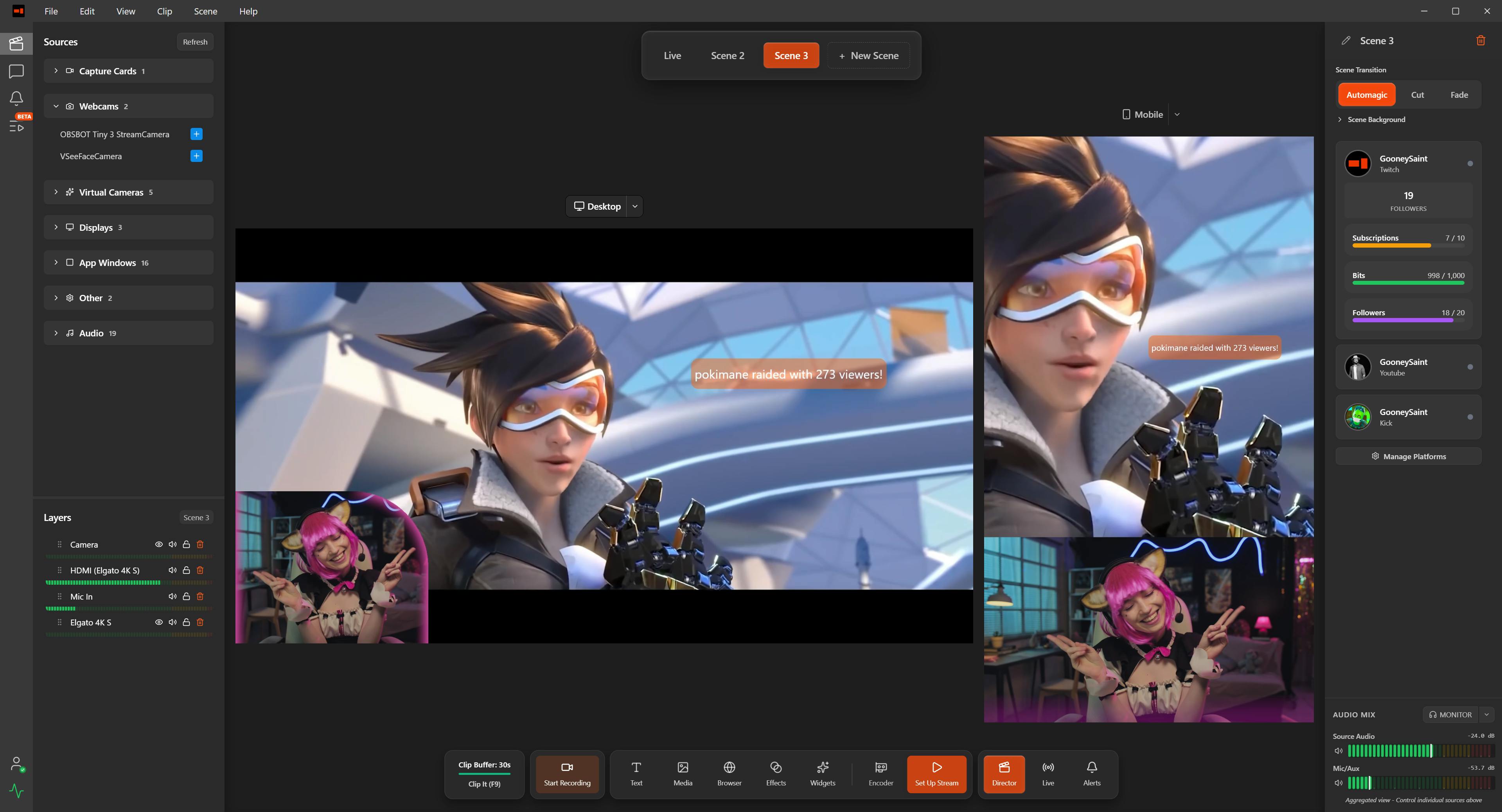
DualStream emerges as a direct solution to this fragmentation. It allows users to combine their desktop and mobile streaming feeds into a single, unified broadcast. This means a streamer can, for instance, showcase a complex software demonstration or gameplay capture from their desktop while simultaneously incorporating a live, personal view from their mobile device. The tool aims to streamline the broadcasting workflow, making multi-platform engagement more accessible and efficient for a wider range of creators.
How DualStream Works
At its core, DualStream acts as an intermediary, aggregating video and audio sources from both a desktop application and a companion mobile app. Users install the DualStream desktop client and the mobile app on their respective devices. The desktop application captures the screen content and any connected webcams or microphones, much like traditional streaming software. Simultaneously, the mobile app captures video and audio from the smartphone or tablet.
The key innovation lies in DualStream's ability to then merge these independent feeds. Instead of requiring separate encoding, ingest, and distribution for each platform, DualStream processes them internally. It then outputs a single, cohesive stream that can be directed to popular streaming platforms like Twitch, YouTube, or Facebook Live. This unified output simplifies the technical setup significantly, eliminating the need for complex multi-stream software or hardware configurations.
The setup process is designed for ease of use. Users typically connect their streaming platform account within the DualStream desktop application. They then configure which feed comes from the desktop (e.g., screen capture, webcam) and which comes from the mobile device. The mobile app syncs with the desktop client, often via a QR code or a pairing code, to establish the connection. Once paired, the user can initiate the stream from the desktop application, and both feeds will be broadcast as one.
Use Cases and Target Audience
The implications for creators are broad. Gamers can stream their PC gameplay while using their phone to show their reaction or engage with chat in a more personal way. Developers can demonstrate software on their desktop while showing their physical workspace or a quick mobile demo of an app they are building. Educators can present complex lecture materials on a large screen while using their mobile device to show a live experiment or a different angle of their presentation.
Podcasters and streamers who conduct interviews or co-host shows can benefit immensely. One host might be on desktop with professional audio and video, while the other joins from a mobile device, offering a different perspective or a more informal segment. This flexibility allows for dynamic content that can switch between polished studio-quality segments and more spontaneous, personal interactions.
DualStream targets a wide audience, from individual streamers and content creators looking to enhance their broadcast quality and flexibility, to small businesses or educational institutions that need a simple way to conduct multi-faceted live presentations or webinars. The emphasis on ease of use suggests it's particularly beneficial for those who may not have extensive technical expertise in video production or streaming infrastructure.
Potential Advantages and Limitations
The primary advantage of DualStream is its simplification of a complex technical problem. By merging feeds, it reduces the need for multiple streaming accounts, dedicated software for each stream, and complex routing setups. This can lead to significant time savings and reduced stress for creators. The ability to offer a more dynamic and multi-dimensional broadcast can also enhance audience engagement and retention. The visual of combining a high-quality desktop feed with a personal mobile perspective can create a more immersive and authentic viewer experience.
However, potential limitations exist. The quality of the combined stream will ultimately depend on the user's internet connection for both desktop and mobile devices. If either connection is unstable, it could degrade the overall broadcast quality. Furthermore, the merging process itself introduces a potential point of failure. While designed for simplicity, any software-based merging can introduce latency or encoding issues if not robustly implemented. Users will also be reliant on DualStream's platform and its ongoing development. Any changes or discontinuation of the service would directly impact their streaming setup.
The specific technical details of how DualStream handles audio mixing, video synchronization, and encoding for the merged stream are not fully detailed, but the success of the tool hinges on its ability to deliver a smooth, high-quality experience without introducing noticeable lag or artifacts. For creators who require absolute control over every aspect of their stream or who need to broadcast to very specific, niche platforms not supported by DualStream, traditional multi-streaming setups might still be preferable.
The Future of Unified Broadcasting
DualStream represents a step towards more integrated and accessible live broadcasting tools. As the creator economy continues to expand, the demand for solutions that lower the technical barrier to entry while increasing production value will only grow. Tools that can intelligently combine diverse input sources into a single, polished output are likely to see increasing adoption.
What remains to be seen is how DualStream will evolve to support more advanced features. Will it offer more granular control over each individual feed's encoding settings? Will it support multiple mobile devices or other input sources simultaneously? The success of such tools often lies in their ability to adapt to the ever-changing needs of content creators and the platforms they broadcast on. For now, DualStream offers a compelling solution for those seeking an easier way to be present in multiple dimensions of the live streaming world.