The Silicon vs. The Software: A Familiar Tale
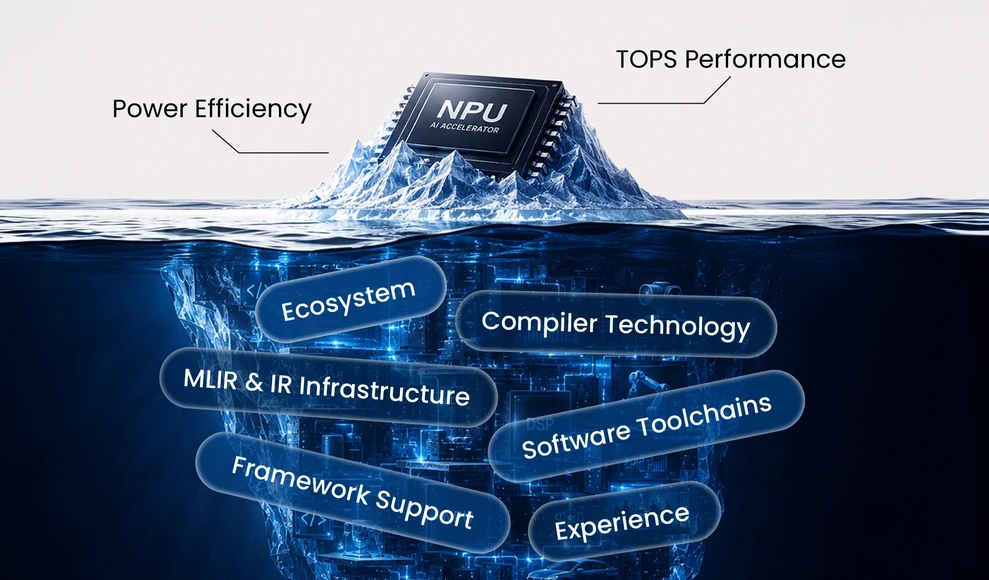
The journey of digital signal processors (DSPs) into mainstream adoption offers a potent lens through which to view the current landscape of edge Artificial Intelligence (AI). While the silicon for edge AI is rapidly advancing—becoming smaller, faster, and more power-efficient—the bottleneck is increasingly shifting from hardware capabilities to the surrounding development models. This mirrors the historical trajectory of DSPs, where raw processing power often outpaced the ease with which developers could harness it for complex applications.
Early DSPs, first appearing in the late 1970s and gaining significant traction through the 1980s and 1990s, were designed for highly specialized, computationally intensive tasks like audio and telecommunications signal processing. They offered performance advantages over general-purpose CPUs for these specific workloads. However, their adoption was initially hampered by a steep learning curve. Programming them required a deep understanding of their unique architectures, instruction sets, and the intricacies of real-time signal manipulation. This created a significant barrier to entry, limiting their use to a relatively small group of embedded systems engineers and algorithm specialists.
The parallel with edge AI is striking. Today, we have an explosion of specialized AI accelerators, NPUs (Neural Processing Units), and optimized DSP cores built into everything from smartphones and IoT devices to automotive systems and industrial equipment. These chips are incredibly capable of running sophisticated machine learning models locally. Yet, the process of developing, deploying, and managing these AI models at the edge is far from seamless. Developers often grapple with fragmented toolchains, diverse hardware targets, the complexities of model quantization and optimization for resource-constrained environments, and the challenges of efficient data management and model updates. The silicon is there, but the development ecosystem is still maturing.
Abstraction Layers: Bridging the Gap
One of the key factors that eventually propelled DSPs into broader adoption was the development of higher-level abstraction layers and more sophisticated software development kits (SDKs). As the ecosystem matured, vendors began providing more user-friendly programming models, libraries of pre-optimized functions, and integrated development environments (IDEs) that simplified the process of creating applications. This allowed developers to focus more on the application logic and less on the low-level hardware details. Instead of writing assembly code for every operation, they could leverage C/C++ libraries or even domain-specific languages tailored for signal processing.
For edge AI, this translates directly to the need for robust, unified software frameworks and development platforms. While frameworks like TensorFlow Lite, PyTorch Mobile, and ONNX Runtime are making strides, the landscape remains fragmented. Developers often face the daunting task of adapting their models and workflows to suit specific hardware vendors' proprietary tools and libraries. The ideal scenario involves a more standardized approach where a model trained in a popular framework can be efficiently deployed across a wide range of edge devices with minimal re-engineering. This requires better interoperability between hardware SDKs, AI frameworks, and runtime engines.
Consider the challenge of optimizing a neural network for inference on a low-power microcontroller versus a high-performance edge server. Without effective abstraction, a developer might need to completely re-architect their model, retrain it with different parameters, and rewrite significant portions of their deployment code for each target. The goal for edge AI, much like the journey DSPs undertook, is to create an environment where developers can express their AI solutions at a higher level of abstraction, with the underlying toolchain and hardware intelligently handling the optimization and deployment complexities.
The Ecosystem Effect: Beyond the Chip
The success of DSPs wasn't solely about improved software tools; it was also about the growth of a rich ecosystem around them. This included third-party IP providers offering specialized algorithms, middleware vendors simplifying integration, and a growing community of developers sharing knowledge and best practices. This collaborative environment accelerated innovation and made it easier for companies to build complex products leveraging DSP technology.
Edge AI is currently in a similar phase of ecosystem development. We see exciting advancements in areas like TinyML, federated learning, and efficient model architectures. However, the ecosystem needs to mature further to support widespread adoption. This involves not just chip manufacturers and AI framework developers, but also sensor providers, data management platforms, security specialists, and cloud integration services. A truly thriving edge AI ecosystem will provide end-to-end solutions that address the entire lifecycle of an AI model, from data ingestion and training to deployment, monitoring, and secure updates in distributed environments.
The surprising detail here is not the rapid pace of hardware improvement, but the slow, deliberate evolution of the development models and ecosystems required to utilize that hardware effectively. It's a reminder that powerful silicon is only one piece of the puzzle. The true acceleration of edge AI will come when we can democratize its development, making it as accessible and straightforward as deploying a web application or a mobile app. The lessons from DSP adoption suggest that this transition will be driven by the creation of intuitive development tools, standardized interfaces, and a vibrant, interconnected ecosystem that supports developers at every step.
If you are a developer building edge AI applications, this means prioritizing platforms and tools that offer strong abstraction layers and cross-vendor compatibility. For founders in the edge AI space, the focus should be on building out comprehensive ecosystems that simplify the entire development lifecycle, not just the hardware component. The industry is moving towards a future where sophisticated AI can run everywhere, but the path is paved with the hard-won lessons of previous technological waves, like that of the humble DSP.