The Alert Noise Epidemic
Developers are drowning in alerts. Monitoring systems, essential for keeping applications running smoothly, have become a double-edged sword. The sheer volume of notifications generated by these systems often overwhelms teams, leading to alert fatigue, missed critical incidents, and a general decline in productivity. This constant barrage of information, much of which is redundant or low-priority, creates a significant drain on engineering resources. The problem isn't a lack of monitoring; it's the inability to effectively process and prioritize the resulting alerts.
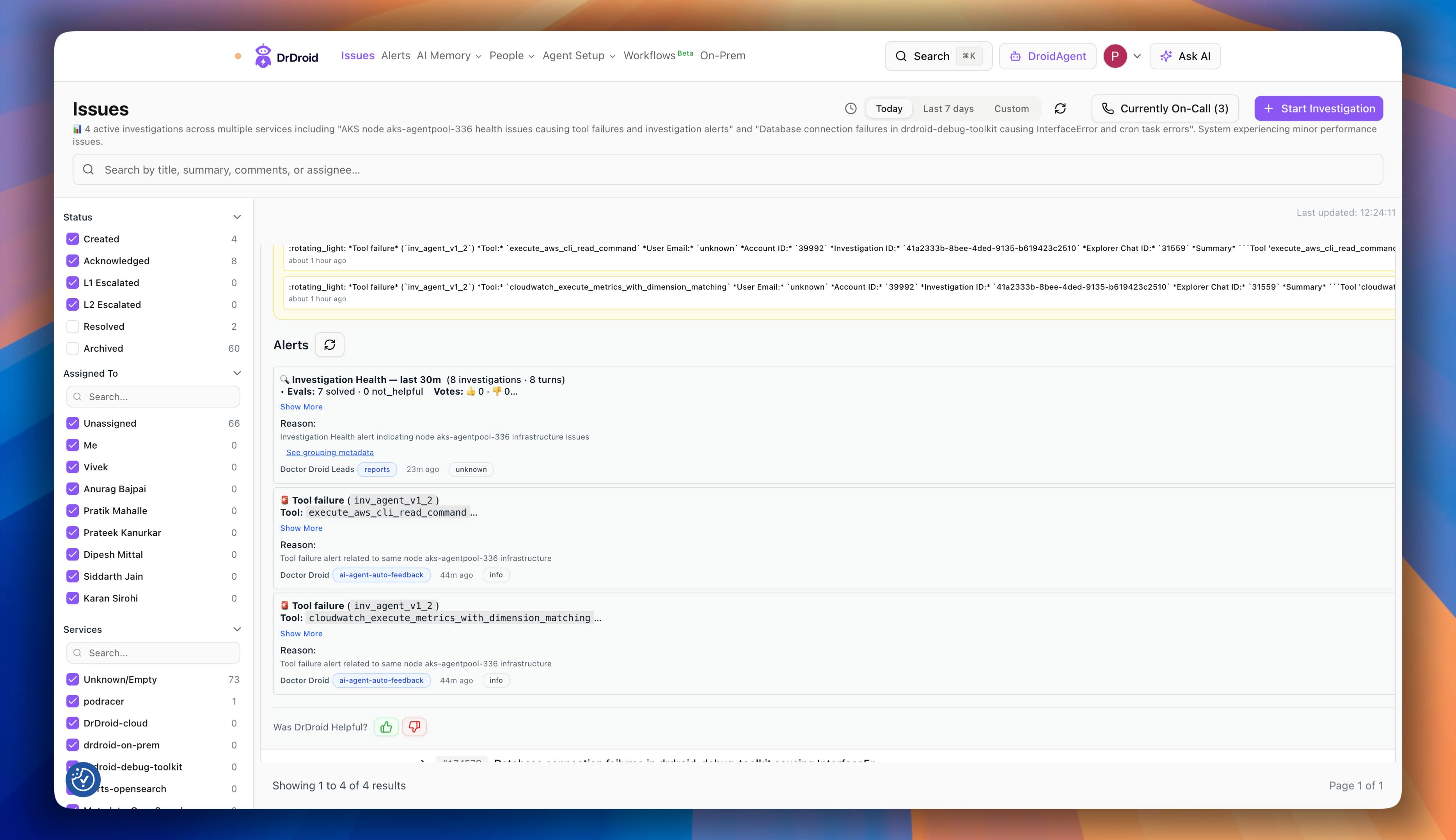
DrDroid, a company focused on developer productivity tools, has launched a new product aimed squarely at this pervasive issue: Alert Grouping. The tool aims to aggregate similar alerts, filter out noise, and present developers with a more actionable and manageable stream of notifications. The core promise is to reduce alert noise completely, allowing engineers to focus on genuine problems rather than sifting through a deluge of non-critical updates.
How Alert Grouping Works
Alert Grouping operates by analyzing incoming alerts from various monitoring sources. Instead of presenting each alert as an individual event, the system intelligently groups them based on predefined rules and machine learning. This means that if ten identical errors occur within a short period, they are not presented as ten separate alerts, but rather as a single, consolidated notification indicating the number of occurrences and the time frame. This approach drastically reduces the sheer quantity of items a developer has to review.
The system supports integration with popular monitoring tools such as Prometheus, Grafana, PagerDuty, and others. By acting as a central hub, Alert Grouping can ingest alerts from disparate systems and apply its aggregation logic before forwarding them to the relevant team or individual. This unification is key to providing a consistent experience across an organization's entire monitoring infrastructure.
A critical component of the tool is its customizable filtering capabilities. Users can define specific criteria for which alerts should be grouped, which should be suppressed entirely, and which should be escalated immediately. This allows teams to tailor the system to their specific operational needs and risk tolerance. For instance, a spike in a specific type of error might be grouped, but if the frequency exceeds a certain threshold within an hour, it automatically triggers a high-priority alert that bypasses normal grouping.
Beyond Simple Deduplication
What sets Alert Grouping apart from basic alert deduplication is its sophisticated approach to context and correlation. The tool doesn't just group identical alerts; it can identify related alerts that might stem from a common underlying issue. For example, if a database starts experiencing high latency, this might trigger alerts for slow queries, increased connection times, and resource utilization spikes. Alert Grouping can correlate these disparate events into a single incident, providing a more holistic view of the problem. This is akin to a detective not just collecting individual clues, but piecing them together to understand the entire crime scene, rather than just seeing a collection of isolated facts.
The platform also includes features for alert enrichment. This means that when an alert is presented, it can be augmented with additional context from other systems, such as recent deployments, known outages, or relevant documentation links. This pre-digested information empowers developers to diagnose and resolve issues faster, without needing to manually cross-reference data from multiple sources. The goal is to move from a reactive alert-response cycle to a proactive incident management process.
Impact on Developer Workflow
The implications for developer workflow are significant. By drastically reducing the noise, Alert Grouping allows engineers to regain focus. Instead of spending valuable time triaging and dismissing non-actionable alerts, they can concentrate on the critical notifications that require immediate attention. This can lead to faster incident response times, fewer missed critical issues, and a general improvement in the team's ability to maintain system stability and performance.
Furthermore, the reduction in alert fatigue can have a positive impact on developer well-being. Constant interruptions and the pressure of potentially missing an important alert contribute to burnout. A more manageable alert stream can lead to a less stressful work environment and higher job satisfaction. For engineering leadership, this translates to improved team efficiency, reduced operational costs associated with incident management, and a more resilient system architecture.
The Future of Alert Management
DrDroid's entry into the alert management space highlights a growing recognition of the challenges posed by modern, complex distributed systems. As microservices architectures and cloud-native environments become the norm, the number of potential alert sources and the complexity of interdependencies only increase. Tools that can effectively cut through this complexity are becoming essential.
While Alert Grouping offers a compelling solution, the broader challenge of alert management is far from solved. What remains to be seen is how effectively these grouping and correlation capabilities can adapt to rapidly evolving systems and emergent failure modes. The ability of AI and machine learning to accurately predict and group alerts without human intervention will be a key differentiator in the long run. The success of tools like DrDroid's will depend not just on their current feature set, but on their capacity to learn and adapt alongside the systems they monitor.