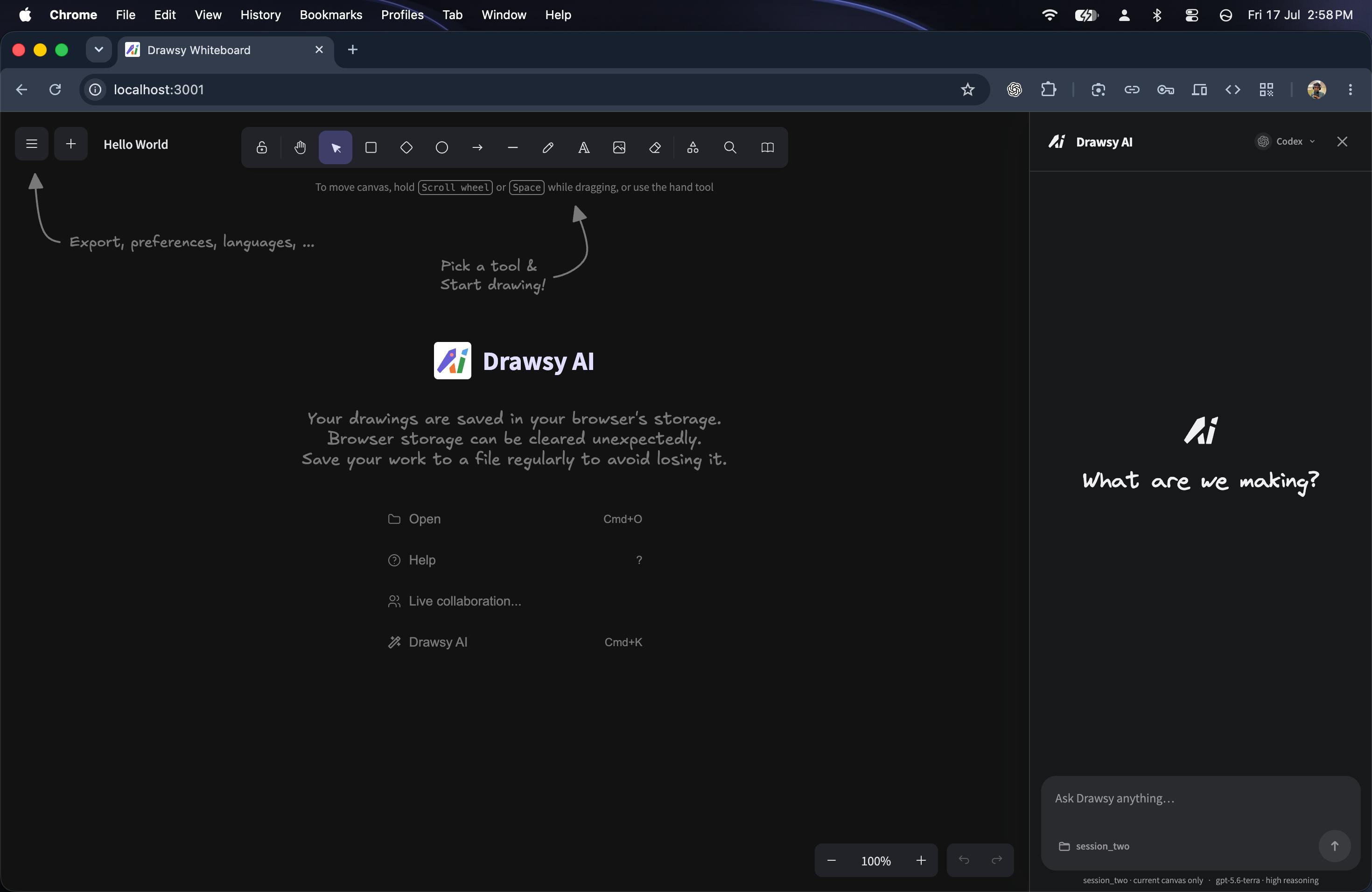
The Drawsy Vision: Merging Artistry and Engineering
Drawsy emerges as a novel AI-powered workspace designed to unify the often-disparate worlds of visual design and software development. The platform’s core proposition is to create an environment where designers and developers can collaborate more seamlessly, with the AI acting as a connective tissue between creative ideation and functional implementation. This integration aims to streamline workflows, reduce friction in the handoff process, and accelerate the journey from concept to product.
At its heart, Drawsy posits that the traditional siloing of design and development tasks leads to inefficiencies. Designers often work in tools that produce static outputs, which developers then must interpret and translate into functional code. This translation process is a common source of errors, delays, and misinterpretations. Drawsy seeks to eliminate these bottlenecks by allowing the visual canvas and the code editor to coexist and interact within a single, intelligent environment. The AI component is key here, not just as a code generator or a design assistant, but as an orchestrator that understands the relationship between visual elements and their underlying code structure.
Think of it less like a traditional design tool and more like a collaborative whiteboard where a designer sketches an idea, and an AI simultaneously generates the corresponding HTML, CSS, or even JavaScript. The designer can then refine the visual, and the AI updates the code in real-time, or vice versa. This creates a dynamic feedback loop that can significantly speed up prototyping and iteration cycles. The platform isn't just about generating code from designs; it's about fostering a shared understanding and a continuous flow of information between the two disciplines.

Key Features and Functionality
While specific feature sets are still emerging, the foundational concept of Drawsy revolves around several interconnected pillars:
- Unified Canvas and Code Environment: The central tenet is the simultaneous presence and interaction of a visual design interface and a code editor. Changes made in one are reflected in the other, facilitated by an AI that understands the semantic relationship between them.
- AI-Assisted Development: Drawsy's AI is designed to go beyond simple code generation. It aims to interpret design intent, suggest optimizations, and even identify potential usability issues based on visual cues. This could involve automatically generating responsive layouts, suggesting accessibility improvements, or ensuring design consistency across different breakpoints.
- Real-time Collaboration: The platform is envisioned to support real-time collaboration, allowing multiple users to work on the same project simultaneously. This would enable designers and developers to co-create, review, and iterate on designs and code in tandem, fostering a more agile and communicative development process.
- Intelligent Handoff: By eliminating the need for a separate handoff phase, Drawsy aims to make the process of transitioning from design to development virtually instantaneous. The AI acts as a translator and validator, ensuring that the implemented code accurately represents the intended design.
The ambition behind Drawsy is to fundamentally alter how digital products are built. Instead of distinct phases for design and development, Drawsy proposes a fluid, integrated process. This could empower smaller teams to achieve more with fewer resources, as the AI assists in bridging skill gaps and accelerating common tasks. For larger organizations, it could mean faster time-to-market for new features and a more cohesive product development culture.
The Unanswered Question: Scalability and Complexity
While the vision is compelling, a significant question remains: how well will Drawsy scale to handle complex, enterprise-level projects? The AI's ability to accurately translate intricate design systems, manage vast codebases, and maintain context across large applications will be critical. The current focus on a unified canvas and code editor suggests a strong initial emphasis on front-end development, but the true test will be in its capacity to integrate with back-end logic, complex state management, and established development workflows. What happens to the thousands of developers who rely on established frameworks and intricate build pipelines when a tool like Drawsy promises to abstract so much of that complexity away? Understanding the platform’s extensibility and its compatibility with existing toolchains will be paramount for widespread adoption.
Implications for the Future of Design and Development
Drawsy represents a significant step towards a more integrated and AI-augmented future for digital product creation. If successful, it could redefine the roles of designers and developers, shifting the focus from manual translation to higher-level problem-solving and creative direction. The platform’s success will likely depend on its ability to deliver on the promise of seamless integration, intelligent assistance, and real-time collaboration, ultimately making the creation of digital experiences more efficient and intuitive for everyone involved.