The Perils of AI Monoculture
Building an entire application workflow around a single AI model is a precarious strategy. While the allure of a single, powerful tool that can handle everything from initial planning to final debugging is strong, it’s a path fraught with risk. This isn't about being indecisive or constantly chasing the next shiny object; it's about implementing a robust risk management strategy through tool diversity. Just as a developer wouldn't rely on a single library for all their application's needs, they shouldn't rely on one AI model for every stage of development and operation.
Tool-hopping, the act of constantly switching tools without a clear purpose, is indeed procrastination. Tool diversity, however, is a deliberate approach to ensure resilience and leverage the unique strengths of different AI models. It means understanding that no single model excels at everything. Claude, for instance, might be a powerhouse for complex reasoning, planning, and generating design direction. Gemini Flash could be ideal for visual reference tasks and rapid prototyping based on image inputs. OpenAI’s Codex or Kimi might offer specialized capabilities for code generation or document analysis. Relying solely on one of these for the entire lifecycle of an application—from conceptualization to debugging and even as a fallback mechanism—is akin to building a house with only a hammer: you'll struggle with screws, nails, and anything else requiring a different tool.
The Case for Model Coverage
Effective builders require comprehensive coverage across critical stages of development and operation. This coverage should be segmented, ensuring that the right tool is used for the right job. At a minimum, this includes:
- A Planning Model: This AI should excel at understanding requirements, brainstorming ideas, outlining project structures, and generating initial strategy documents. Its strength lies in high-level conceptualization and logical flow.
- An Implementation Model: This AI should be adept at translating plans into tangible outputs, such as writing code, generating API schemas, drafting documentation, or creating initial UI mockups. Speed, accuracy, and adherence to specific formats are key here.
- A Fallback Model: This is the crucial safety net. It should be capable of stepping in when the primary implementation model fails, or when unexpected issues arise. This could involve debugging, suggesting alternative approaches, or even generating placeholder content if a primary service goes offline. A fallback model needs to be reliable and possess a broad understanding of potential failure points.
Consider this: you might use a large, sophisticated model like Claude for initial architectural design and reasoning about complex user flows. Then, you'd switch to a specialized code generation model like Codex or a multimodal model like Gemini for translating those designs into functional code or visual assets. For debugging, you might employ a model specifically trained on error analysis or leverage a different LLM with a broader knowledge base to troubleshoot issues. Even for content generation, different models might be better suited for marketing copy versus technical documentation.
Beyond Development: Operational Resilience
The need for tool diversity extends beyond the initial development phase into the operational life of an application. AI models are not static entities; they are updated, deprecated, or may experience outages. If your application's core functionality relies entirely on the API of a single AI model, you are exposed to significant operational risk. A sudden change in the API's behavior, a pricing adjustment, or a complete service interruption could cripple your application overnight.
This is where the fallback model becomes indispensable. Imagine an e-commerce platform that uses an AI for personalized product recommendations. If the primary recommendation engine experiences downtime, a fallback system—perhaps a simpler, more robust model or even a pre-trained set of rules—must be able to serve *something* to the user, rather than presenting a blank page or an error message. This fallback doesn't need to be as sophisticated as the primary; its goal is to maintain basic functionality and a semblance of user experience during an outage.
Furthermore, different AI models have different strengths in terms of latency, cost, and specialized capabilities. A model that is excellent for creative writing might be too slow or expensive for real-time user input processing. Conversely, a lightning-fast model might lack the nuanced understanding required for complex planning. By integrating multiple models, developers can optimize for these trade-offs, using cheaper, faster models for high-volume, low-complexity tasks and reserving more powerful, expensive models for critical, complex operations.
The Builder's Workflow: A Hybrid Approach
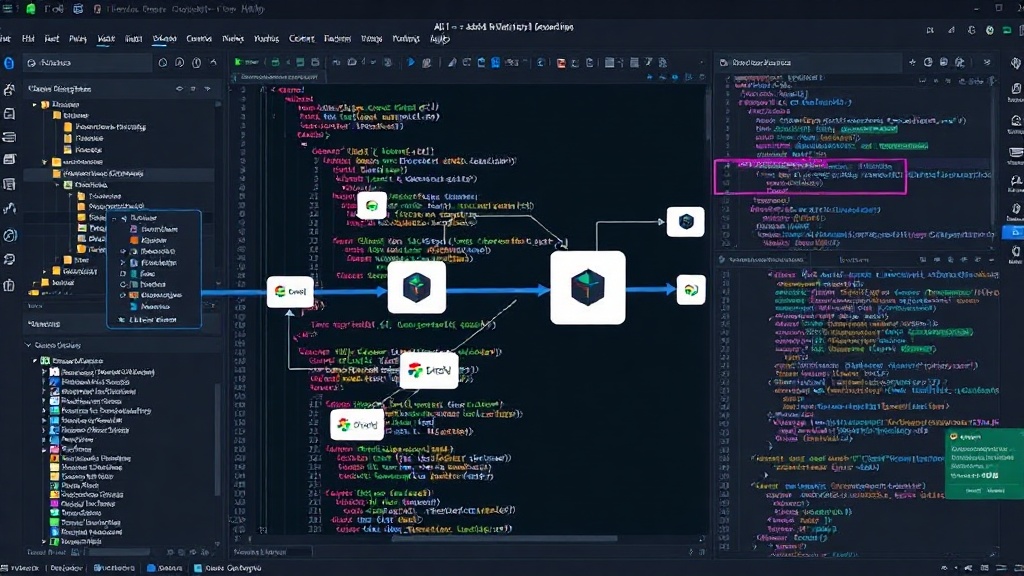
The future of building AI-powered applications lies in a hybrid, composable approach. This means architecting your application to seamlessly integrate with multiple AI services, orchestrating them through your own backend logic. This architecture might involve:
- An Orchestration Layer: Your application's backend acts as the conductor, determining which AI model should handle a specific request based on its type, priority, and cost.
- Modular AI Integration: Each AI capability (e.g., text generation, image analysis, code completion) is treated as a distinct module that can be swapped out or augmented.
- Dynamic Model Selection: The system can dynamically choose between different models based on real-time performance, cost, or even A/B testing results.
- Graceful Degradation: If a primary AI service fails, the orchestration layer can route requests to a secondary, fallback model with minimal disruption to the user.
This approach requires more upfront architectural planning but yields significant long-term benefits in terms of resilience, flexibility, and cost-effectiveness. It allows developers to stay agile, adapt to the rapidly evolving AI landscape, and avoid being locked into a single vendor or model whose capabilities or service might change unexpectedly.
Ultimately, the goal is not to be a tool-hopper, but a judicious selector of tools. It's about understanding the AI ecosystem, recognizing the unique strengths of different models, and building systems that can intelligently leverage this diversity to create more robust, reliable, and adaptable applications.