The Critical Distinction: Application Keys vs. Provider IDs
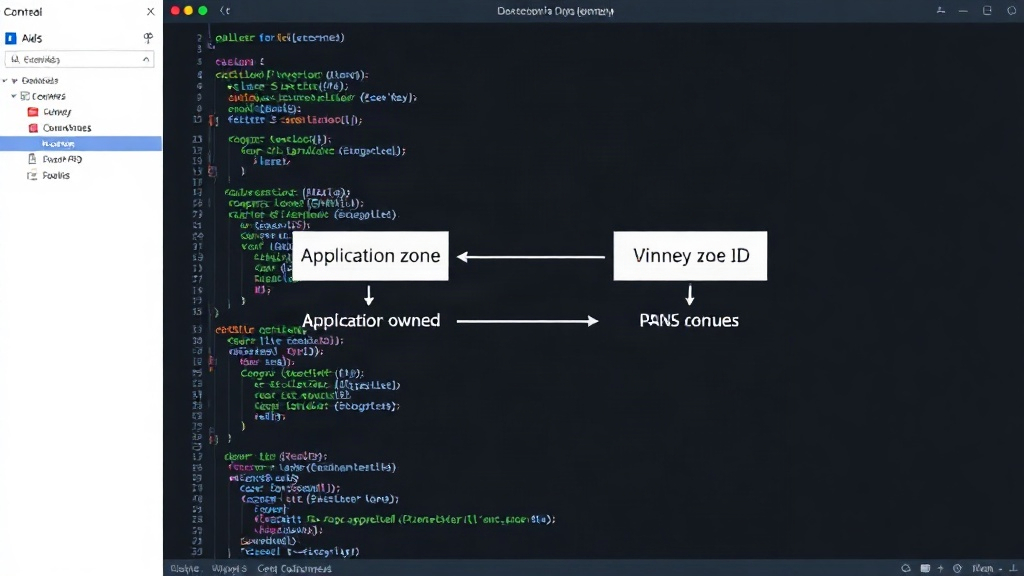
When managing DNS zones for applications, particularly across different cloud providers or during migrations, a common pitfall emerges: treating the DNS provider's Zone ID as the definitive, immutable identifier for a domain. This approach is fundamentally flawed and leads to identity failures when provider-specific IDs change. The correct strategy is to maintain an application-owned zone key, a stable identifier that represents the domain within your application's inventory, and to treat the provider's Zone ID as a transient, scoped locator.
Think of it less like a permanent address and more like a temporary mailing code. The provider's Zone ID tells your application *where* to find the DNS zone *right now*. Your application-owned zone key, however, is the actual identity of that domain within your system. This distinction is crucial. Storing the provider's Zone ID as the primary key for a domain or its records is akin to using a hotel room number as your permanent home address. If you change hotels, the room number becomes meaningless and your address is lost.
This separation is the difference between remembering where a zone lives and letting a provider define what the zone is. The first is useful state. The second turns an account move, a delete-and-recreate event, or stale inventory into an identity failure.
Why Provider IDs Are Not Primary Keys
Cloud providers, by their nature, manage resources dynamically. When you create a DNS zone with a provider like AWS Route 53, Azure DNS, or Google Cloud DNS, you are assigned a unique identifier for that zone. This ID is often a long string of alphanumeric characters. While essential for interacting with the provider's API to manage records, these IDs are not stable across all operational scenarios. Consider these common events:
- Account Migration: If an application's DNS is moved from one cloud account to another, or even within different regions or resource groups of the same provider, the Zone ID will almost certainly change.
- Zone Deletion and Recreation: In some automation workflows or during troubleshooting, a zone might be deleted and then recreated. A new Zone ID will be generated for the newly created zone, even if it manages the exact same domain name.
- Provider-Specific Operations: Certain provider-level operations, such as zone export/import or template-based deployments, can result in a new Zone ID being assigned to a zone that logically still represents the same domain.
If your application relies solely on the provider's Zone ID as its primary reference, any of these events will break the application's ability to locate and manage its DNS records. The application will attempt to interact with the old, now invalid, Zone ID, leading to API errors and service disruptions. This is an identity failure: the application loses track of its own resources because its reference point is external and mutable.
The Application-Owned Zone Key Model
To avoid these failures, applications should maintain their own internal, stable identifier for each DNS zone they manage. This application-owned zone key serves as the canonical reference within your system. When you need to perform operations on a DNS zone—creating records, updating them, deleting them, or querying them—you first look up the zone using your internal key. This lookup retrieves the necessary metadata, including the *current* provider Zone ID, the normalized domain name, and any other application-specific configuration.
This model provides several benefits:
- Stability: The application-owned key remains constant, even if the underlying provider Zone ID changes.
- Decoupling: It decouples your application's logic from the specifics of any single DNS provider's resource management.
- Resilience: It makes migrations and automated reconfigurations significantly smoother. When a Zone ID changes, you simply update the mapping in your application's inventory for that specific zone key, rather than having to re-identify all associated records.
The process for interacting with DNS records should look like this:
- Lookup: Use the application-owned zone key to find the zone's current configuration in your inventory.
- Verification: Retrieve the current provider Zone ID and the domain name associated with it. Before proceeding, verify that the domain name returned by the provider for this Zone ID still matches the expected domain name your application manages. This is a critical reconciliation step.
- Operation: Use the verified provider Zone ID to perform the desired DNS record operation via the provider's API.
- Update (if necessary): If the provider's Zone ID has changed but the domain name is correct, update your application's inventory with the new Zone ID for that application-owned zone key.
Reconciling DNS Records for Critical Operations
This robust key management is particularly vital for operations like mail cutovers, where DNS changes have immediate and direct impacts on service availability. When migrating mail services or changing DNS providers, a thorough reconciliation of desired MX (Mail Exchanger) records against the published DNS is paramount. Simply updating the MX records in the provider's interface and assuming it will work is insufficient. You must:
- Define Desired State: Clearly specify the exact MX records, including hostnames and priorities, that should be active.
- Query Published DNS: Actively query the DNS system to retrieve the currently published MX records for the domain.
- Compare and Verify: Compare the queried records against the desired state. Ensure that the correct records are published and that any old, conflicting records have been removed.
- Confirm Propagation: Account for DNS propagation times. A cutover is not complete until the desired records are resolutely live across the global DNS infrastructure.
Treating the provider's Zone ID as a replaceable external reference, never as the primary key for the domain or its records, and resolving every record operation through a stable application-owned zone key, is the difference between a resilient, manageable system and one prone to catastrophic identity failures during routine operational events.