RecipeHub: A Django-Powered Recipe Sharing Platform
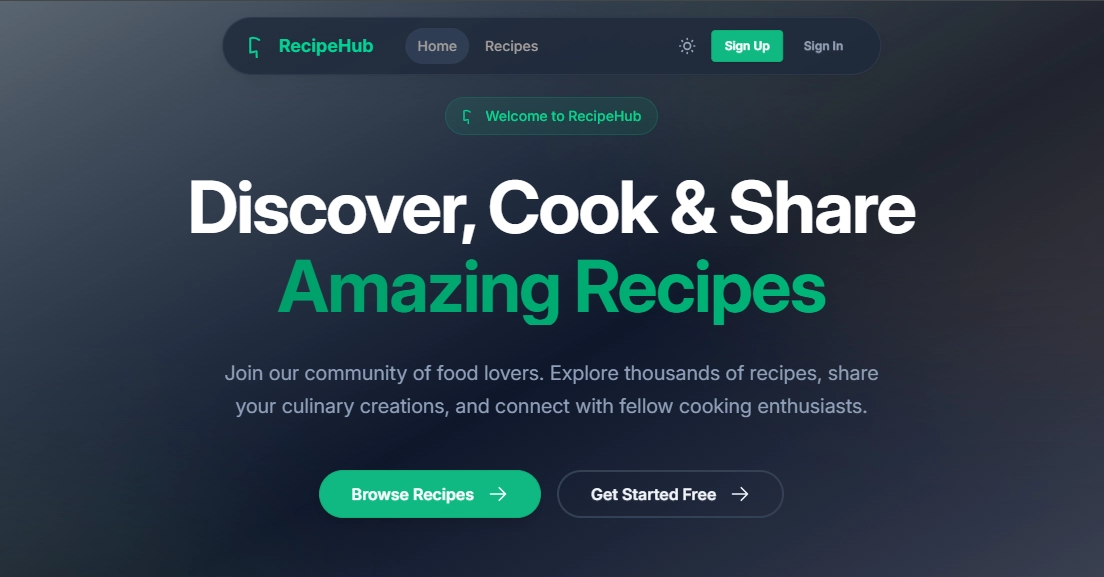
A developer recently chronicled their journey building and deploying RecipeHub, a modern recipe sharing web application. The project, undertaken as a personal learning exercise with Django, extends beyond basic functionality to offer a robust user experience. RecipeHub allows users to register, log in, and then create, edit, and delete their own recipes. It also facilitates discovery through category browsing and the ability to save favorite recipes.
The application incorporates several user-centric features designed to enhance usability and engagement. Users can upload images for their recipes, providing a visual element to their culinary creations. A personal dashboard offers a centralized view of user activity, including their created and favorited recipes. Significantly, RecipeHub supports both light and dark modes, catering to user preferences and reducing eye strain. The entire application is built to be fully responsive, ensuring a seamless experience across desktops, tablets, and mobile devices.
Technology Stack and Development Decisions
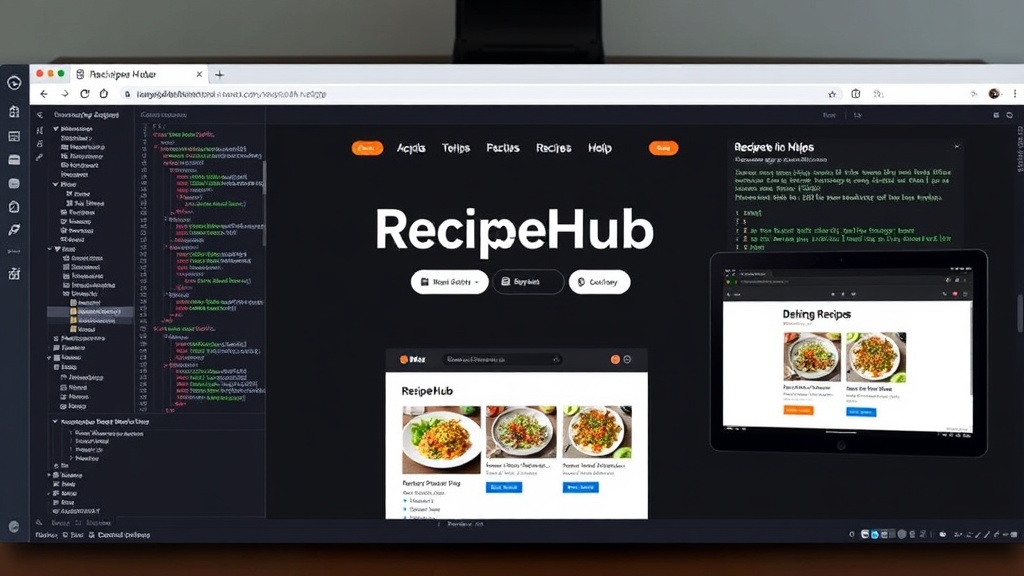
The foundation of RecipeHub is Python, with the Django web framework providing the backend structure. Django Allauth was integrated to handle user authentication, simplifying the registration and login processes. For data management, PostgreSQL was chosen as the relational database. The frontend is a modern stack designed for speed and interactivity. Tailwind CSS and DaisyUI were employed for efficient and attractive UI development, enabling rapid styling and component creation. A key technology for dynamic frontend updates without full page reloads is HTMX. This library allows developers to access modern browser features directly from HTML, making it possible to render HTML on the server and update parts of the page as needed, thereby enhancing the user experience and reducing client-side complexity.
Vite, a next-generation frontend tooling solution, was used to manage the build process, offering faster cold server starts and Hot Module Replacement (HMR). This combination of backend and frontend technologies aims for a performant and maintainable application. The developer started with a Django starter template, customizing it extensively to add the desired features and refine the user interface. This approach leverages existing boilerplate code while allowing for significant personalization.
Deployment and Production Challenges
While the initial development focused on features and technology choices, the deployment phase often presents unique hurdles. Deploying a Django application to production involves several critical steps, including setting up a production-ready web server (like Gunicorn or uWSGI), configuring a reverse proxy (like Nginx), managing static files, and ensuring database connectivity. For a project like RecipeHub, which includes user-uploaded images, proper storage configuration is also essential, often utilizing cloud storage solutions.
Progressive Web App (PWA) capabilities, as seen in similar Django projects, can further enhance user experience by enabling offline access and installability, although this was not explicitly detailed for RecipeHub. The mention of a "starter template to production" in related discussions highlights the common path from initial development to a live, accessible service. This typically involves setting up continuous integration and continuous deployment (CI/CD) pipelines to automate testing and deployment, minimizing manual errors. The challenges often lie in optimizing performance, managing security, and ensuring scalability. For instance, handling a growing number of users and recipes requires careful database indexing and efficient query design. Secure handling of user credentials and uploaded content is paramount. The decision to use a robust database like PostgreSQL and a well-established framework like Django provides a solid foundation for addressing these production concerns.
Broader Implications and Future Development
The creation of RecipeHub demonstrates a practical application of modern web development principles using Django. It showcases how a combination of backend power and flexible frontend tools can result in a feature-rich, user-friendly application. The use of HTMX, in particular, points to a growing trend of server-rendered HTML enhancing dynamic web applications without the full overhead of client-side JavaScript frameworks for every interaction. This approach can lead to faster initial load times and simpler state management.
For developers looking to build similar platforms, RecipeHub serves as a valuable case study. It highlights the importance of a well-defined technology stack, the benefits of starting with a template, and the necessity of planning for deployment from the outset. Future development could explore advanced features such as user ratings and reviews, recipe scaling, meal planning functionalities, or integration with external recipe APIs. The responsive design and light/dark mode options already in place provide a strong foundation for user satisfaction. The success of such a project lies not just in its features but in its ability to be reliably deployed and maintained, offering a consistent experience to its users.