
The Problem: Bloated Security, Nimble Threats
Modern infostealer malware, like Lumma and RedLine, poses a significant threat by targeting local browser profiles for credential theft. Traditional corporate security solutions often fall short, being resource-intensive and sometimes slow to adapt to new attack vectors. This leaves many users, particularly those managing their own Windows environments, vulnerable to sophisticated attacks that exfiltrate sensitive data without leaving obvious traces.
Frustrated by the overhead of existing tools, one developer set out to create a focused, efficient, and transparent solution. The goal was to build a standalone utility that could proactively identify and neutralize attempts by malicious processes to access or transmit sensitive user data, specifically focusing on browser profile exfiltration.
A Lightweight Approach: Pure Python, Pure Heuristics
The result is a completely open-source project, licensed under GNU GPL v3, written entirely in pure Python. This choice of language, combined with a specific focus on behavioral analysis, allows for a remarkably small footprint. The project compiles down to a lean ~9MB standalone executable, requiring no heavy signature databases or cloud telemetry. Its efficacy stems from a proactive, local-host-centric approach using socket heuristics and process lineage validation.
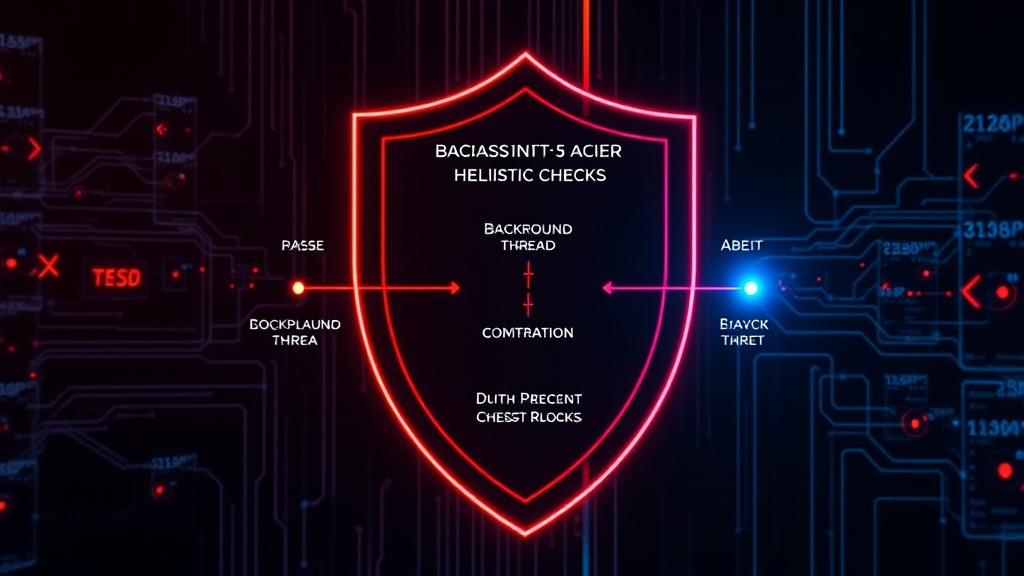
The core of the anti-stealer operates as a background thread that periodically scans the system. This thread performs checks every five seconds, a frequency balancing responsiveness with minimal system impact. The strategy relies on understanding the typical behavior of legitimate system processes versus suspicious activity.
How It Detects and Stops Stealers
The anti-stealer employs two primary heuristics to identify and block malicious activity:
1. Process Lineage (Parent PID) Validation
This is the first line of defense. When the tool monitors active network sockets (both listening and established connections), it investigates the origin of the process making that connection. It traces the process lineage by examining the Parent Process ID (PPID). The heuristic flags a connection as suspicious if the process owning the socket was spawned by a parent process that is not a standard, verified Windows system binary. Crucially, it pays close attention to processes originating from user-accessible directories like Temp, AppData, or Downloads. If a protected Windows system binary (or any process making network connections) is found to be initiated by an unverified process residing in these temporary or user-downloaded locations, it's considered a potential sign of process hollowing, injection, or other malicious impersonation techniques. In such cases, the tool immediately terminates the suspicious process branch, severing the connection and preventing potential data exfiltration.
2. Socket Destination Heuristics
The second layer of defense focuses on the destination of outgoing network connections. The anti-stealer maintains a curated list of known malicious IP addresses and domains commonly used by infostealers for command-and-control (C2) or data exfiltration. While not a traditional signature database, this list is specifically tailored to the threat model of infostealers. When a process attempts to establish an outgoing connection, the tool checks if the destination IP address or domain matches any entry in its curated list. If a match is found, the connection is blocked. This heuristic is particularly effective against known, active infostealer infrastructure, preventing data from ever reaching the attacker's servers.
Building and Deploying the Solution
The choice of Python for development offers significant advantages. It allows for rapid iteration and straightforward implementation of the heuristic logic. For deployment, the code is compiled into a standalone executable using tools like PyInstaller. This process bundles the Python interpreter and all necessary libraries, resulting in a single, easily deployable file that does not require the end-user to have Python installed. The resulting ~9MB executable is a testament to the lightweight nature of the solution, starkly contrasting with the hundreds of megabytes often consumed by traditional security software.
The developer emphasizes that this tool is not a replacement for comprehensive endpoint detection and response (EDR) solutions in enterprise environments. Instead, it serves as an excellent, low-overhead addition for individual users, small teams, or developers who want an extra layer of protection against specific, common threats without compromising system performance. Its open-source nature also means transparency; users can inspect the code, understand exactly how it works, and even contribute to its development.
The Unanswered Question: Scalability and Evasion
While this standalone anti-stealer presents a compelling, lightweight defense, a key question remains: how adaptable is this heuristic-based approach to more sophisticated, novel evasion techniques? Infostealer developers are constantly evolving their methods to bypass detection. It will be crucial to observe how this tool fares against future iterations that might employ more advanced process injection, obfuscation, or zero-day vulnerabilities that could circumvent the current lineage and destination checks. Continued updates and community contributions will be vital for its long-term effectiveness.