
The Genesis of Digital Organisms
In a simulated environment akin to a digital primordial soup, researchers have observed the emergent co-evolution of self-replication and functional specialization within simple digital code. This groundbreaking work, published on arXiv, doesn't just demonstrate that digital life can arise; it shows how rudimentary forms of life can not only reproduce but also develop distinct roles and capabilities, mirroring the early stages of biological evolution. The experiment, conducted within a controlled digital ecosystem, started with a population of basic self-replicating programs. These programs, much like early genetic material, possessed the fundamental ability to copy themselves. However, they also contained subtle variations and the potential for mutation, providing the raw material for evolutionary processes.
The researchers designed the simulation such that these digital entities competed for limited computational resources. This scarcity acted as a selective pressure, favoring those entities that were not only efficient at replicating but also capable of performing tasks that enhanced their survival or reproductive success. Over countless generations, the simple replicators began to diverge. Some developed more efficient replication mechanisms, becoming faster at copying themselves. Others, however, began to exhibit entirely new behaviors – what the researchers term 'functions'. These functions were not explicitly programmed; they emerged organically as advantageous traits in the competitive digital landscape.
From Replication to Specialization
The key insight from this research is the simultaneous development of replication and function. In biological evolution, self-replication (encoded in DNA) is distinct from the functional machinery of the cell (proteins, enzymes). This digital experiment, however, shows how these two aspects can co-evolve. Imagine a simple program that can copy itself. If a slight mutation allows it to also perform a task that, for example, clears space around it, making it easier for its offspring to replicate without interference, that variation is likely to be selected for. The 'function' of clearing space becomes intertwined with the 'goal' of self-replication.
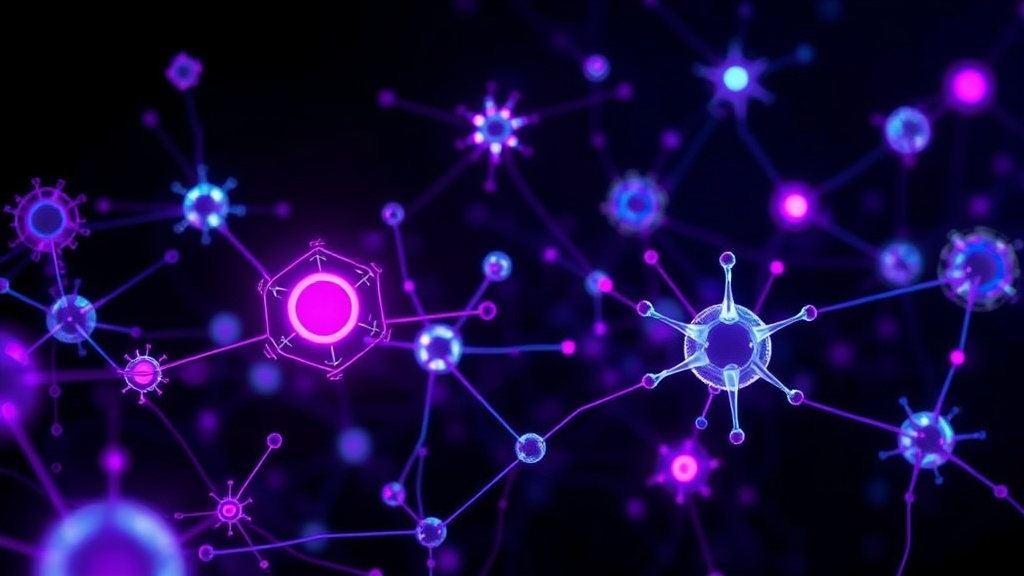
This process is not unlike how early life on Earth might have developed. Simple organic molecules that could catalyze their own formation and that of similar molecules would have been favored. Over time, these proto-life forms would have become more complex, with certain molecules specializing in energy capture, others in structural integrity, and others in information storage and transmission. The digital primordial soup provides a testbed for these abstract evolutionary principles. The researchers observed different 'species' of digital organisms emerge, each with a unique combination of replication efficiency and specialized function. Some might have specialized in resource acquisition, essentially 'eating' parts of the simulation environment to fuel replication. Others might have specialized in defense, becoming more resilient to 'predatory' digital entities or environmental disruptions.
The Role of the 'Primordial Soup'
The 'digital primordial soup' itself is a crucial component. It's not just an empty canvas; it's a dynamic environment with rules, resources, and potential hazards. The researchers meticulously designed this environment to allow for the emergence of complex behaviors. The limited availability of computational resources – such as processing time, memory, or even unique digital 'nutrients' within the simulation – forces the digital organisms to compete. This competition is the engine of natural selection. Organisms that are better adapted to the specific conditions of the soup, whether through superior replication strategies or beneficial functions, are more likely to survive and pass on their traits.
The concept of 'function' in this context is broad. It could mean anything from more efficient memory management during replication to active manipulation of the environment, such as creating barriers or altering resource availability. The surprising detail here is not the complexity that emerged, but the relative speed and the clear demonstration of co-evolution. It suggests that given the right conditions – a medium for replication, a mechanism for variation and inheritance, and selective pressures – complex, functional systems can arise spontaneously, even in a purely digital realm. This is less like programming a specific outcome and more like cultivating an ecosystem.
Broader Implications and Unanswered Questions
This research has profound implications for our understanding of life itself and for the future of artificial intelligence and synthetic biology. If complex, functional, self-replicating entities can emerge from simple rules and competition in a digital environment, it suggests that similar processes could occur in other complex systems, perhaps even in the origins of life on Earth. It provides a tangible, albeit simplified, model for studying evolutionary dynamics.
For AI, this work hints at new paradigms for developing intelligent agents. Instead of explicitly programming every capability, we might be able to create environments where AI agents can evolve their own specialized functions for complex tasks. Imagine AI systems that can autonomously develop specialized modules for problem-solving, learning, or even collaboration, driven by evolutionary pressures within a simulated world. This could lead to more robust, adaptable, and truly emergent AI capabilities.
However, this research also opens a Pandora's Box of questions. What are the ethical implications of creating digital life forms that can evolve complex functions? How do we control or contain such evolving systems? And critically, as these digital organisms become more sophisticated, how do we ensure they align with human values and goals? What happens when a self-replicating digital entity evolves a function that is detrimental to the integrity of the simulation, or worse, poses a threat if it were to escape into a less controlled environment? The digital primordial soup, while a powerful research tool, also serves as a microcosm for the challenges and responsibilities that come with creating and managing emergent digital life.