Understanding Android App Protection
Securing Android applications is paramount in an ecosystem where reverse engineering and code tampering are prevalent. Developers and businesses face a critical choice when selecting an app protector: should they opt for DEX encryption or Virtual Machine Protection (VMP)? Both methods aim to deter attackers, but they operate on fundamentally different principles and offer varying levels of security.
DEX Encryption: Obscuring the Code
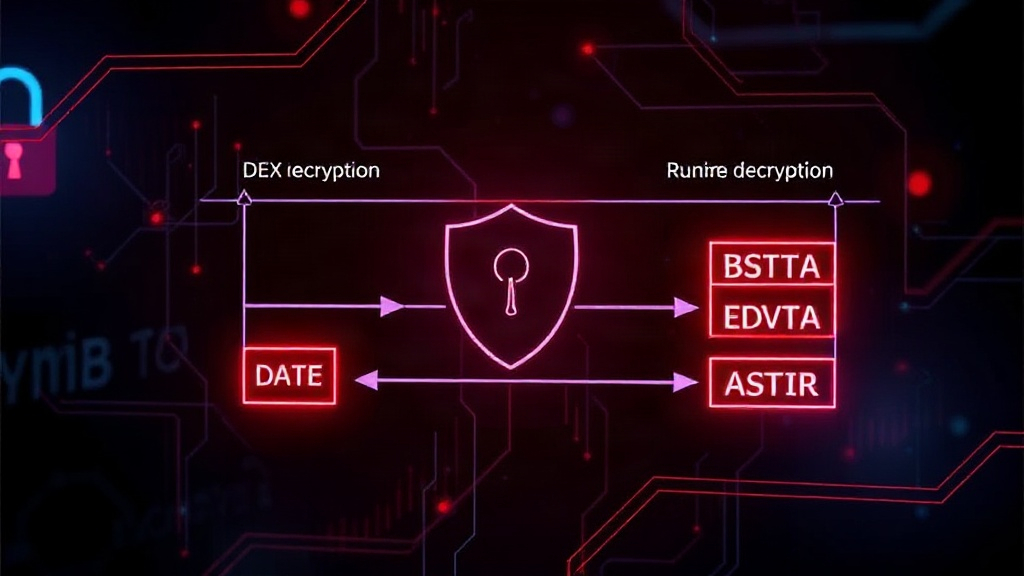
DEX encryption primarily addresses the challenge of extracting application code directly from the APK file. In a standard Android application, the compiled Java or Kotlin code is packaged into Dalvik Executable (DEX) files. These files are relatively straightforward to decompile using tools like JADX, allowing attackers to view and understand the application's logic, algorithms, and sensitive data handling. DEX encryption combats this by ensuring that the DEX files are not stored in plain text within the APK. Instead, they are obfuscated or encrypted. At runtime, the application's loader is responsible for decrypting and loading these DEX files into memory. This process significantly increases the difficulty of static analysis. An attacker attempting to decompile the APK will find encrypted blobs rather than readable code. However, the core logic of the application must still be executed, meaning the decryption and loading process itself becomes a target for analysis. Attackers can potentially intercept or analyze the runtime decryption mechanism to reconstruct the original code, making DEX encryption a deterrent rather than an impenetrable barrier.
Virtual Machine Protection (VMP): A Deeper Layer of Security
Virtual Machine Protection (VMP) takes a more sophisticated approach. Instead of merely encrypting the DEX files, VMP transforms critical sections of the application's code into a custom bytecode that runs on a virtual machine embedded within the application itself. This virtual machine is unique to the protector and executes this custom bytecode. The original DEX code is often still present but is heavily obfuscated or even converted into instructions for this internal VM. This method goes beyond simple code hiding. When an attacker tries to decompile the code, they are not just looking at encrypted DEX files; they are looking at instructions for an unknown virtual machine that does not exist outside the protected application. Analyzing this custom bytecode requires understanding not only the application's logic but also the intricate workings of the VMP's virtual machine. This significantly raises the bar for reverse engineering. Attackers cannot rely on standard decompilers like JADX because the code they see is not standard Dalvik bytecode. They would need to perform extensive binary analysis, emulate the custom VM, and then reconstruct the original logic, a process that is orders of magnitude more complex and time-consuming than analyzing decrypted DEX code.
Key Differences and Use Cases
The fundamental difference lies in their objective and execution. DEX encryption focuses on making static analysis of the APK difficult by hiding the DEX files. It's akin to locking your house and hiding the key; the house is harder to get into, but once someone finds the key and unlocks the door, they can see everything inside. VMP, on the other hand, fundamentally changes how the code is executed. It's like replacing your house's doors and windows with a complex, custom-built security system that requires a unique, unknown key to operate. Even if an attacker gets inside, the internal structure is unrecognizable and incomprehensible without understanding the custom system.
Consider the implications for different types of applications:
- DEX Encryption: Suitable for applications where the primary threat is casual code extraction and decompilation. It's effective against hobbyists or less sophisticated attackers looking to quickly understand an app's functionality or steal assets. It's generally faster to implement and has less impact on runtime performance compared to VMP.
- VMP: Ideal for applications containing highly sensitive intellectual property, critical business logic, or valuable algorithms. This includes financial applications, anti-cheat systems, digital rights management (DRM) protected content, and enterprise software where preventing piracy and IP theft is paramount. VMP offers a much higher level of protection but often comes with a greater performance overhead and can be more complex to integrate.
Performance and Integration Considerations
When choosing an app protector, performance overhead is a critical factor. DEX encryption typically has a minimal impact on application startup time and runtime performance. The decryption process happens quickly during loading. VMP, however, can introduce noticeable overhead. The custom virtual machine needs to interpret or translate the protected bytecode into native instructions, which can slow down execution, particularly for computationally intensive tasks. Developers must carefully benchmark their applications after VMP implementation to ensure the performance degradation is acceptable for their user base. Integration complexity also varies. Basic DEX encryption can often be integrated with relative ease, sometimes as a simple post-build step. VMP solutions may require more in-depth integration, potentially involving code refactoring or specific build pipeline configurations. The choice between the two often involves a trade-off between the desired security level and acceptable performance and integration effort. For most applications, a robust DEX encryption solution might be sufficient. For those with mission-critical IP, VMP becomes a necessary consideration, provided the performance impact is manageable.
The Unanswered Question of Runtime Analysis
While VMP significantly complicates reverse engineering, it's crucial to acknowledge that no system is entirely unbreachable. The core challenge for all app protectors is that the code must eventually run on the device's hardware. This means that even with VMP, a determined and skilled attacker with sufficient time and resources might eventually be able to analyze the runtime behavior of the virtual machine and its instructions. The question that remains is not whether VMP can be broken, but rather, at what cost and how much time it takes. The goal of advanced protection like VMP is to raise that cost so high that it becomes economically unfeasible for most attackers. The arms race between protectors and reverse engineers is ongoing, and the effectiveness of any solution depends on its implementation and the sophistication of the threats it faces.
Conclusion: Balancing Security and Usability
Choosing the right Android app protector involves understanding the specific threats your application faces and the level of protection required. DEX encryption offers a strong first line of defense against common code extraction, providing a good balance of security and performance for many applications. VMP provides a significantly higher level of security by transforming code execution, making it the preferred choice for applications with highly sensitive intellectual property or critical business logic. Developers must weigh the enhanced security of VMP against its potential performance overhead and integration complexity. Ultimately, the best protection strategy is one that aligns with the application's value, the threat landscape, and the user experience.