
Demystifying Backend Systems: A Structured Approach
For years, developers have navigated the intricacies of backend systems, building and deploying microservices, designing APIs, and implementing robust data protection strategies. While daily work involves these technologies, the ability to articulate their function and interplay is a different skill. A new series on Dev.to, initiated by Ilya Mikhasik, seeks to bridge this gap.
This series is not merely a catalog of tools or frameworks. Instead, it offers a structured exploration of backend systems as they function in real applications. The core objective is to illuminate how various components collaborate and the rationale behind specific architectural and design choices. This approach moves beyond surface-level descriptions to provide a deeper understanding of system design principles.
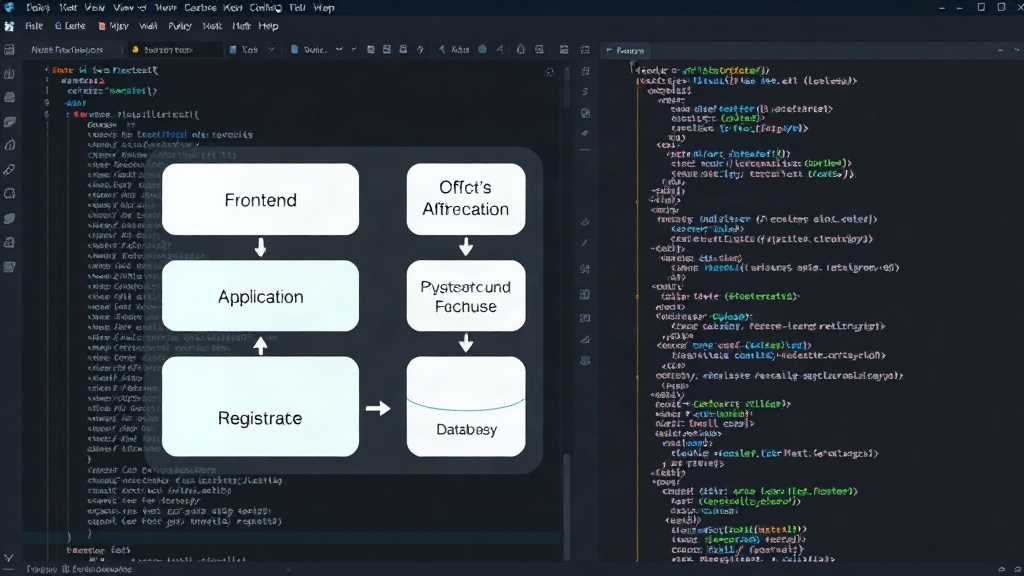
The series begins with a foundational overview of system architecture. It breaks down a typical system into distinct layers: frontend, application, registry, and database. This layered approach helps in understanding the separation of concerns and how responsibilities are distributed across these layers. For instance, the frontend handles user interaction, while the application layer manages business logic, and the database layer persists data. The registry layer often plays a crucial role in service discovery and management within a microservices environment.
A key focus will be the graph-like data model employed to represent entities and their complex relationships. Unlike traditional relational databases that rely on tables and rows, a graph model treats data as nodes (entities) and edges (relationships). This structure is particularly powerful for systems where connections between data points are as important as the data itself, enabling more intuitive querying and analysis of interconnected information. Think of it less like a spreadsheet and more like a meticulously mapped family tree, where every individual is connected to others through various familial bonds.
Automating CRUD Operations with the Registry Factory
Further delving into the practical implementation, the series will cover the Registry Factory, a custom-developed tool designed to automate the creation of Create, Read, Update, and Delete (CRUD) operations. In microservice architectures, managing data consistency and providing uniform access to data across different services can be challenging. Developers often write boilerplate code for these basic data manipulation functions repeatedly.
The Registry Factory aims to streamline this process. By automating the generation of CRUD functions, it reduces repetitive coding tasks, minimizes the potential for human error in implementation, and ensures a consistent interface for data access. This not only speeds up development but also enhances the maintainability of the codebase. The factory likely leverages metadata or definitions of entities to generate the necessary code, abstracting away the low-level database interactions.
This automation is particularly valuable in dynamic environments where services and data models evolve rapidly. The ability to quickly generate or update data access logic allows development teams to adapt more swiftly to changing requirements. It represents a move towards more declarative development, where developers define the desired state or structure, and the factory handles the imperative steps to achieve it.
Beyond Core Architecture: Data Protection and Service Integration
The series will also address critical aspects such as data protection and service integration. In today's regulatory landscape, safeguarding sensitive information is paramount. This involves not only securing data at rest and in transit but also implementing policies and mechanisms for data governance, privacy, and compliance. The series will likely touch upon encryption techniques, access control mechanisms, and potentially data masking or anonymization strategies, depending on the specific system's requirements.
Service integration is another cornerstone of modern distributed systems. Microservices must communicate effectively with each other to fulfill complex business processes. This involves choosing appropriate communication patterns, such as synchronous REST APIs or asynchronous messaging queues, and managing inter-service dependencies. The series will likely explore how these services are designed to interact, the protocols they use, and strategies for ensuring reliable and resilient communication, especially in the face of network failures or service outages.
The practical challenges of integrating disparate services, each potentially developed with different technologies or by different teams, require careful planning and robust architectural patterns. This includes considerations for API versioning, contract management, and error handling across service boundaries. The series aims to provide insights into how these challenges are tackled in a real-world context, moving beyond theoretical discussions to practical, battle-tested solutions.
The Value Proposition for Developers and Architects
This Dev.to series offers a valuable resource for backend developers, system architects, and anyone involved in building or maintaining complex software systems. By focusing on the practical application of technologies and the reasoning behind design decisions, it provides a learning experience that is both educational and actionable.
The structured approach, starting from architecture and moving through data modeling, CRUD automation, data protection, and service integration, ensures a comprehensive understanding. For developers looking to deepen their knowledge of microservices, distributed systems, and data management, this series promises to be an insightful guide. It addresses the common challenge of understanding how individual components fit into the larger system, offering clarity on the 'why' behind the 'what' in modern software engineering.
The decision to share these insights publicly on a platform like Dev.to is commendable. It democratizes knowledge that is often gained through years of hands-on experience, making complex topics more accessible to a wider audience. This initiative is particularly relevant for junior to mid-level engineers seeking to advance their careers and for senior engineers looking to refine their understanding or discover new approaches.
What remains to be seen is how the series will tackle the inevitable trade-offs inherent in any system design. Every architectural decision involves compromises, and understanding these trade-offs—for example, the performance implications of a graph database versus a relational one, or the complexity introduced by asynchronous messaging—is crucial for making informed choices. The series' ability to articulate these trade-offs will be a key indicator of its depth and practical value.