Bridging the Gap in AI-Assisted Development
Most production applications do not live in a single, monolithic repository. Instead, they are composed of multiple, independent Git repositories. A single feature might require changes across the frontend, backend, shared libraries, and infrastructure code. While this polyrepo structure enforces clear ownership and modularity, it presents a significant challenge for AI coding assistants. Traditionally, these tools operate within the confines of a single repository, blind to the broader system context. This limitation hinders their ability to understand the full scope of a project and make coordinated changes across different parts of an application.
DevSwarm aims to solve this problem with its new Multi-Repo Workspaces feature. This innovation allows developers to bundle several Git repositories into a unified workspace. Crucially, each repository retains its autonomy, preserving its unique history, branching strategy, remote configurations, CI/CD pipelines, and pull request workflows. This means developers don't need to compromise their existing operational practices or migrate to a monorepo structure to leverage the power of cross-repository AI coding.
Contextual AI Across Your Entire Stack
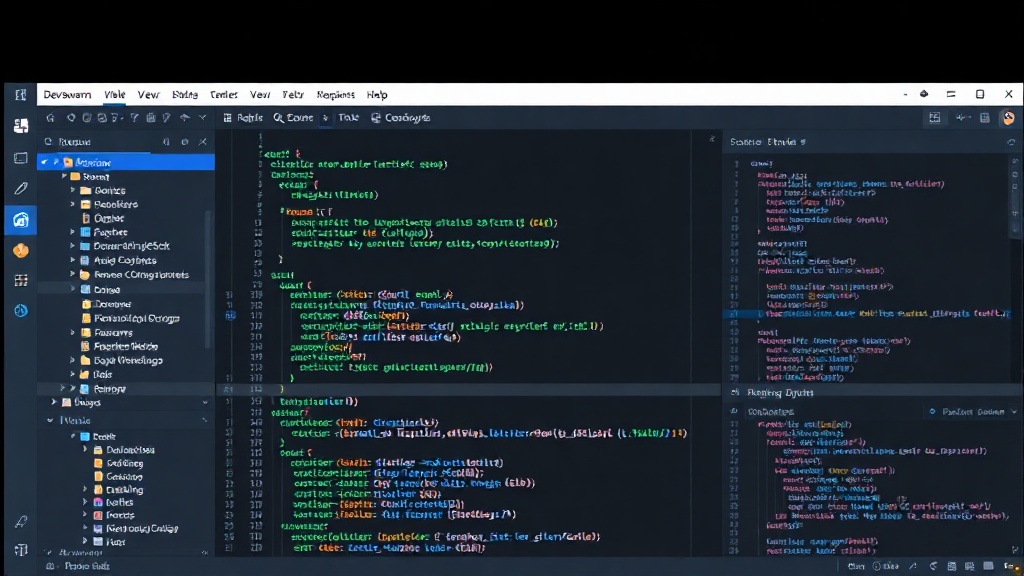
The core benefit of Multi-Repo Workspaces lies in providing AI coding agents with a holistic view of a developer's project landscape. Whether using Claude Code, GitHub Copilot, or other supported agents, the AI now has visibility into the interconnectedness of your codebase. This comprehensive context enables the AI to suggest and implement changes that span multiple repositories, ensuring consistency and reducing the manual effort required to coordinate updates across different services or modules.
Imagine an AI agent identifying a performance bottleneck in a backend service and then suggesting optimizations not only in the service's code but also in the frontend components that interact with it, or even updating a shared configuration file in a separate infrastructure repository. This level of coordinated action was previously impossible with single-repo AI tools. DevSwarm's approach makes AI coding assistance truly system-aware, mimicking how human developers would approach complex, multi-component tasks.
Seamless Workflow Integration
DevSwarm’s Multi-Repo Workspaces are designed for minimal disruption. The feature emphasizes maintaining the integrity of existing Git workflows. Developers can continue to work with their preferred Git commands, branches, and remotes for each individual repository. The AI's contributions are presented as standard code changes within each repository, allowing for familiar review processes. This means pull requests and code reviews happen in their usual locations, whether that's GitHub, GitLab, or another platform.
After an AI agent has made changes across multiple repositories, developers can review all the proposed modifications in a consolidated view. This central dashboard allows for efficient assessment of the AI's work, enabling comments, suggestions, and independent merging of changes for each repository. The system avoids forcing a monolithic approach, respecting the distributed nature of modern software development and ownership models. This flexibility is key for teams already operating with a polyrepo strategy, as it offers immediate value without requiring a significant overhaul of their development infrastructure or practices.
The Future of Collaborative AI Development
The implications of this feature extend beyond mere convenience. By enabling AI to understand and operate across distributed codebases, DevSwarm is paving the way for more sophisticated AI-driven development workflows. This could lead to faster debugging, more efficient feature development, and improved code quality across complex systems. The ability to manage AI-assisted changes from multiple repositories within a single interface streamlines the review and integration process, reducing cognitive load for developers.
The challenge of AI agents understanding complex, multi-repo systems has been a significant hurdle. DevSwarm's solution directly addresses this by treating a collection of repositories as a single, coherent workspace for the AI, while preserving the independent operational characteristics of each repository. This approach respects the established practices of teams that have adopted polyrepo architectures for good reasons, such as clear ownership, independent deployment cycles, and manageable codebases. The question remains how other platforms will adapt to this multi-repo paradigm, and whether this will become the de facto standard for AI coding tools operating on non-monolithic projects.