
The Problem: Tutorial Hell
Many developers find themselves stuck in a loop of consuming tutorials without ever building substantial projects. This 'tutorial hell' leaves them with theoretical knowledge but lacking practical experience. The sheer volume of available tutorials can be overwhelming, and it's often difficult to know which ones are relevant or how to apply the learned concepts to real-world scenarios. This gap between learning and doing is a significant barrier to skill development and confidence building in the tech industry.
DevStacker's Solution
DevStacker aims to break this cycle by offering a structured approach to learning through building. The platform is designed to guide users through complete, real-world projects, from conception to completion. Instead of passively watching videos, developers will actively engage with project requirements, code implementation, and problem-solving. The core idea is to transition users from a consumption-based learning model to a creation-based one.
How It Works
While specific features are still under development, the concept behind DevStacker revolves around providing curated project pathways. Users will likely select a project based on their skill level and interests. The platform will then break down the project into manageable steps, offering guidance, code snippets, and explanations as needed. This approach mimics the experience of working on a real development task, where challenges are presented incrementally and solutions are discovered through active problem-solving. Think of it less like a textbook and more like having a senior developer guiding you through your first major assignment, providing just enough help to get you unstuck without giving away the entire solution.
Target Audience and Feedback
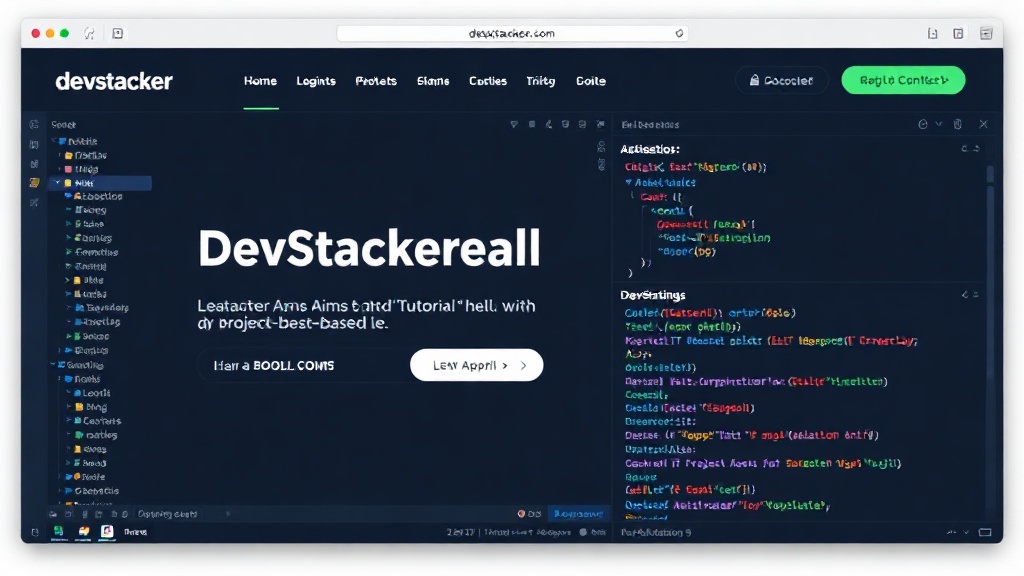
The target audience for DevStacker is broad, encompassing aspiring developers, junior engineers, and even experienced professionals looking to pick up new technologies or solidify their understanding. The developer behind DevStacker is actively seeking 'brutally honest feedback' from the developer community. Key questions include the initial impression of the app's concept, the perceived interestingness of the idea, clarity of the landing page, and ultimately, the likelihood of adoption. This feedback loop is crucial, especially with a planned launch date of July 20, 2026, allowing ample time for iteration and improvement based on user input.
The 'Tutorial Hell' Phenomenon
The term 'tutorial hell' has become a common lament in developer communities. It describes the frustrating experience of completing numerous online tutorials, gaining familiarity with syntax and basic concepts, but failing to develop the ability to independently build applications or solve novel problems. This often stems from tutorials that provide step-by-step instructions without encouraging critical thinking or adaptation. DevStacker's project-centric model directly addresses this by forcing users to think critically, make decisions, and overcome obstacles inherent in building something from scratch, albeit with guided support.
Potential Impact and Future Development
If DevStacker can effectively deliver on its promise, it could significantly impact how developers learn and upskill. By bridging the gap between theoretical knowledge and practical application, it could accelerate career progression and foster greater innovation. The success will hinge on the quality and variety of projects offered, the intuitiveness of the guidance system, and the platform's ability to adapt to evolving technologies and developer needs. The pre-launch feedback phase is a critical step in ensuring the product aligns with market demand and effectively solves the 'tutorial hell' problem.
What's Next?
With over two years until its planned launch, DevStacker has a significant window for refinement. The developer's proactive approach to soliciting candid feedback suggests a commitment to building a valuable tool. Developers interested in escaping tutorial hell should consider exploring the DevStacker website and providing their input. The collective wisdom of the community will be instrumental in shaping this promising new learning platform.