The Problem: Cloud-Dependent Network Scanners
Many existing network scanning tools force users into cloud accounts and recurring subscriptions, even for basic local network analysis. This model raises privacy concerns and can be prohibitively expensive for individuals or small teams needing to understand their immediate network topology. The developers behind DeviceShelf found this approach restrictive, prompting them to create an alternative that prioritizes local data storage and user privacy.
DeviceShelf: A Local-First Architecture
DeviceShelf is designed from the ground up to be a local-first application. This means all scanning, analysis, and data storage occur directly on the user's machine. The core scanning engine is written in Go, leveraging its performance and concurrency capabilities. This core handles essential network discovery tasks including ARP/ping sweeps, port scanning, service identification, DHCP fingerprinting, SNMP queries, and the crucial device identification logic.
One Core, Three Front-ends
The power of DeviceShelf lies in its modular architecture. A single Go backend serves as the foundation, providing a consistent scanning and analysis engine. This core is then presented through three distinct front-end technologies, catering to different user environments:
Desktop: Go with Wails
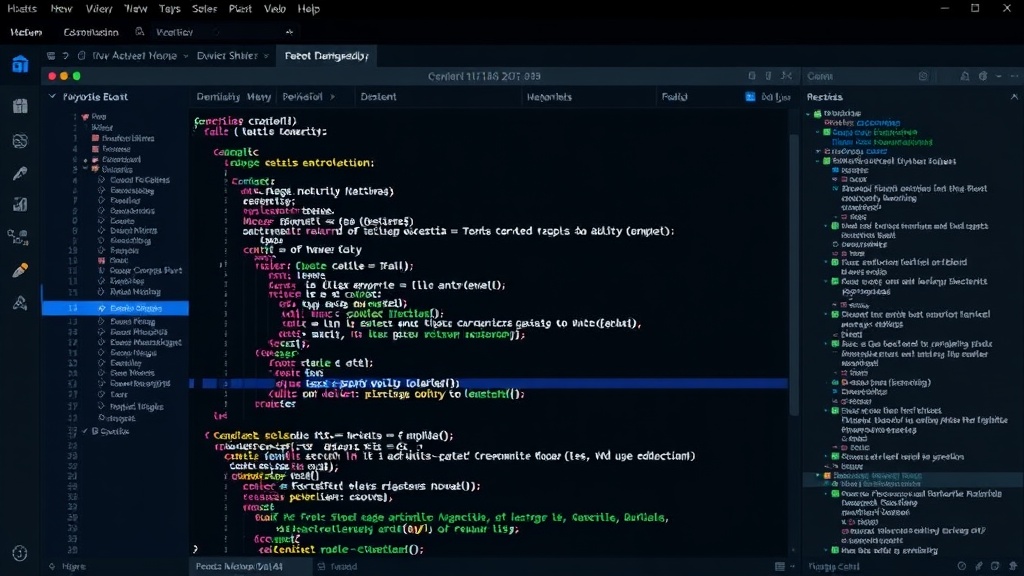
For desktop operating systems (macOS, Windows, Linux), DeviceShelf employs Wails. Wails is a framework that allows developers to build cross-platform desktop applications using Go on the backend and standard web technologies (HTML, CSS, JavaScript) for the user interface. This approach enables the same Go scanning engine to be packaged and deployed across multiple desktop platforms without requiring separate native rewrites for each. The web UI provides a familiar and interactive experience for users managing their local networks.
Mobile: Flutter for Cross-Platform Apps
On the mobile front, DeviceShelf utilizes Flutter. Flutter is Google's UI toolkit for building natively compiled applications for mobile, web, and desktop from a single codebase. The mobile applications communicate with the core concepts of DeviceShelf, mirroring a significant portion of the identification logic. This mirrored logic is unit-tested on both the Go backend and the Flutter front-end to ensure consistent behavior across platforms. The use of Flutter allows for a unified development experience and a consistent user interface across iOS and Android devices.
Headless Operation for Automation
Beyond graphical interfaces, DeviceShelf also offers a headless build of its Go core. This headless version is designed for environments where a graphical user interface is not necessary or desirable, such as on servers or within automated workflows. It allows users to run the scanning and analysis engine programmatically, integrating its capabilities into larger systems or scripts for continuous network monitoring and data collection without manual intervention.
Key Scanning and Identification Features
The Go core of DeviceShelf is packed with sophisticated network analysis tools:
- ARP/Ping Sweep: Quickly discovers active devices on the local network by sending ARP requests and ICMP pings.
- Port Scanning: Identifies open ports on discovered devices, indicating running services.
- Service Probing: Attempts to determine the type and version of services running on open ports.
- DHCP Fingerprinting: Analyzes DHCP requests to gather information about client devices.
- SNMP: Queries devices that support the Simple Network Management Protocol for detailed configuration and status information.
- Device Identification: A core component that analyzes gathered data (MAC addresses, open ports, service banners, SNMP data) to identify the make, model, and operating system of devices. This logic is crucial for presenting a user-friendly overview of the network.
The 'Local-First' Advantage
The decision to build a local-first scanner addresses several critical user needs. Firstly, it significantly enhances privacy. By keeping all network data on the user's machine, the risk of sensitive network information being exposed or misused by a third-party cloud provider is eliminated. Secondly, it offers cost savings; there are no subscription fees or cloud storage charges associated with using DeviceShelf. This makes it an accessible tool for a wide range of users, from home network enthusiasts to small IT departments. The independence from cloud services also means that DeviceShelf functions reliably even without an internet connection, as long as the local network is operational.
Developer Experience and Modularity
The choice of Go for the core provides a robust and efficient backend. Its strong concurrency primitives are well-suited for network I/O-intensive tasks. Wails offers a streamlined path to creating desktop applications that feel native while leveraging web development skills, reducing the learning curve for frontend developers. Flutter provides a similar advantage for mobile development, enabling rapid iteration and a consistent look and feel across iOS and Android. The mirrored logic between the Go core and Flutter front-end is a testament to disciplined development, ensuring that device identification is accurate and consistent regardless of where the user is accessing it. This modularity also suggests potential for future expansion, perhaps to other platforms or by adding more specialized scanning modules.
What's Next?
DeviceShelf represents a clear shift away from the trend of mandatory cloud integration for local network tools. By focusing on privacy, cost-effectiveness, and cross-platform accessibility, it offers a compelling alternative for anyone needing to understand their local network environment. The architecture, with its unified Go core and multi-platform front-ends, is a smart approach to building complex applications efficiently. The surprising detail here is not the technical stack itself, but the deliberate choice to eschew cloud dependencies entirely, a move that directly addresses a growing user concern about data privacy.