The Unheralded Work on Non-Autoregressive Decision Models
The AI community is abuzz with a new class of models: non-autoregressive architectures capable of lightning-fast probability predictions over structured JSON schemas, eschewing traditional text generation. This surge of interest, however, is met with a mix of validation and profound frustration from developers who laid the groundwork long before the current hype cycle. One such individual is Nandakishor M., who detailed his work on these very models a full year ago.
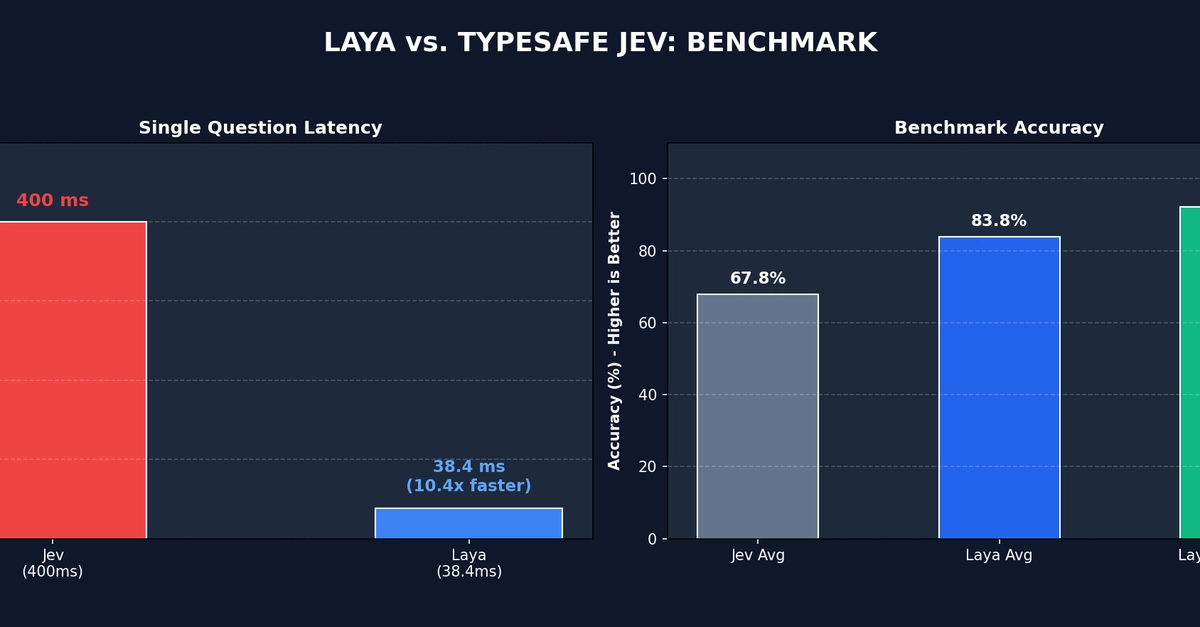
In March 2025, Nandakishor published an arXiv paper (arXiv:2503.23303) detailing his research into non-autoregressive decision models, specifically employing Reinforcement Learning (RL) conversion trajectories. This research culminated in the development and release of an open-weight System 1 decision engine. This engine could reportedly achieve prediction times under 40 milliseconds, operating on a structured JSON schema. The model weights were made publicly available on Hugging Face under the name sales-conversion-model-reinf-learning by DeepMostInnovations.
The core innovation lies in shifting away from sequential, autoregressive generation. Traditional models, like those used for text generation, predict one token at a time, creating a dependency chain. Non-autoregressive models, in contrast, can predict all outputs in parallel, leading to dramatic speed improvements. When applied to decision-making tasks—predicting probabilities, classifications, or structured outputs based on input—this parallel prediction capability enables near-instantaneous responses. This is particularly valuable for applications demanding real-time interaction, such as sales conversion prediction, where milliseconds can mean the difference between engagement and lost opportunity.
Nandakishor's work specifically leveraged RL to optimize these conversion trajectories. This approach likely involved training an agent to navigate a state space representing customer interactions, aiming to maximize a reward signal (e.g., conversion probability). The non-autoregressive nature of the final model allowed it to output the predicted outcome directly, bypassing the sequential decoding steps common in other generative approaches. The focus on a structured JSON schema for output further streamlines downstream processing, making the model directly usable in applications without extensive parsing or reformatting.
The Frontier Lab Hype
The recent attention from a prominent frontier AI lab, which has labelled similar work as a "breakthrough," highlights a common pattern in AI research and development. Innovations developed by individual researchers or smaller teams can sometimes languish in obscurity until larger, more visible institutions reframe or popularize them. This phenomenon can be disheartening for the original creators, who invested significant time and effort without immediate widespread recognition or validation.
The frustration stems from the implicit narrative that the frontier lab's work is entirely novel. While the lab's contribution might involve scaling, novel architectural tweaks, or a particularly effective training methodology, the fundamental concept of non-autoregressive prediction for structured outputs, and its application to decision tasks, was demonstrably present in Nandakishor's prior work. The speed claims—under 40ms—are particularly noteworthy, suggesting a highly optimized implementation that rivals or surpasses human reaction times in specific decision contexts.
This situation raises questions about how the AI community acknowledges and credits foundational research. The arXiv preprint server and platforms like Hugging Face are crucial for disseminating research and code, but they lack the institutional weight and marketing power of major AI labs. When a well-known lab publishes research, it often triggers a cascade of media attention, investor interest, and further academic exploration, effectively overshadowing earlier, independent contributions.
The specific application domain mentioned, sales conversion, is a prime example of where fast, accurate predictions can have a direct business impact. Imagine a system that can predict, in real-time, the likelihood of a website visitor converting based on their behavior, demographics, and interaction patterns. Such a system could dynamically adjust website content, offers, or sales outreach strategies. Nandakishor's model, with its sub-40ms latency, is precisely the kind of tool that could power such sophisticated, responsive systems.
Implications for Developers and the AI Landscape
The emergence of these fast, non-autoregressive decision models has significant implications. For developers, it signals a shift towards architectures that prioritize speed and direct structured output over complex sequential generation. This opens up new possibilities for real-time AI applications that were previously infeasible due to latency constraints.
The fact that Nandakishor's model is open-weight is critical. It means developers can directly access, experiment with, and build upon this technology without proprietary restrictions. This democratizes access to advanced AI capabilities, allowing smaller teams and individual researchers to compete with larger organizations. The challenge for developers now is to understand how to best leverage these models, potentially integrating them into existing workflows or building entirely new applications that capitalize on their speed and efficiency.
What remains unaddressed is the broader impact on the research ecosystem. When independent researchers' work is effectively rediscovered and rebranded by larger entities, it could disincentivize open contribution. Why invest months in meticulous research and open-sourcing if the recognition and subsequent development momentum will only materialize when a major lab picks it up? This dynamic warrants a closer look at how credit is assigned and how early-stage, independent innovation is amplified within the AI community.
The rapid advancement in non-autoregressive models, exemplified by Nandakishor's year-old work and the subsequent attention it has garnered, points to a future where AI decision-making is faster, more efficient, and more accessible. The key takeaway for practitioners is to stay attuned to these architectural shifts and to recognize the value of open-source contributions that may precede mainstream trends.