
The Problem: AI Opinions, Not Answers
For months, the developer behind the new iOS app 'War Table' wrestled with a common AI paradox: using advanced models for crucial decisions, not just menial tasks. The problem wasn't a lack of AI capability, but an overabundance of conflicting opinions. Whether deciding on taking a contract or pursuing a new idea, the answer often depended on which model was queried and when. GPT-5 might say 'go,' while Claude suggested 'wait,' and Gemini offered a hedged response. This wasn't providing clarity; it was presenting one AI's confident, yet ultimately personal, opinion as fact.
This experience revealed a fundamental flaw in how many developers were leveraging AI for strategic choices. Instead of definitive guidance, they were receiving a stream of subjective viewpoints, leading to indecision or the adoption of a flawed strategy based on the most persuasive output. The developer realized that the true signal wasn't in the consensus, but in the dissent.
The Solution: War Table - Amplifying Disagreement
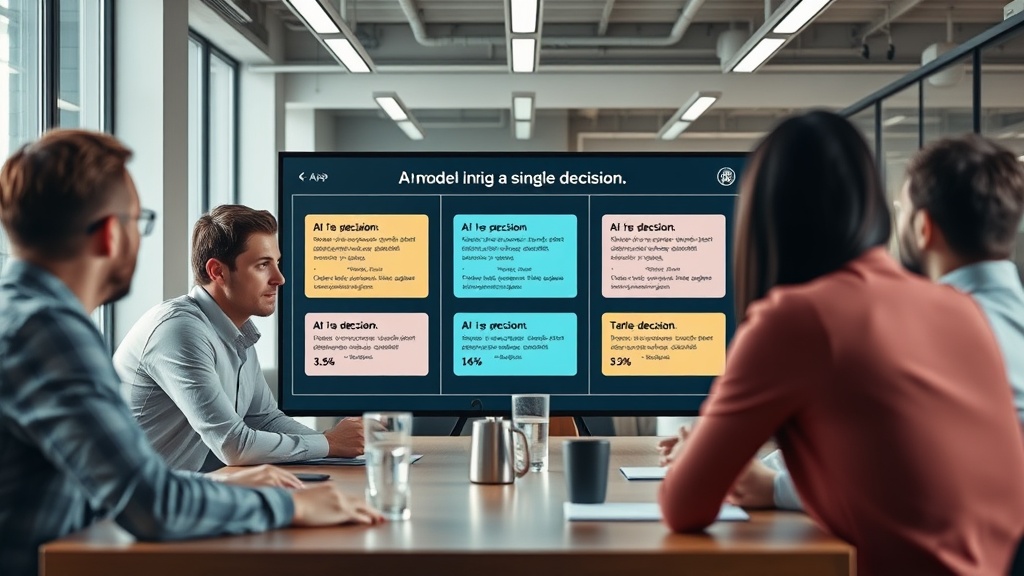
The antidote to this AI opinion-paralysis is 'War Table,' an iOS application designed to do the opposite of smoothing over differences. The core concept is simple yet powerful: present a single, hard decision to multiple AI models simultaneously, and then highlight where they diverge. Users input a specific decision they are grappling with. The app then deploys five distinct AI models—Claude, GPT-5, Gemini, Grok, and Qwen—to argue for or against the decision from locked roles across three distinct rounds.
Instead of aggregating these arguments into a single, sanitized verdict, 'War Table' intentionally preserves and visualizes the disagreements. The developer found that the points of contention, the models that broke from the pack, were invariably the most insightful. These dissenting voices often pointed towards overlooked risks, unconsidered alternatives, or the fundamental flaws in an initial plan that the consensus had glossed over. This approach transforms AI from a potential oracle into a structured debate partner, where the friction between different perspectives reveals the most critical insights.
From Concept to App Store: A Developer's Journey
The journey from identifying this AI dilemma to shipping a functional app was arduous. Months were spent in development, iterating on the prompt engineering, the model orchestration, and the user interface. The goal was to create an experience that felt intuitive, even when dealing with complex AI interactions. The final product, which went live on the App Store this morning, aims to provide a tangible tool for anyone facing difficult choices, whether they are founders, product managers, or individual contributors.
The app is available for free to start, allowing users to experience its core functionality without immediate financial commitment. This tiered approach lowers the barrier to entry, encouraging wider adoption and feedback. The developer expressed that seeing the app live on the App Store still feels surreal, a testament to the dedication and effort invested over the past several months. This launch marks a significant milestone, not just for the developer, but potentially for how individuals can harness AI for more robust decision-making.
The Future of AI-Assisted Decision-Making
The implications of 'War Table' extend beyond its immediate utility. It suggests a paradigm shift in how we interact with large language models. Rather than seeking a single 'correct' answer, the future may lie in leveraging the diverse biases and perspectives of multiple models to triangulate truth. This approach acknowledges that AI, much like human experts, operates with inherent limitations and viewpoints. By making these differences explicit, 'War Table' empowers users to critically evaluate AI outputs and make more informed, strategic decisions.
The success of this model could inspire further development in AI tools that focus on critical thinking and reasoned debate, rather than simply information retrieval or content generation. As AI becomes more integrated into professional workflows, tools that enhance judgment and highlight blind spots will become increasingly valuable. The developer's initiative to build an app that actively surfaces AI disagreement offers a compelling glimpse into this future.