
Consolidating Life Management: The AI-Centric Repository
The traditional approach to personal digital life involves a scattered collection of apps and tools, each siloed and requiring individual management. For one developer, this fragmentation became a problem, leading to an innovative solution: consolidating all aspects of his life – from journaling and self-analysis to investing and parenting – into a single Git repository. The radical aspect of this approach is that the repository is not primarily written for human consumption, but for AI agents, specifically using Claude Code.
This unified repository acts as a central knowledge base. By breaking down the AI's role, the developer found that disparate applications and data streams could finally connect. Instead of managing separate apps for journaling, investing, or parental leave documentation, everything now resides in one interconnected system. The primary reader of this repository is the AI, not the developer himself. This shift in perspective allows for a more integrated and efficient management of personal data and tasks.
The author built this system to solve his own problems. Each component, from investment tracking to managing parental leave notes, began as a small application designed to address a specific personal need. During an extended period of parental leave, he had the time to integrate these disparate tools into a single, cohesive system. This post serves as a high-level overview, detailing the rationale behind this unified approach and the fundamental mechanics of how it operates. Detailed 'how-to' guides for individual components will follow in separate articles.
The "Why": Unifying Disparate Life Domains
The decision to bundle everything into one repository stems from a core principle: starting with problems experienced in his own home. This developer's projects are inherently practical, designed to solve personal pain points. When faced with managing multiple distinct applications for different life areas, the inefficiency and data siloing became apparent. Bringing these functions under one roof, managed by AI, offered a solution.
The key insight is that by ceasing to write for humans and instead optimizing for AI comprehension, the data becomes more fluid. Journal entries, investment notes, and parenting records transform from isolated data points into a unified knowledge graph that an AI can traverse and leverage. This cross-pollination of data allows for emergent insights and automations that would be difficult or impossible to achieve with separate systems. For instance, an AI could potentially correlate investment performance with personal well-being metrics derived from journal entries, or track parenting milestones against productivity data.
This unified approach is not merely about convenience; it’s about creating a more intelligent and responsive personal operating system. The AI, acting as the central operator, can understand context across different domains, enabling more sophisticated analysis and action. This move fundamentally changes how personal data is organized and utilized, shifting from a human-centric, task-specific model to an AI-centric, holistic management system.
The "How": Architecture and Operation with Claude Code
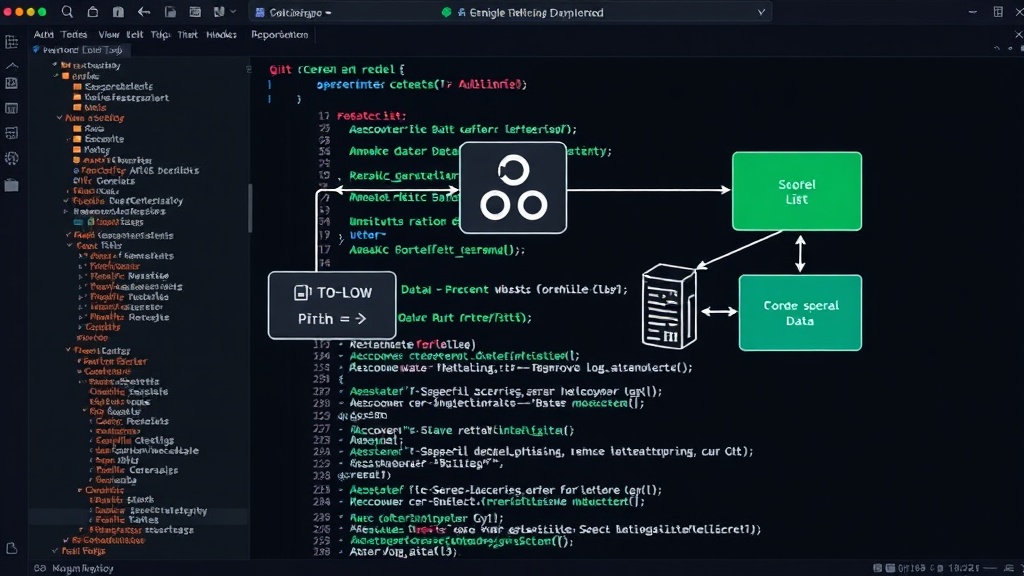
The system operates on the premise that the Git repository serves as the single source of truth. All data, whether it's daily journal entries, investment portfolio updates, or notes on child development, is committed to this repository. The primary interface for interacting with and managing this data is Claude Code, an AI model capable of understanding and executing code, and processing natural language instructions.
Claude Code agents are tasked with specific functions. For example, one agent might be responsible for parsing new journal entries, extracting sentiment and key themes, and updating a personal analytics dashboard. Another agent could monitor investment data, analyze market trends based on news feeds, and flag potential opportunities or risks. A third agent might manage parenting-related information, such as tracking developmental milestones or scheduling appointments, and cross-referencing them with the developer's work calendar.
The repository's structure is designed for AI readability. This means using clear, consistent naming conventions, structured data formats (like YAML or JSON where appropriate), and detailed commit messages that explain the changes. While humans can read it, the emphasis is on providing the AI with unambiguous data that it can process efficiently. The AI agents interact with the repository by reading existing data, performing analysis or operations, and then committing new data or code back to the repository. This creates a continuous feedback loop, where the AI's actions are logged and become part of the knowledge base for future operations.
Challenges and Future Directions
Operating one's entire life through an AI-managed repository presents unique challenges. Ensuring data integrity, managing AI agent conflicts, and maintaining the security of such a comprehensive personal data store are critical. The author acknowledges that this is an ongoing experiment, and the system is constantly evolving. The surprising detail here is not the ambition of the project, but the practical implementation and the focus on AI as the primary user, rather than an auxiliary tool.
What remains to be seen is the scalability of this approach. Can it adapt as life becomes more complex, with more demanding work roles or unforeseen personal events? How will the AI agents handle ambiguity or conflicting instructions? The author plans to detail the specific prompts, code structures, and agent configurations in subsequent posts, offering a deeper dive into the technical implementation. For now, the concept itself represents a bold step towards a future where AI is not just a tool, but a core component of personal life management.