
AI-Powered Game Porting Achieved
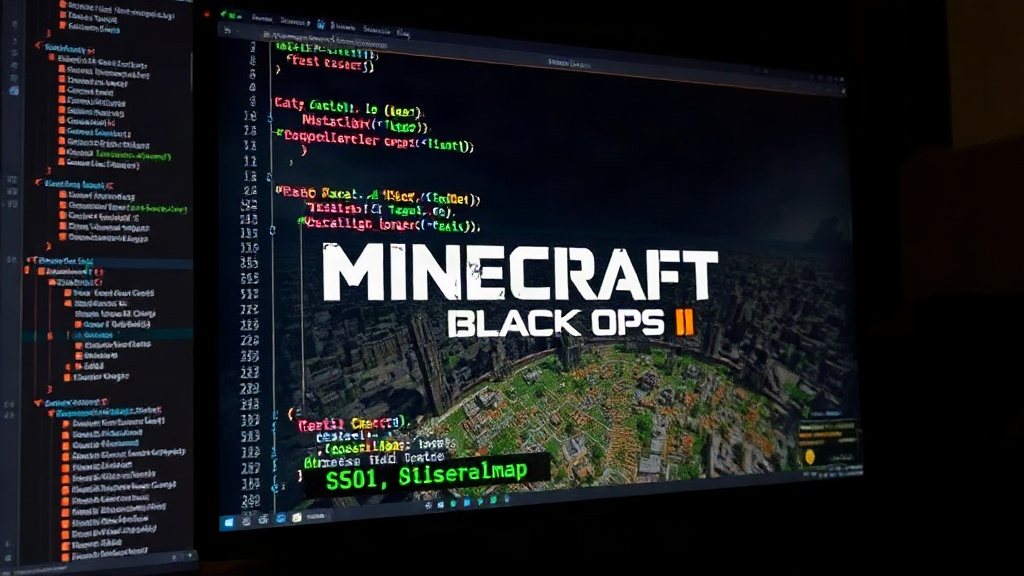
A dedicated developer has achieved a remarkable feat: running the entirety of Call of Duty: Black Ops 2's iconic "Hijacked" map natively within Minecraft. This ambitious project, powered by an AI model referred to as GPT-6 Astra, demonstrates a novel approach to inter-game asset and logic porting. The result is a playable experience, achieving a respectable 45 frames per second by leveraging Minecraft's existing OpenGL rendering context.
The "Hijacked" map, a fan-favorite from the 2012 Call of Duty title, is known for its intricate level design set on a luxury yacht. Recreating such a complex environment, complete with its unique geometry, textures, and interactive elements, within the blocky aesthetic of Minecraft is no small task. This project goes beyond simple asset replacement; it involves translating game logic and ensuring compatibility with a fundamentally different game engine.
The AI model, GPT-6 Astra, appears to have played a pivotal role in this translation process. While the specifics of how Astra was employed remain somewhat opaque, its involvement suggests a sophisticated application of AI in understanding and converting complex game data. This could range from assisting in the conversion of 3D models and textures to interpreting and re-implementing game mechanics and physics within Minecraft's framework.
Technical Implementation Details
The core of this achievement lies in the technical approach. Instead of attempting to build a new rendering engine or a complex intermediary tool, the developer opted to utilize Minecraft's existing OpenGL context. This means that the "Hijacked" map assets and logic are being rendered and processed directly by Minecraft's game client. This method is significantly more efficient than emulating one game within another or relying on external rendering solutions.
Achieving 45 frames per second indicates that the port is not only functional but also offers a playable experience. While not reaching the buttery-smooth 60fps often desired for competitive gaming, 45fps is more than adequate for exploring the map and experiencing its recreated environment. This performance level suggests that the AI-assisted conversion process was relatively efficient and that the rendered assets are not excessively taxing on typical hardware configurations capable of running Minecraft.
The choice of OpenGL is significant. Minecraft has historically relied on OpenGL for its rendering pipeline. By integrating the CoD map within this context, the developer is essentially treating the ported assets as native Minecraft elements, allowing them to be processed by the same rendering calls and shaders. This avoids the overhead associated with running separate applications or complex virtual machine setups.
Implications for Game Modding and AI
This project opens up fascinating possibilities for the future of game modding and the application of AI in creative fields. Historically, porting assets and logic between different games has been a painstaking, manual process requiring deep knowledge of multiple game engines and file formats. AI models like GPT-6 Astra, if capable of understanding and translating such complex inter-game data, could dramatically accelerate this process.
Imagine a future where developers can use AI to seamlessly import environments, characters, or even gameplay mechanics from one game into another. This could lead to unprecedented levels of creativity in fan-made content, allowing for mashups and experiences previously confined to imagination. It also raises questions about intellectual property and the ethical use of AI in repurposing copyrighted game assets.
The success of this port also highlights the growing sophistication of AI in understanding complex, structured data like that found in video games. Game engines are intricate systems with proprietary file formats and unique logic structures. An AI that can parse, interpret, and then reconstruct this information in a new context is a testament to advancements in natural language processing and, potentially, specialized AI architectures designed for data transformation.
Future Potential and Unanswered Questions
While this demonstration is impressive, it also leaves several questions unanswered. The exact architecture and training data of GPT-6 Astra are not detailed, making it difficult to assess the generalizability of this technique. Can Astra port other complex game assets? How much manual intervention was required after the AI's initial conversion?
Furthermore, the performance metrics, while playable, could likely be improved with further optimization. The native integration within Minecraft's OpenGL context is a strong foundation, but specific shader optimizations, mesh simplification, or logic refinements could potentially push the frame rate higher. It remains to be seen if the developer plans to release this mod to the public, allowing other Minecraft players to explore the "Hijacked" map within their own game worlds.
This achievement serves as a powerful proof-of-concept. It suggests that AI is evolving beyond text and image generation into more complex, structured domains like game development. As AI tools become more adept at understanding and manipulating game data, the landscape of digital creation and entertainment could be fundamentally reshaped. The ability to bring elements from disparate gaming universes into a single, cohesive experience is a tantalizing prospect for players and creators alike.