
The State of Third-Party iOS Keyboards
Searching the iOS App Store for a reliable third-party QWERTY keyboard is a dispiriting experience. Most are abandoned, languishing with outdated code and unaddressed bugs. Others are aggressively ad-riddled, turning the simple act of typing into a gauntlet of interruptions. A few feel like crude ports from Android, lacking any native iOS polish or responsiveness. The good ones, few and far between, are defined not by their feature sets but by their stability – they simply don't crash.
Apple's built-in keyboard, refined over fifteen years, sets a high bar. The lack of sustained, dedicated effort from independent developers means the third-party landscape has become a graveyard of half-finished projects and forgotten ambitions. This environment makes it nearly impossible for users to find a viable alternative to the system keyboard, stifling innovation and user choice.
This is the problem developer Omar Machala set out to solve. Recognizing the void, he embarked on building a new kind of keyboard from the ground up, focusing on core functionality and robust engineering. His project, Diction, aims to be more than just another app store entry; it's a statement against the prevailing trends of neglect and poor quality.
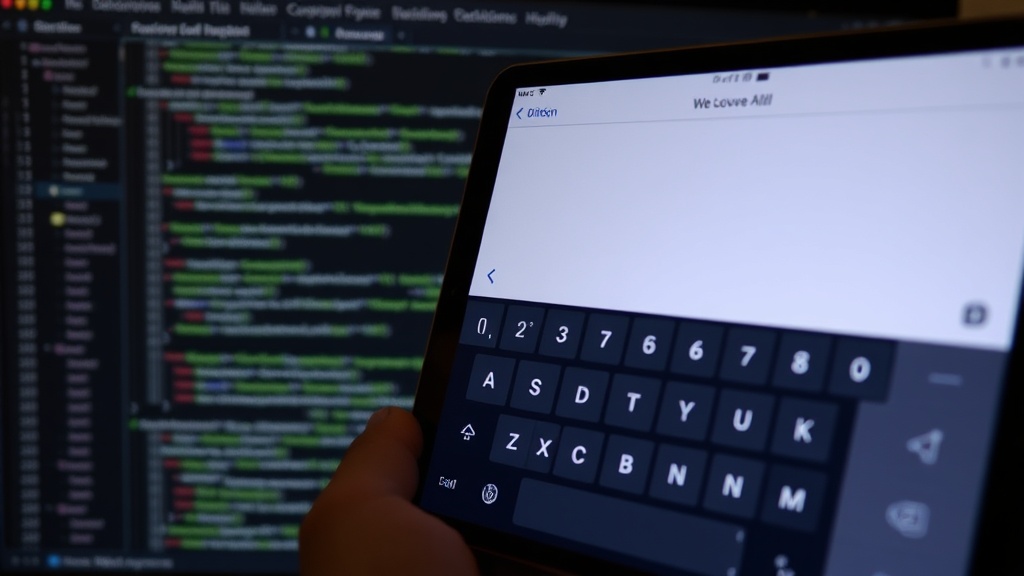
Diction: Beyond the Voice Interface
While Diction is primarily known as a voice keyboard, its ambition extends far deeper. Machala's project is also a serious, low-level QWERTY keyboard initiative. This foundational aspect is the part that rarely gets discussed, yet it's central to Diction's mission. The goal is to create a keyboard that is not only functional but also performant and extensible, built on principles that ensure longevity and reliability.
The decision to build in C++ is a deliberate one, prioritizing performance and control. Unlike Swift or Objective-C, C++ offers a level of abstraction that allows for fine-grained memory management and direct hardware interaction, crucial for a component as performance-sensitive as a keyboard. This choice signals a commitment to building a robust, efficient engine that can power both voice input and traditional typing without compromise.
The development process involves tackling complex challenges inherent to system-level software. This includes managing input events, rendering the keyboard UI efficiently, handling text input states, and integrating sophisticated voice-to-text processing. Each of these components requires meticulous engineering to ensure a seamless user experience.
The Technical Hurdles of Keyboard Development
Building a third-party keyboard for iOS is notoriously difficult. Developers must contend with Apple's strict sandboxing, which limits inter-app communication and access to system resources. Keyboards operate within a confined extension sandbox, imposing constraints on memory usage, network access, and processing power. This isolation is a security measure, but it significantly complicates the development of feature-rich and responsive input methods.
One of the primary technical challenges is achieving true real-time performance. For a keyboard to feel natural, keystrokes must register instantly, and text suggestions or corrections must appear without perceptible delay. This requires highly optimized rendering pipelines and efficient data processing. Rendering the keyboard UI itself, especially with custom themes or complex layouts, demands careful attention to avoid dropped frames or lag.
Furthermore, managing the state of text input across different applications is a delicate balancing act. A keyboard needs to understand the context of the input field it's attached to, whether it's a password field, a text message, or a search bar. This context awareness influences auto-correction, auto-capitalization, and the availability of certain keys or features. The iOS Keyboard Extension API provides mechanisms for this, but integrating them smoothly requires deep understanding and careful implementation.
Voice Input: The User-Facing Innovation
While the underlying QWERTY engine is a significant technical feat, the voice input capability is Diction's primary user-facing innovation. Modern voice-to-text technology has advanced dramatically, but integrating it seamlessly into a mobile keyboard presents unique challenges. The goal is to provide an experience that is not just accurate but also intuitive and efficient, allowing users to dictate text as naturally as they speak.
This involves leveraging advanced speech recognition models. These models need to be robust enough to handle different accents, background noise, and variations in speaking style. For a mobile keyboard, this often means balancing on-device processing for speed and privacy with cloud-based processing for higher accuracy and more complex language understanding. Diction's approach likely involves a hybrid model, optimizing for both performance and intelligence.
The user experience for voice input needs to be fluid. This means providing clear visual feedback when the microphone is active, indicating when speech is being processed, and showing recognized text in real-time. Transitions between voice input and traditional typing should be instantaneous, allowing users to switch modes effortlessly. For instance, a user might start dictating a message, then quickly type a specific word or phrase that is easier to input manually.
The Future of Diction and iOS Keyboards
Diction represents a new direction for third-party iOS keyboards. By focusing on a solid, C++ foundation and layering innovative features like advanced voice input, Machala aims to create a product that stands out from the stagnant offerings in the App Store. The project is a testament to the power of dedicated engineering and a user-centric approach to software development.
The success of Diction could signal a shift in the market. If one developer can build a high-quality, reliable keyboard from scratch, it raises the question of why more haven't. It suggests that the barrier to entry might be perceived as higher than it actually is, or that the market has been dominated by a few players who haven't felt the need to innovate.
For users tired of the current options, Diction offers a glimpse of what a modern, well-engineered keyboard can be. It's a project that prioritizes performance, privacy, and user experience, aiming to break free from the graveyard of abandoned apps and set a new standard for third-party keyboards on iOS.