The Illusion of Progress
For three months, I meticulously tweaked our search ranking algorithm. Every two weeks, a new iteration: BM25, hybrid BM25 with vector search, a cross-encoder reranker, different embedding models. Each change nudged a few documents up or down the results list. Yet, none of them improved the quality of the answers users received. The core issue remained stubbornly unaddressed.
This is the classic trap of mistaking movement for progress. The user’s query was specific: “Why does the gateway reject service X?”
With the initial BM25 algorithm, the top result was a glossary page defining “gateway.” It was relevant by keyword match but utterly useless for solving the actual problem. The user wasn’t looking for a definition; they were troubleshooting a specific rejection.
Introducing hybrid retrieval, which combined keyword and vector search, shifted the glossary page to third place. A Jira ticket mentioning “service X” rose to second. This ticket described the *symptom* of the problem, not its root cause. It was closer, but still not the actionable information the user needed.
Then came the cross-encoder reranker. This pushed the Jira ticket to the top result, pushing the glossary page down to fourth. While the ticket offered more context, it still didn't explain the why behind the rejection. It was the same wrong answer, just dressed up slightly differently.
Identifying the Real Bottleneck: Selection
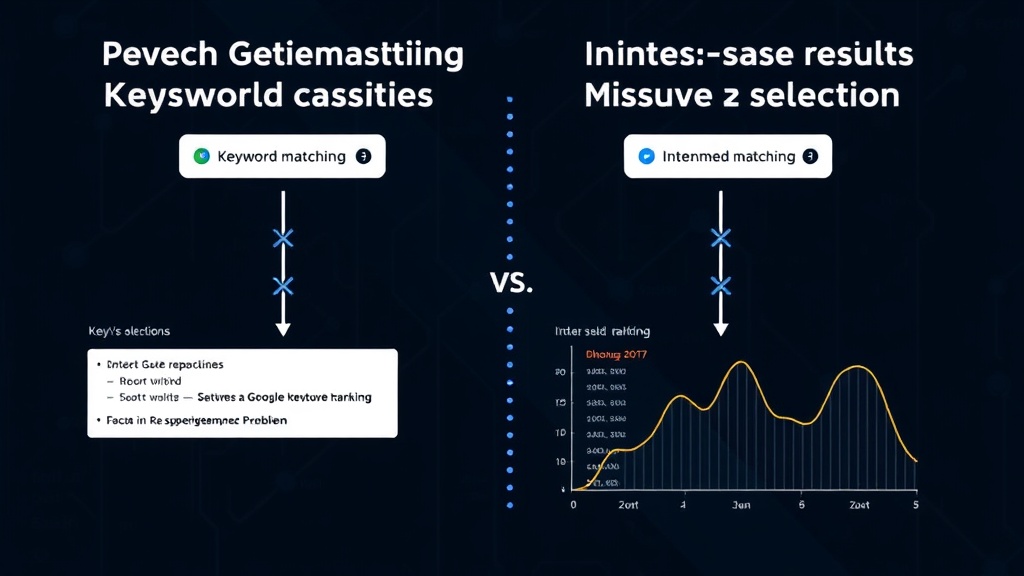
The repeated failure to deliver a useful answer pointed to a deeper problem. The algorithms were performing as designed, but the data they were searching within was fundamentally flawed for the task. The real issue wasn’t ranking the available documents better; it was the lack of documents that actually contained the correct answer. This is the selection problem.
Imagine trying to find a specific book in a library where the catalog is incomplete, and many books are mis-shelved. You can rearrange the existing books on the shelf (ranking), but if the book you need isn't there, or is in the wrong section entirely, your efforts are futile. The problem isn't how you order the books you *have*, but the selection of books available and their organization.
In our case, the documentation and knowledge base contained many documents that mentioned “gateway” and “service X,” but few that explicitly detailed the conditions under which the gateway rejects service X. The system was surfacing tangential information, not direct solutions.
The crucial realization was that before optimizing how to find an answer, we needed to ensure the answer actually existed in a retrievable format within our knowledge base. This meant shifting focus from algorithmic tuning to content strategy and data curation.
The Shift to Content Strategy
The solution involved a multi-pronged approach to improve the selection of information:
- Content Auditing: We began by auditing existing documentation to identify gaps. We specifically looked for areas where common troubleshooting questions lacked clear, concise answers.
- Targeted Content Creation: Based on the audit, we prioritized creating new content that directly addressed these identified gaps. This included detailed explanations of rejection scenarios, step-by-step guides for common issues, and explicit cause-and-effect documentation.
- Metadata Enhancement: Existing relevant documents were reviewed and enhanced with more specific tags and keywords. This wasn't about stuffing keywords, but about ensuring documents could be found if a user phrased their query in a slightly different, yet still accurate, way.
- User Feedback Loop: We implemented a more robust feedback mechanism for search results. Users could flag results as unhelpful, providing qualitative data that helped us understand where the content was failing.
This shift required a different mindset. Instead of thinking like algorithm engineers, we needed to think like technical writers and information architects. The goal was no longer to find the *best match* among flawed data, but to ensure the *correct match* existed in the first place.
Lessons Learned
The experience was a powerful reminder that even the most sophisticated ranking algorithms are only as good as the data they operate on. Optimizing a retrieval system without first ensuring a comprehensive and accurate selection of documents is akin to polishing a car with a flat tire – it looks better, but it still won’t drive correctly.
This highlights a critical distinction in information retrieval and knowledge management: ranking optimizes retrieval from existing data, while selection optimizes the data itself for discoverability and utility. For complex technical systems, the selection problem often precedes and overshadows the ranking problem.
If your search results seem consistently unhelpful, even after algorithmic tweaks, ask yourself: is the problem how I'm finding things, or is the problem that the things I need aren't there to be found?