The Case for a Better Coding Companion
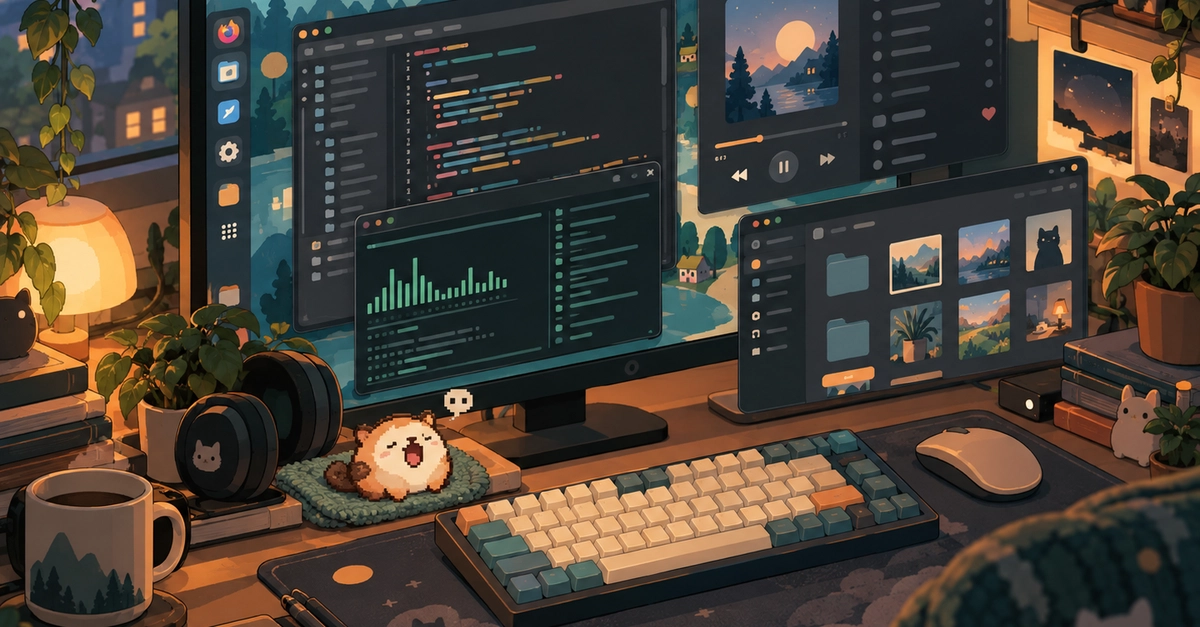
OpenAI's Codex Pets, launched in May 2026, aimed to put a face on AI coding assistants. These overlay applications for Windows and macOS provided real-time status updates, task completion notifications, and input prompts. While the feature launched with eight built-in pets, its functionality was limited, leaving a void for developers seeking more engaging and customizable AI companions.
Enter Mika, a developer who decided OpenAI's offering wasn't enough. Frustrated by the limitations of the official pets, Mika set out to build a superior alternative. The result is a desktop companion that, according to Mika, offers a more dynamic and personalized experience than what a multi-billion-dollar corporation could produce.
The core issue with Codex Pets, as Mika implies, is a lack of deep integration and true agency for the AI. They function more as passive status indicators than active participants in the development process. This is where Mika's project shines, offering a glimpse into what a truly collaborative AI coding partner could look like.
Mika's Approach: Agency and Customization
Mika's pet isn't just a visual overlay; it's designed to be a more integrated part of the developer's workflow. The key differentiator is the concept of letting the agent "cook." This implies a level of autonomy and background processing that goes beyond simple status updates. Instead of just showing what the AI is doing, Mika's pet actively manages and executes tasks, providing feedback and engaging the user only when necessary.
This approach contrasts sharply with the more passive nature of Codex Pets. While OpenAI's pets act as notifications, Mika's pet seems to embody a more proactive assistant. The developer can delegate tasks, and the pet handles the execution, reporting back with results or requesting further clarification. This shift from notification system to active agent is crucial for improving developer productivity and reducing cognitive load.
Customization is another area where Mika's pet reportedly excels. The ability to tailor the pet's appearance, behavior, and interaction style allows developers to create a companion that truly fits their personal preferences and workflow. This level of personalization is often missing in corporate-developed tools, which tend to favor a one-size-fits-all approach.
Beyond Status: Real-Time Interaction and Feedback
The "let him cook" philosophy extends to how the pet handles complex or long-running tasks. Instead of a static "working" icon, Mika's pet likely provides more nuanced visual cues and feedback. This could include animations that reflect the type of work being done, progress bars that offer real-time updates, or even subtle changes in the pet's demeanor to indicate challenges or breakthroughs.
Furthermore, the pet's ability to prompt for input at critical junctures is essential. This ensures that the AI doesn't go down the wrong path without human oversight. However, the design goal appears to be minimizing these interruptions, letting the AI handle as much as possible autonomously. This balance between automation and human control is a delicate one, and Mika's implementation suggests a more effective solution.
The implications for developer productivity are significant. By offloading routine tasks and providing intelligent assistance, a well-designed AI companion like Mika's can free up developers to focus on higher-level problem-solving and creative work. The pet becomes less of a novelty and more of an indispensable tool.
What This Means for the AI Assistant Landscape
Mika's project highlights a common pattern in technology: individual developers and smaller teams can often innovate faster and more precisely than large corporations. While OpenAI has the resources to build broad-reaching features, they may lack the granular understanding of specific user needs that drives passionate individuals. Mika's "better Codex Pet" is a testament to this.
The success of Mika's custom pet raises questions about the future of AI assistants. Will we see a proliferation of highly specialized, customizable AI companions? Or will larger players like OpenAI eventually incorporate these advanced features into their own offerings? The current landscape suggests a move towards more integrated and agentic AI, where the assistant is not just a tool but a collaborator.
For developers, this means the potential for more powerful and personalized AI tools is growing. The ability to choose or even build companions that align with individual coding styles and project requirements could significantly enhance the development experience. Mika's work serves as a compelling example of this potential, demonstrating that sometimes, the best solutions come from those closest to the problem.
The Unanswered Question: Scalability and Monetization
While Mika's pet appears to be a superior solution for individual developers, the question remains about its scalability and potential for wider adoption. How easy is it for other developers to replicate this experience? Are there plans for broader distribution or monetization? These are the next steps that will determine if this project remains a personal triumph or evolves into a widely used tool. The technical hurdles of creating a robust, cross-platform AI companion with deep IDE integration are significant, and their resolution will be key to its future impact.