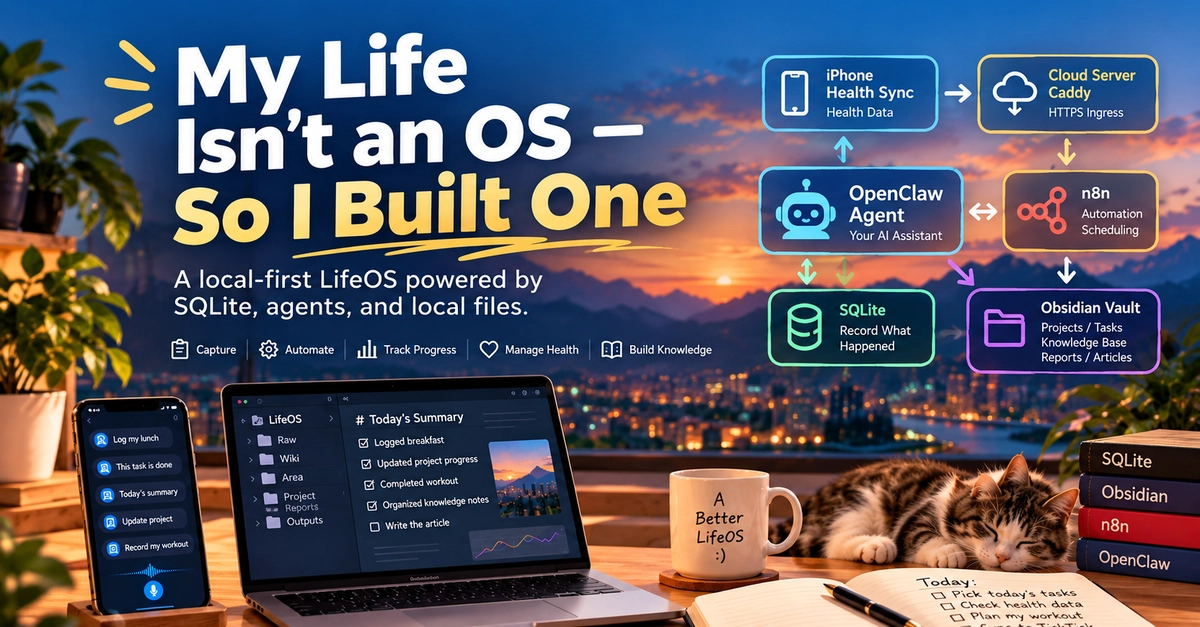
The Problem: Life Management Tools Don't Fit
Many developers, founders, and creators grapple with managing the sheer volume of tasks, information, and projects that define modern professional lives. The existing landscape of tools, while vast, often falls short. From simple scheduled tasks augmented by AI like ChatGPT to complex knowledge management systems built on Obsidian or Notion, no single solution consistently meets the needs of a highly technical individual who requires deep integration and automation.
The author, a developer, found this gap acutely. ChatGPT could offer reminders, but the idea of entrusting core life data to a chat interface felt wrong. Obsidian templates provided flexibility, but automating updates from a phone or collecting daily to-dos required significant custom development. Existing open-source projects, like Daniel Miessler's LifeOS, were ambitious but didn't align with the author's specific requirements for a personalized, integrated system. This frustration led to a clear objective: build a system that acts as a personal operating system for life, tailored precisely to the user's workflow and data needs.
Designing the Personal LifeOS
The core of this endeavor is the concept of a 'LifeOS' – a system designed to mirror the functionality of a computer's operating system but applied to personal productivity and information management. Unlike a traditional OS that manages hardware and software, a LifeOS manages personal data, tasks, goals, and knowledge.
The author’s approach prioritizes several key principles:
- Data Ownership and Control: Information should reside locally or in a controlled environment, not solely within proprietary cloud services or conversational AI models.
- Integration: Tools must work together seamlessly. A task completed on a mobile device should update project statuses, and meeting notes should automatically link to relevant contacts or projects.
- Automation: Repetitive tasks, data collection, and status updates should be automated to free up cognitive load.
- AI Augmentation: AI should serve as an intelligent assistant, not the primary data store or control plane. It should enhance workflows, not dictate them.
The system aims to go beyond simple to-do lists. It's envisioned as a central hub where different aspects of life – work projects, personal goals, learning, and knowledge – are interconnected and manageable through a unified interface or automated processes. This means not just tracking tasks but understanding their context, dependencies, and impact on broader objectives.
Think of it less like a digital planner and more like a highly personalized, intelligent assistant that understands your entire digital footprint and proactively helps manage it. It’s about creating a system that adapts to you, rather than forcing you to adapt to a rigid tool.
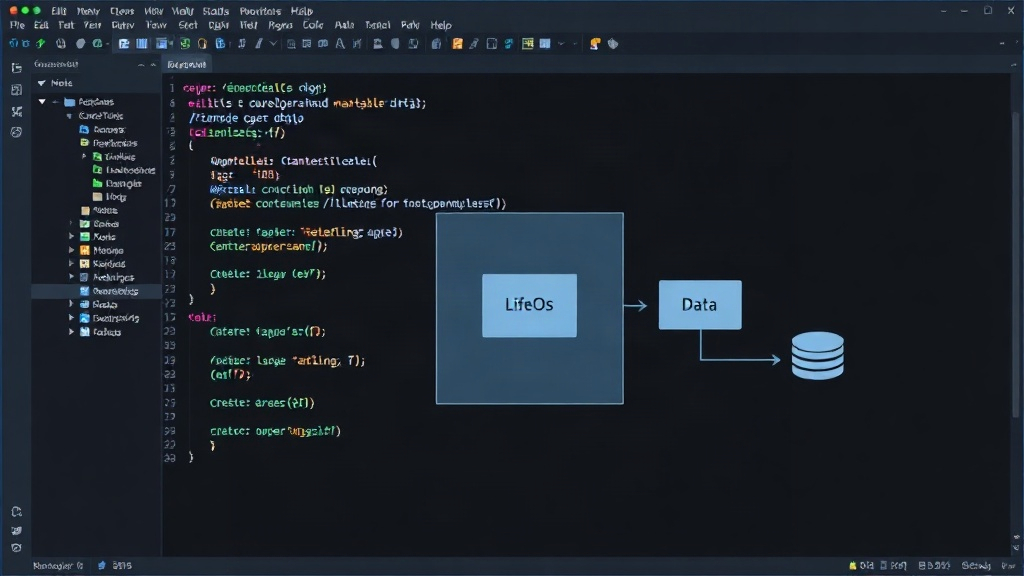
Key Components and Functionality
Building a functional LifeOS requires careful consideration of its components. The author's system, though not fully detailed in the provided excerpt, implies a modular design that can incorporate various tools and services:
Task Management and Scheduling
This is a foundational element. The system needs to handle daily to-dos, project milestones, and recurring tasks. Crucially, it must integrate with other parts of the OS. For instance, a task related to a specific project should automatically pull relevant project details or links to associated documents. Automation here means tasks could be generated automatically based on calendar events, incoming emails, or updates in other systems.
Knowledge Management
This component is vital for anyone dealing with a high volume of information. It’s not just about storing notes but about creating a networked thought system. Links between notes, projects, and tasks are essential. The system should allow for easy retrieval of information based on context, not just keywords. This could involve linking meeting notes to attendees, project updates to specific deliverables, or research findings to relevant learning goals.
AI Integration
AI is positioned as an enhancement, not the core. This means using AI for tasks like summarizing information, drafting initial responses, identifying patterns in data, or suggesting next steps. The key is that the AI operates on data the user controls and understands, and its output is actionable within the broader LifeOS framework. For example, an AI might process a batch of meeting transcripts, extract action items, and then automatically create tasks in the task management module.
Data Synchronization and Access
A critical challenge for any personal OS is ensuring data consistency across devices and services. The author’s approach likely involves robust synchronization mechanisms, possibly leveraging local storage with cloud backup, or using APIs to connect disparate services. The ability to access and update information from any device, whether mobile or desktop, is paramount. This requires a well-defined data model and reliable sync protocols.
The 'Why Now?' for Personal Operating Systems
The proliferation of AI tools, the increasing complexity of digital workflows, and the growing awareness of data privacy concerns have converged to make the idea of a personal OS more relevant than ever. Developers and tech professionals are no longer content with off-the-shelf solutions that require significant manual effort to adapt. They seek systems that are as sophisticated and adaptable as the software they build for a living.
The author's project taps into a broader trend: the desire for greater control and agency in the digital realm. As large language models and cloud services become more powerful, the potential for them to become black boxes that hold our most personal data is a growing concern. Building a personal OS is a way to reclaim that control, ensuring that technology serves individual needs rather than dictating them.
This isn't just about productivity; it's about building a digital environment that supports personal growth, learning, and well-being. By creating a system that understands and manages the complexities of their digital lives, individuals can focus more on the actual substance of their work and personal pursuits.
Implications and Future Directions
The creation of such a personalized LifeOS has significant implications. For the individual developer, it means a more streamlined, efficient, and less stressful way to manage their complex professional and personal lives. It reduces the cognitive overhead associated with juggling multiple tools and platforms.
For the broader tech community, it highlights a potential direction for personal productivity tools. Instead of monolithic applications, we might see a rise in modular, API-driven systems that users can assemble and customize to create their own 'operating systems' for life. This approach emphasizes user empowerment and flexibility.
The unanswered question remains: How can such deeply personalized systems achieve wider adoption or interoperability? While the author's solution is tailored to their needs, the principles behind it could inform the development of more adaptable and user-centric productivity platforms for everyone.