
Unified Interface for Multimodal AI
Developers working with large language models (LLMs) and increasingly, vision models, often face a fragmented ecosystem. Each model, whether it's a text-based LLM like GPT-4 or a multimodal model like GPT-4V, typically requires its own specific API client, authentication method, and data formatting. This complexity slows down development and makes it difficult to switch between models or integrate them into existing workflows.
A new Python library, inspired by the simplicity of the `jev` (JSON Event) format, aims to solve this by providing a single, consistent function call for interacting with a wide range of AI models. The core idea is to abstract away the underlying differences in model APIs, allowing developers to focus on their application logic rather than the intricacies of model integration.
The library exposes a primary function, let’s call it `query_model`, which takes a model identifier and a prompt (which can include text, images, or both) as input. It then handles the necessary translation, authentication, and request formatting for the specific model being targeted. The output is consistently formatted, regardless of the underlying model's native response structure.
Abstraction Through a Single Function
The challenge lies in creating a truly universal interface. LLMs vary in their input requirements (e.g., specific tokenizers, context window limits) and output formats (e.g., JSON, plain text, structured data). Vision models add another layer of complexity with image handling, including different encoding methods and resolution requirements.
This wrapper tackles this by defining a standardized input schema. For text-based LLMs, this is straightforward: a string or a list of messages. For multimodal models, the input schema extends to accept a list of components, where each component can be either a text string or a reference to an image (e.g., a local file path, a URL, or base64 encoded data). The library then determines the correct way to encode and send this data to the target model's API.
The output is similarly standardized. The `query_model` function always returns a predictable structure. For text generation, this might be a simple string. For more complex tasks, it could be a structured JSON object, parsed from the model's response. The library aims to provide sensible defaults while allowing for customization when specific model features are needed.
Consider the analogy of a universal remote control for your home entertainment system. Instead of juggling multiple remotes for your TV, soundbar, and Blu-ray player, a universal remote consolidates all functions into one device. This wrapper aims to be the universal remote for AI models, simplifying interaction and reducing the cognitive load on developers.
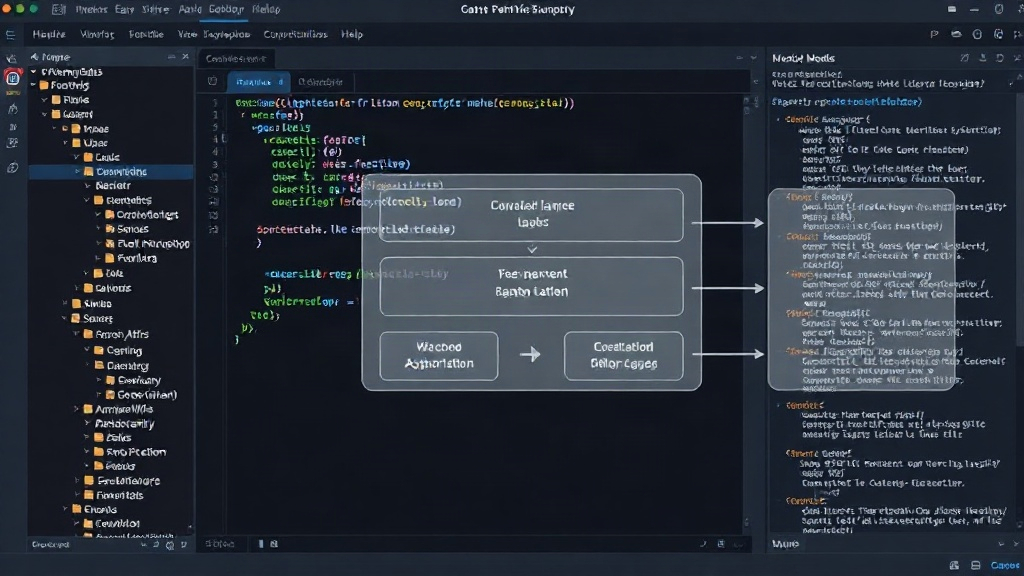
Supporting Diverse Models
The library's design emphasizes extensibility. New models can be added by implementing a specific adapter class that knows how to interact with that model's API. This modular approach means that as new LLMs and vision models emerge, the wrapper can be updated to support them without requiring changes to the core interface.
Initial support is expected to include popular models from providers like OpenAI (GPT series, DALL-E), Google (Gemini), Anthropic (Claude), and potentially open-source models hosted via Hugging Face or other platforms. The inclusion of vision models is a key differentiator, enabling developers to build applications that can process and reason about both text and images through a single programmatic entry point.
This unification is particularly powerful for applications that require sophisticated multimodal understanding. Imagine a customer support system that can analyze screenshots of error messages alongside user descriptions, or an educational tool that can interpret diagrams and explain them verbally. The wrapper makes building such systems significantly more straightforward.
The Jev-like Inspiration
The inspiration from `jev` (JSON Event) suggests a focus on event-driven processing and a clean, human-readable format. While the exact implementation of `jev` might differ, the spirit of simplifying complex data structures into manageable, sequential events or calls is key. In this context, each `query_model` call can be seen as an event, triggering a specific AI model to perform a task and return a result. The consistent output format ensures that subsequent processing steps can be built without conditional logic for different model responses.
What remains to be seen is how effectively the library handles the nuances of different model outputs. For instance, the varying degrees of creativity, factuality, and safety guardrails across models are difficult to standardize. While the wrapper can standardize the *interface*, the *behavior* of the underlying models will still differ. Developers will need to be aware of these intrinsic model differences, even when using a unified wrapper.
Implications for Developers and AI Integration
For developers, this library promises a significant reduction in boilerplate code and integration time. Instead of writing custom clients for each AI service, they can leverage a single interface. This also makes experimentation easier; switching from one LLM to another for A/B testing becomes a matter of changing a model identifier string, not rewriting API call logic.
The ability to seamlessly integrate vision models alongside text models opens up new possibilities for AI-powered applications. Developers can more easily build systems that understand the visual world, leading to richer user experiences and more powerful analytical tools. The abstraction layer simplifies the complexity of multimodal AI, making it more accessible to a broader range of developers.
This approach accelerates the adoption of advanced AI capabilities by lowering the barrier to entry. It allows smaller teams and individual developers to build sophisticated multimodal applications that previously required specialized expertise in integrating multiple, disparate AI services.
