The Cost of Curiosity
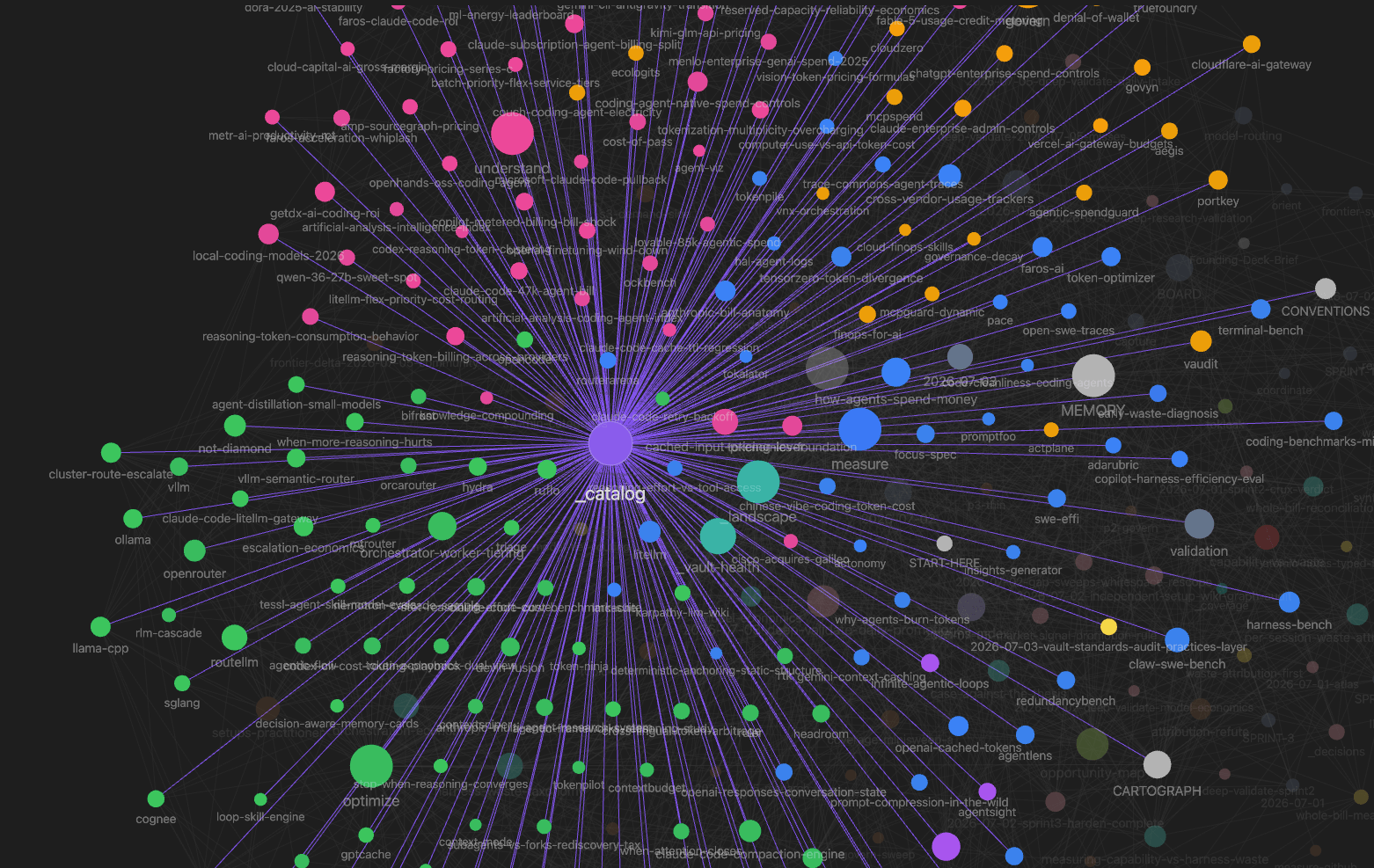
The pursuit of efficiency in large language models (LLMs) can paradoxically lead to significant expenditure. One developer, seeking to understand and reduce the token costs associated with AI research, found themselves spending over $1,000 on tokens to conduct that very research. This experience, shared on Hacker News, highlights a common yet often unacknowledged challenge in the rapidly evolving field of AI development: the opaque and potentially high cost of experimentation and optimization.
The core problem isn't necessarily the models themselves, but the ecosystem around them. Tools, platforms, and the very act of querying these powerful AI systems consume resources that translate directly into monetary costs. For developers and researchers, especially those operating on a budget or exploring novel applications, this can be a substantial barrier. The developer in question was attempting to build a custom deep research pipeline, a sophisticated system designed to ingest and analyze vast amounts of information using LLMs. The goal was noble: to automate research and identify patterns that would otherwise be time-consuming for humans. However, the process of refining this pipeline, fine-tuning prompts, evaluating model outputs, and iterating on the underlying logic required a constant stream of API calls. Each call, no matter how small, contributes to the token count, and token counts, in turn, directly impact the bill.
This isn't a trivial amount of money for a single individual or a small team. $1,000 can represent weeks or even months of runway for a startup, or a significant personal investment for an independent researcher. The irony is palpable: the very act of trying to save money ended up costing a substantial sum. This situation serves as a stark reminder that while LLMs offer immense potential, their practical implementation requires careful cost management and strategic planning. It's akin to a chef spending a fortune on rare ingredients to figure out how to cook a cheaper, more efficient meal. The outcome might be valuable, but the upfront investment is considerable.
The Black Box of Token Costs
A significant part of the problem lies in the lack of granular visibility and predictable cost structures for many LLM APIs. While providers like OpenAI, Anthropic, and Google offer pricing per token, the journey to understanding exactly how many tokens a complex query or a multi-step process will consume is fraught with uncertainty. Factors such as the length of the prompt, the complexity of the task, the specific model used (e.g., GPT-4 vs. GPT-3.5, Claude 3 Opus vs. Sonnet), and even the verbosity of the model's response all contribute to the final token count. For a researcher building a custom pipeline, these variables are dynamic and difficult to pre-calculate with precision.
The developer's experience underscores the need for better tooling and methodologies for cost estimation and tracking within LLM development workflows. Without this, experimentation becomes a high-stakes gamble. Imagine trying to optimize a software application by randomly changing code and then checking the server bill each time – it’s an inefficient and expensive way to debug. Similarly, optimizing LLM prompts and workflows without a clear understanding of token consumption can lead to unforeseen expenses. The Hacker News thread, while brief, likely contained a wealth of shared experiences and potential solutions, from using cheaper, smaller models for initial testing to implementing strict rate limits and cost monitoring dashboards. However, the act of gathering this information itself can consume time and resources, perpetuating the cycle.
Strategies for Mitigation: Beyond the Burn
The developer’s costly lesson points to several critical strategies for anyone looking to build with LLMs without depleting their resources. Firstly, rigorous prompt engineering is paramount. This involves crafting prompts that are concise, clear, and direct, minimizing unnecessary tokens. Techniques like few-shot learning (providing examples within the prompt) can often reduce the need for lengthy explanations, but even these examples add to the token count and must be carefully selected.
Secondly, choosing the right model for the task is crucial. Not every problem requires the most powerful and expensive model. For tasks like simple text classification, summarization of short texts, or basic content generation, less capable but significantly cheaper models might suffice. Developers should benchmark different models for their specific use cases to find the optimal balance between performance and cost. This often involves a trade-off: a slightly less accurate result from a cheaper model might be perfectly acceptable if it saves 80% of the cost.
Thirdly, implementing robust cost monitoring and control mechanisms is essential. This includes setting budgets, using API usage dashboards provided by the LLM providers, and integrating custom alerts to notify when spending approaches predefined limits. Techniques like caching frequent queries and their responses can also significantly reduce redundant API calls. If a specific piece of information or analysis is requested repeatedly, storing the result instead of re-querying the LLM can lead to substantial savings over time. This is analogous to a web application caching frequently accessed database results to reduce load and latency.
Finally, exploring techniques like quantization, parameter-efficient fine-tuning (PEFT), and knowledge distillation can help create smaller, more efficient models that require fewer tokens for inference or can be fine-tuned at a lower cost. While these methods often require a deeper technical understanding and more upfront engineering effort, they can lead to long-term cost reductions and improved performance for specific applications. The developer's journey, though expensive, provides an invaluable case study for the broader AI community.
The Unanswered Question: Scalability and Sustainability
What remains largely unanswered is how this cost barrier impacts the democratization of advanced AI capabilities. While major tech companies can absorb these research and development expenses, individual developers, startups, and researchers in academia face a significant hurdle. The very tools that promise to accelerate innovation could inadvertently concentrate power among those who can afford to experiment at scale. This raises questions about the long-term sustainability of a model-driven AI ecosystem where continuous, costly experimentation is a prerequisite for progress.