
Email Broadcast Module Shipped
The primary focus of the dev log entry for July 19, 2026, is the successful shipment of a new email broadcast module. This module introduces several key functionalities designed to streamline and enhance bulk email sending capabilities. Users can now leverage robust audience filtering to segment recipients precisely. The system also incorporates suppression lists, ensuring that emails are not sent to unsubscribed users or those who have opted out of communications. A queued, per-recipient send mechanism is in place to manage delivery efficiently and prevent overwhelming mail servers. Furthermore, the module provides comprehensive delivery tracking, allowing administrators to monitor the status of sent emails.
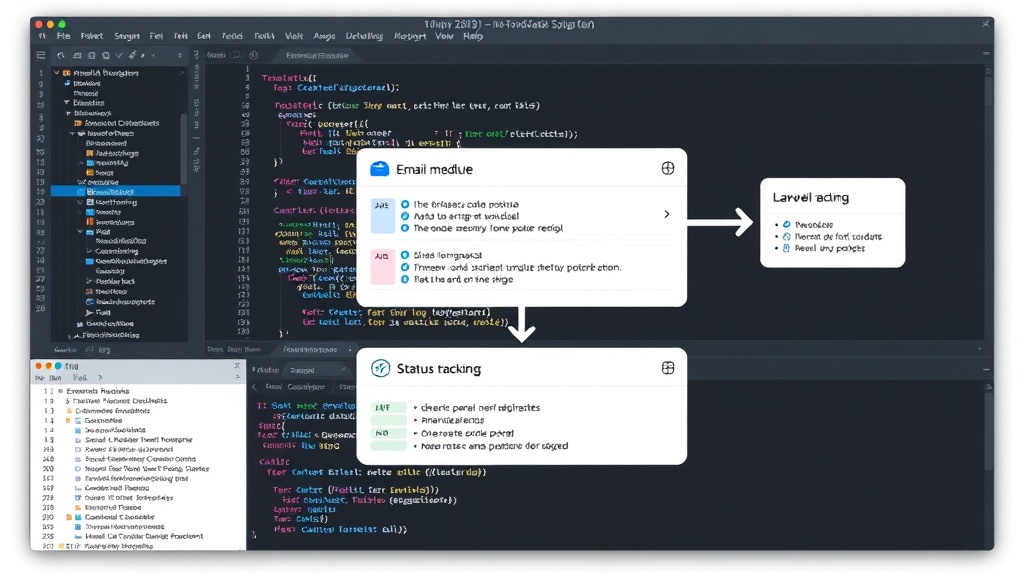
The architecture of the email broadcast system is built around a clear design principle: the recipient row is the ultimate source of truth. When a campaign is initiated, it first resolves an audience filter to generate a specific contact query. This query then passes through a suppression gate, which checks for unsubscribes, do-not-contact flags, and email address validity. The system then materializes a distinct recipient row for each eligible contact. Finally, it dispatches one queued job for each of these rows. This approach ensures that each job re-verifies the recipient's status before attempting to send. This design makes retries or accidental double dispatches a no-operation (no-op), eliminating the need for explicit locks or a separate deduplication table. The status updates sync back to these recipient rows, employing a rank guard system where the order of events is strictly defined: sent, then delivered, then opened, and finally clicked.
Silent Laravel Implicit Binding Bug Resolved
In addition to the new module, a critical bug within the Laravel framework was identified and fixed. This issue involved a silent failure in implicit route binding. The problem occurred when the name of a route parameter did not match the name of the corresponding method parameter in the controller. In such cases, Laravel would inject an empty model into the controller method instead of throwing an error or signaling a problem. This could lead to unexpected behavior and data inconsistencies, as developers might proceed with operations on an empty or null object without realizing the binding had failed. The lesson learned from this incident is that Laravel's implicit binding mechanism fails quietly, meaning it does not alert the developer to the failure, making it harder to detect and debug.
The implications of this bug are significant for developers relying on Laravel's automatic model binding. Without explicit checks or clear error messages, debugging such issues can be time-consuming. The fix ensures that route parameter mismatches are handled more predictably, likely by throwing a more informative exception or providing clearer feedback during development. This enhances the robustness of applications built with Laravel by preventing silent data corruption or unexpected null object interactions.
Lessons Learned and Future Considerations
The development log entry highlights two key takeaways. Firstly, the importance of robust error handling and clear feedback mechanisms in frameworks like Laravel. Silent failures, while sometimes intended to simplify development, can become significant sources of bugs and debugging headaches. Developers must remain vigilant and implement their own validation and checks, especially for critical data binding processes. Secondly, the successful implementation of the email broadcast module underscores the value of a well-defined architectural principle, such as using the recipient row as the source of truth. This approach simplifies complex workflows, enhances reliability, and makes the system more resilient to retries and failures.
Moving forward, developers will want to ensure their Laravel applications have comprehensive checks in place for route binding, particularly in production environments where silent failures can have a greater impact. For those building similar email systems, the recipient-row-as-source-of-truth pattern offers a compelling model for managing state and ensuring reliable delivery. The inclusion of detailed delivery tracking and suppression logic in the new module also sets a high bar for comparable systems.