The Core Problem Nobody Talks About
Brilliant developers are voluntarily chaining themselves to single AI providers. This mirrors early cloud adoption mistakes, leading to a decade of overpaying. The advice often given to startups, especially regarding direct enterprise contracts with major AI players, is frequently wrong for their stage. Vendor partners push multi-year commitments, a strategy that benefits the vendor, not necessarily the rapidly evolving startup.
The temptation to sign a direct contract with a dominant AI provider like OpenAI is strong, particularly for a YC-backed startup seeking stability and predictable performance. However, such agreements often come with hidden costs and limitations that only become apparent later. This strategy locks a company into a specific ecosystem, making future pivots or integrations with alternative providers significantly more complex and expensive. The core issue is that advice tailored for established enterprises with stable, long-term needs doesn't translate well to the agile, experimental nature of early-stage startups.
Why Open Source and APIs Matter
The alternative, and often smarter, approach involves leveraging open-source models and well-documented APIs. This strategy provides flexibility and avoids the pitfalls of vendor lock-in. Open-source AI models, such as those from Hugging Face or Meta's Llama series, offer a powerful foundation. While they may require more initial setup and management, they prevent a company from being beholden to a single vendor's pricing, terms of service, or development roadmap.
Consider the lessons learned from the early days of cloud computing. Companies that committed to proprietary services faced immense challenges when they needed to migrate or optimize costs. They paid a premium for years because switching was prohibitively expensive. The same dynamic is now playing out in the AI space. A direct contract with a provider like OpenAI, while seemingly offering a clear path forward, can become a gilded cage.
The AT Protocol, used by Bluesky, offers a counter-example in the social media space. It is open by design, allowing public profile data, including followers, to be queried through a documented API without authentication. This openness contrasts sharply with the proprietary, locked-down nature of most social network APIs. The AT Protocol exposes endpoints like app.bsky.actor.getProfile and app.bsky.graph.getFollowers, which are accessible via simple HTTP GET requests. This illustrates the power of open APIs in making data accessible and fostering interoperability, a principle that should extend to AI development.
Building Flexibility into Your AI Stack
The key is to abstract the AI model layer. Instead of directly calling a vendor's API for inference, developers should build an abstraction layer. This layer can then route requests to different providers or even self-hosted open-source models based on cost, performance, or availability. This is akin to building a database abstraction layer in traditional application development – you don't hardcode against MySQL or PostgreSQL; you use an ORM or a driver interface that allows you to swap the backend database with minimal code changes.
For instance, a startup could start with an API from a provider like OpenAI for rapid prototyping and initial deployment. However, the architecture should be designed such that if OpenAI's pricing increases significantly, or if a new, more cost-effective open-source model becomes competitive, the abstraction layer can be updated to redirect traffic. This might involve using libraries that support multiple LLM backends or building a custom routing service.
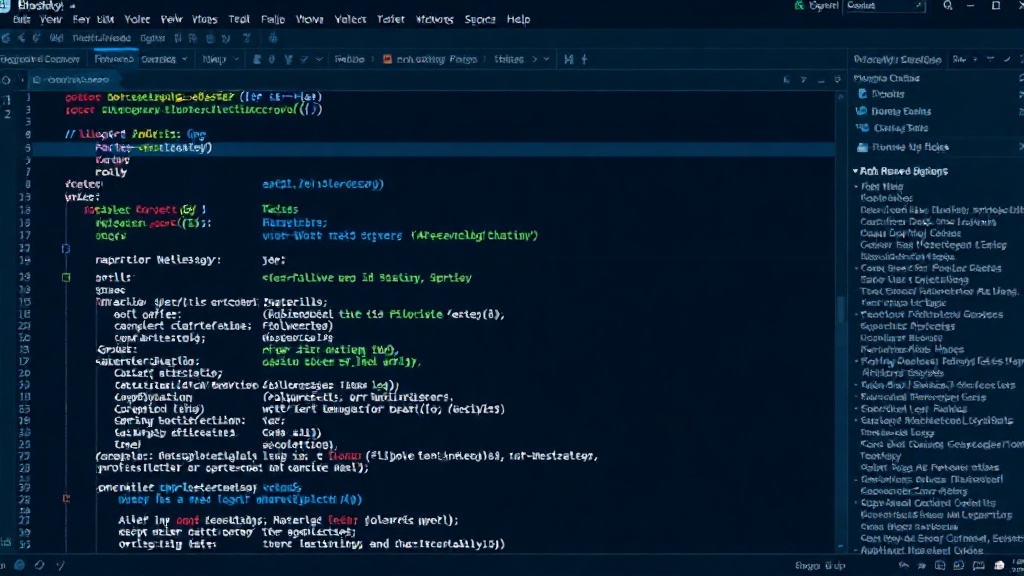
Code samples can illustrate this. Imagine a Python function that takes a prompt and an optional `provider` argument. If `provider` is 'openai', it calls the OpenAI API. If it's 'local_llama', it calls a locally hosted Llama model via an inference server like Ollama or vLLM. This pattern decouples the application logic from the specific AI model implementation.
import openai

def generate_text(prompt, provider='openai', model='gpt-3.5-turbo'):
    if provider == 'openai':
        response = openai.ChatCompletion.create(
            model=model,
            messages=[{"role": "user", "content": prompt}]
        )
        return response.choices[0].message.content
    elif provider == 'local_llama':
        # Placeholder for calling a local inference server
        # e.g., using requests to http://localhost:11434/api/generate
        return "Response from local Llama model"
    else:
        raise ValueError(f"Unknown provider: {provider}")

# Example usage:
# print(generate_text("Tell me a joke."))
# print(generate_text("Explain quantum physics.", provider='local_llama'))
This approach requires more upfront engineering effort. It's not as simple as signing a direct contract and getting an API key. However, the long-term benefits in terms of cost control, flexibility, and strategic independence are substantial. It allows startups to adapt to the rapidly changing AI landscape without being trapped by sunk costs in a proprietary system.
The Future of AI Strategy: Openness and Adaptability
The AI industry is evolving at an unprecedented pace. New models are released weekly, and pricing structures can change overnight. Relying solely on one vendor's API is a bet against this dynamism. The open-source community is a powerful engine for innovation, often democratizing access to cutting-edge technology faster than proprietary solutions can.
What nobody has addressed yet is the long-term cost of vendor lock-in for AI. While immediate gains in speed-to-market are appealing, the compounding costs of inflexible contracts, potential price hikes, and limited integration options can cripple a startup's growth trajectory. The decision to embrace open-source AI and API-first design isn't just a technical choice; it's a strategic imperative for long-term survival and success in the AI era.
If you are a founder or lead developer at a startup, consider the long-term implications of your AI provider choice. Are you building for today, or are you building for the next five years? The answer to that question dictates whether you should sign that enterprise contract or invest in building an adaptable, open-source-friendly AI stack.