The Problem with Random Failure Rates
Testing webhook retry logic has historically been a frustrating endeavor. While introducing a random error rate on the receiver side can simulate flakiness, it fails to guarantee the reproduction of specific, critical failure scenarios. A 10% error rate might confirm that a sender retries, but it offers no insight into the correctness of those retries. Crucially, this approach is unsuitable for continuous integration (CI) pipelines, where deterministic, repeatable tests are paramount.
The core bug developers truly care about involves a precise sequence of events:
- Your service successfully sends a webhook request.
- The receiving service processes this request, but a network interruption or internal crash occurs before the receiver can acknowledge success (e.g., send a 200 OK response) back to the sender.
- The sender, not receiving confirmation, initiates a retry mechanism.
- The critical question arises: Does the receiver, upon receiving the retried request with the same identifier, correctly recognize it as a duplicate and avoid processing it again (e.g., creating a duplicate order)? Or does it treat it as a new request, leading to unintended side effects?
Random failures, by their nature, cannot reliably reproduce this exact sequence on demand, leaving a critical gap in testing coverage. This gap is particularly problematic for systems where duplicate processing can lead to data corruption, financial discrepancies, or other severe operational issues.
Deterministic Fault Injection via Step Sequences
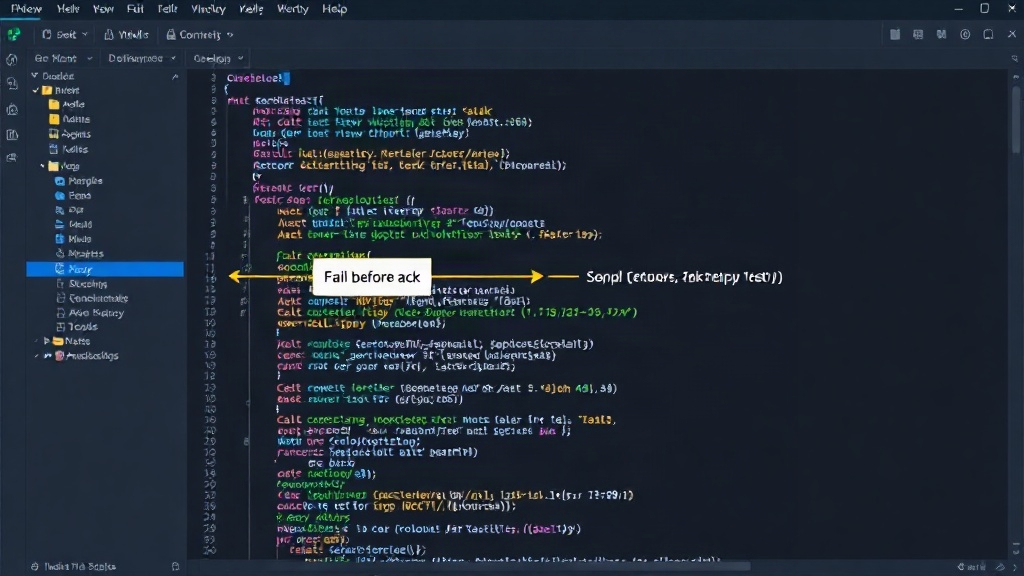
To address this, a new approach introduces a third, highly controlled mode for webhook receivers. Instead of relying on random errors, this mode allows developers to define a precise sequence of operations and failures that a webhook receiver should execute for each distinct Idempotency-Key. This transforms flaky, unpredictable testing into a deterministic process.
The mechanism involves providing the webhook endpoint with a JSON list of predefined steps. When a request arrives, the receiver inspects its Idempotency-Key (or any custom header designated for this purpose). Based on this key, the receiver then systematically walks through the provided list of steps in the exact order specified. Each distinct Idempotency-Key triggers its own independent sequence, ensuring that tests are isolated and repeatable.
Consider a simple sequence for an Idempotency-Key like order-123:
[
  {
    "action": "process_request",
    "succeed_after": 1
  },
  {
    "action": "respond_success",
    "fail_before": 1
  },
  {
    "action": "process_request",
    "succeed_after": 1
  },
  {
    "action": "respond_success",
    "succeed_after": 1
  }
]
When the first request with Idempotency-Key: order-123 arrives:
- The receiver identifies the key.
- It looks up the sequence for
order-123. - The first step is
process_request, which succeeds after 1 attempt (this is the first attempt). - The second step is
respond_success, which is configured tofail_beforethe first attempt. This simulates the scenario where the connection drops before the 200 OK is sent. The receiver internally notes this failure but does not send an error response yet. - The sender, not receiving a response, retries with the same
Idempotency-Key: order-123. - The receiver resumes the sequence for
order-123from where it left off. It now attempts therespond_successstep again, this time succeeding after the first attempt (which is the second overall attempt for this step). The receiver can now send the 200 OK. - If the receiver implemented idempotency correctly, it should recognize that
order-123has already been processed. The subsequent steps in the sequence (the secondprocess_requestandrespond_success) would then be skipped or handled appropriately by the idempotency logic, preventing duplicate order creation.
This deterministic approach allows developers to precisely test the resilience and correctness of their webhook sender's retry logic and their receiver's idempotency handling. By defining specific failure points within a sequence, developers can guarantee that critical edge cases are exercised in CI environments, significantly improving the robustness of distributed systems.
Benefits for CI/CD and System Robustness
The primary advantage of this deterministic testing method is its suitability for automated pipelines. Unlike random error injection, which provides probabilistic assurance at best, this technique guarantees that specific failure modes are tested with every build or deployment. This significantly reduces the risk of deploying systems that fail under specific, yet common, network conditions.
For developers building webhook-driven architectures, this means:
- Guaranteed Idempotency Testing: Ensure that duplicate requests due to retries do not cause unintended side effects like double charges or multiple resource creations.
- Reliable Retry Logic Validation: Verify that the sender correctly handles timeouts and network interruptions, retrying appropriately without overwhelming the receiver.
- Early Detection of Race Conditions: Pinpoint subtle bugs that might occur when a receiver is processing a request, fails to acknowledge it, and then receives a retry before the initial processing is fully committed.
- Faster Debugging: Reproduce complex failure scenarios on demand, dramatically shortening the debugging cycle for intermittent issues.
This capability moves webhook testing from a