
DeepSeek's Vision for Artificial General Intelligence
A leaked transcript attributed to Liang Wenfeng, founder of DeepSeek, has ignited discussion within the AI community regarding the future trajectory of artificial general intelligence (AGI). The document, reportedly from a closed-door investor meeting, details a phased AGI roadmap that diverges from a sole focus on raw performance metrics. Instead, Wenfeng emphasizes a progression that hinges on models developing the capacity for continuous learning and self-improvement, rather than merely achieving incremental gains in speed or accuracy.
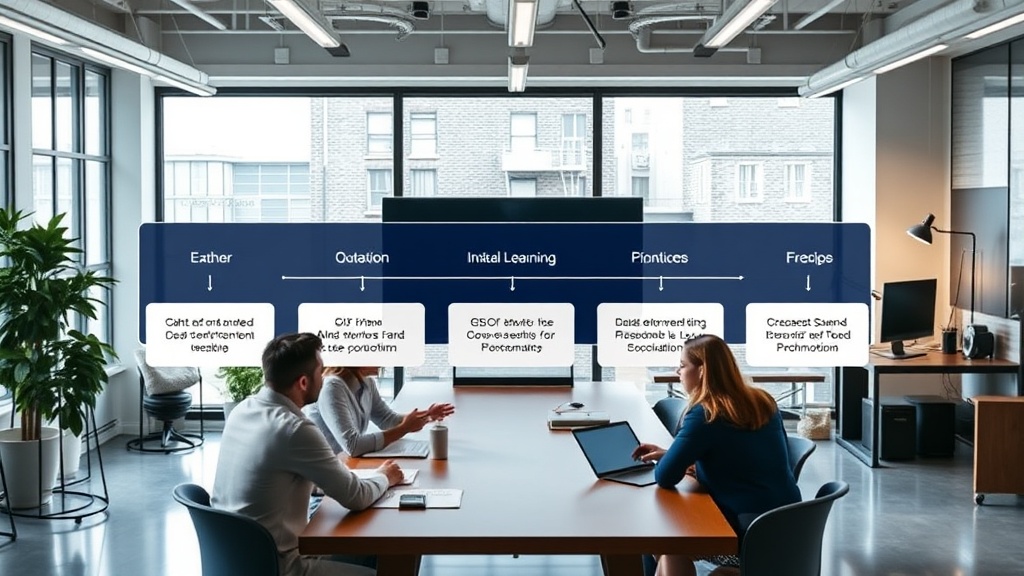
The reported roadmap outlines a sequence: Chain-of-thought reasoning, followed by agents, then continual learning, AI self-improvement, and finally, embodied intelligence. This sequence suggests a fundamental belief that current large language models, while capable of complex tasks with sufficient context, fundamentally lack the human ability to accumulate experience and adapt over time. Wenfeng's central argument appears to be that genuine progress towards AGI requires a paradigm shift beyond optimizing existing architectures and training data. The true next frontier, from this perspective, is not simply a faster or more accurate model, but one that can learn organically and persistently.
This viewpoint directly informs DeepSeek's strategic decisions. The company's stated prioritization (or lack thereof) of certain research avenues can be understood as a consequence of this roadmap. If continual learning is the bottleneck for the next generation of AI, then efforts focused solely on scaling existing architectures without this capability are deemed secondary or premature. This implies that DeepSeek is actively choosing to invest in foundational research that enables long-term AI evolution, rather than chasing short-term performance benchmarks that might not lead to true AGI.
The Case for Continual Learning
Wenfeng's emphasis on continual learning is a significant departure from the prevailing trend of training ever-larger models on static datasets. The current paradigm often involves periodic retraining, which is both computationally expensive and prone to catastrophic forgetting – where a model loses previously learned information when trained on new data. Continual learning, in contrast, aims to enable models to learn incrementally and adapt to new information and tasks without discarding existing knowledge.
This capability is crucial for developing AI systems that can operate effectively in dynamic, real-world environments. Imagine an AI assistant that could genuinely learn your preferences and habits over months or years, adapting its responses and actions accordingly, rather than requiring explicit reprogramming or fine-tuning for every new nuance. This is the promise of continual learning.
The progression to AI self-improvement builds upon this foundation. Once a model can learn continuously, it can then begin to identify areas for its own improvement, potentially modifying its own parameters or learning strategies. This iterative process, akin to human metacognition, is seen as a critical step towards more autonomous and advanced AI systems. The final stage, embodied intelligence, suggests a future where these learning and self-improving AIs can interact with and learn from the physical world, moving beyond the digital realm.
Explaining DeepSeek's Strategic Choices
The implications of this roadmap for DeepSeek's product and research strategy are profound. By publicly (albeit indirectly, through a leaked transcript) articulating this phased approach, Wenfeng provides a framework for understanding the company's focus. For instance, if the company is not aggressively pursuing the absolute highest scores on public leaderboards for tasks that do not directly contribute to the development of continual learning or agentic capabilities, it is not necessarily a sign of underperformance, but rather a deliberate strategic choice.
This perspective challenges the common industry metric of simply comparing model sizes and benchmark scores. Wenfeng's argument suggests that these metrics, while useful for evaluating current capabilities, do not adequately capture the progress towards AGI. The real measure of advancement lies in the development of more fundamental learning mechanisms that allow AI to evolve and adapt over time. This could mean that DeepSeek is prioritizing long-term, foundational research over the immediate deployment of incremental model updates.
The focus on agents also signals a move towards AI systems that can not only process information but also take actions and interact with their environment to achieve goals. This is a natural precursor to embodied intelligence, suggesting that DeepSeek views agentic capabilities as a necessary stepping stone. The entire roadmap, therefore, appears to be a coherent strategy for building AI that moves beyond pattern recognition and towards genuine understanding and adaptation.
The Unanswered Question: Market Adoption and Competition
What remains to be seen is how the broader AI market and investor community will react to this long-term vision. While the pursuit of AGI is a common goal, the specific path outlined by Wenfeng requires a different kind of investment and evaluation. Investors accustomed to seeing rapid iteration and benchmark improvements may need to adjust their expectations. Furthermore, the competitive landscape is already crowded with companies focused on scaling current architectures. DeepSeek's differentiated approach, while potentially more aligned with true AGI, could face challenges in gaining immediate market traction or convincing stakeholders of its long-term viability against more conventionally-minded competitors.
This strategic divergence highlights a critical tension in AI development: the race for immediate capability versus the methodical construction of foundational intelligence. Wenfeng's roadmap suggests that the latter is the only viable path to AGI, and that DeepSeek is positioning itself as a leader in this more deliberate, foundational approach. The success of this strategy will depend not only on DeepSeek's technical breakthroughs but also on its ability to articulate and justify this long-term vision to the market.