The Cost of a Green Checkmark
A common scenario unfolds in engineering teams adopting Databricks: a senior engineer deploys a new data pipeline to production. This pipeline, a MERGE job, is designed to read from a silver Delta table, apply business logic, and then upsert into a gold table. This gold table directly feeds an executive dashboard. The engineer tested the job in a development environment using a 40 GB sample dataset. It completed in four minutes with correct output and passed code review.
The critical oversight was the production environment's reality. The gold table in production is a staggering 3.8 TB, and it lacks Z-ordering on the merge key. Furthermore, partition pruning is not configured. Consequently, each execution of the job forces Databricks to scan the entire 3.8 TB table to identify the rows requiring updates. This inefficient scanning process dramatically inflates compute costs.
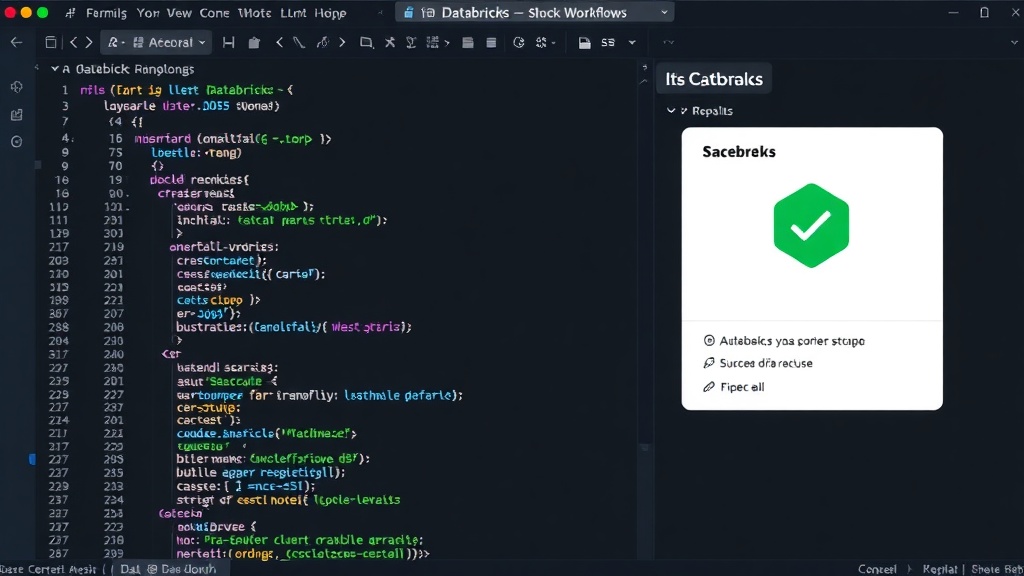
Despite the massive underlying inefficiency, the job reported success. It exited with code 0, displaying a green checkmark in the Databricks Workflows UI. The output was accurate, but the cost to produce it was astronomical. The job was scheduled to run every 30 minutes, and crucially, no cost alerts were in place to flag unusual expenditure.
The Hidden Price Tag
This pipeline ran without detection for eleven days. The hidden cost only came to light when someone reviewed the monthly Databricks Unit (DBU) report. The total compute cost for this single pipeline had ballooned to $2,300. This is for a job that, with proper optimization, should have cost approximately $40.
This incident underscores a critical disconnect between perceived job success and actual operational efficiency and cost in cloud data platforms. A green checkmark in a UI signifies that the code executed without crashing, but it says nothing about the resources consumed or the underlying performance of the data operations.
Why Optimization Matters in Production
The discrepancy in cost stems from several factors inherent to production data environments that often differ significantly from development setups. Production tables, especially those feeding critical dashboards, tend to grow much larger than development samples. Without proper indexing and partitioning strategies, operations like MERGE, which require comparing and updating records, can become prohibitively expensive on large datasets.
Z-ordering is a Databricks-specific optimization technique that collocates related information in the same set of files. When data is Z-ordered by the columns used in MERGE or JOIN operations, Databricks can significantly reduce the amount of data it needs to scan. Similarly, partition pruning, which involves filtering data based on partition columns, can drastically cut down the data scanned if the data is organized into logical partitions (e.g., by date or region).
In the described scenario, the absence of Z-ordering on the merge key meant that Databricks had to read a vast portion of the 3.8 TB table for every single merge operation. If the merge key was, for example, a customer ID, and the table was partitioned by date, without Z-ordering on customer ID, the system still had to sift through potentially all customer records within the relevant partitions.
The Deceptive Simplicity of 'Success'
The core issue is that Databricks, like many cloud data platforms, prioritizes job completion over resource efficiency by default. An exit code of 0 means the Spark job finished its tasks. For a MERGE statement, this means it processed its input, attempted the upsert, and completed the transaction. The platform registers this as a successful operation. It doesn't inherently flag that it scanned 3.8 TB to find a few hundred rows to update.
This disconnect is particularly dangerous for cost management. Teams often rely on basic job status indicators for monitoring. Without supplementary monitoring for DBU consumption, query performance metrics (like data scanned), or custom cost alerts, expensive inefficiencies can run undetected for extended periods. The $2,300 bill serves as a stark reminder that