The Migration Headache: Beyond Data Dumps
Backend developers frequently grapple with selecting the optimal database for a project. As a project evolves, the initial database choice, however suitable at the time, may cease to be the best fit. This often precipitates the arduous task of migrating from one database engine to another. While the data migration itself is a substantial undertaking, one of the most time-consuming and error-prone aspects is the complete rewriting of all application queries to conform to the new engine's specific API and query language.
Consider the common scenario of migrating from a NoSQL database like MongoDB to a relational database such as PostgreSQL. MongoDB queries typically employ a fluid, document-oriented approach, utilizing methods like find(), aggregate(), and specialized operators for nested documents. PostgreSQL, conversely, relies on structured SQL queries, joins, and a strictly enforced schema. The underlying mental model and syntax are fundamentally divergent.
This disparity means that a query designed for MongoDB might look nothing like its PostgreSQL equivalent. A simple db.collection.find({ user_id: 123 }) in MongoDB could translate to a complex SQL statement involving table joins and explicit type casting in PostgreSQL. The effort to translate these queries manually is not merely a matter of syntax substitution; it requires a deep understanding of both the old and new database paradigms, as well as the application's data access patterns.
The implications of this migration headache extend beyond developer hours. It introduces a significant risk of bugs and performance regressions. Incorrectly translated queries can lead to unexpected results, data inconsistencies, or severe performance degradation, impacting the application's reliability and user experience. For startups and companies operating at scale, such disruptions can be catastrophic, leading to lost revenue and damaged reputation.
Abstraction as the Solution
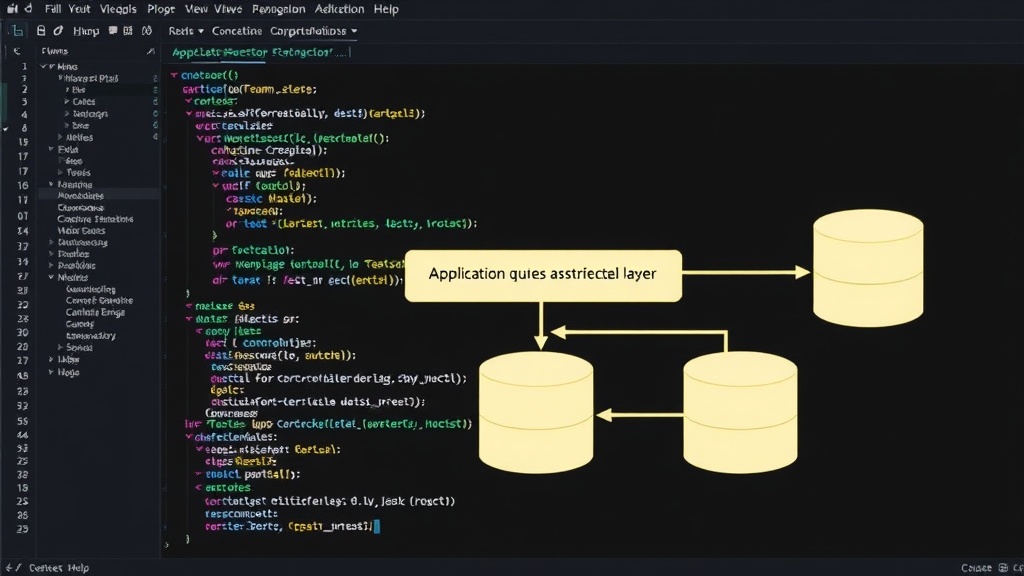
The core problem lies in the tight coupling between application logic and the specific database engine being used. To alleviate this, the principle of database abstraction becomes crucial. The goal is to create a layer that sits between the application code and the database, allowing developers to write queries against a unified interface, regardless of the underlying database engine.
This abstraction layer can be envisioned as a universal translator for database commands. Instead of learning and implementing the specific dialect of SQL for MySQL, the nuances of T-SQL for SQL Server, or the query syntax for PostgreSQL, developers would interact with a single, consistent API. This API would then translate the developer's abstract query into the appropriate engine-specific query at runtime.
The benefits are manifold. Firstly, it dramatically reduces the effort required for database migration. If the application is built on an abstraction layer, switching the underlying database engine might only require changing the configuration of the abstraction layer and potentially adapting a few specific, low-level queries if the abstraction isn't perfect. The bulk of the application's query logic remains untouched.
Secondly, it enhances developer productivity. Developers can focus on building application features rather than becoming deep experts in multiple database query languages. They can write queries once and have them work across different database systems. This also simplifies onboarding new developers, as they only need to learn one query interface.
Thirdly, it offers greater flexibility. Teams can choose the database that best suits a particular feature or workload without fearing vendor lock-in or facing a massive migration effort down the line. This allows for more agile development and better optimization of resources.
Implementing Database Agnostic Queries
Achieving true database agnosticism is challenging. Different database systems have unique strengths and features. A NoSQL database excels at flexible schema and horizontal scaling for certain workloads, while a relational database offers ACID compliance and complex join capabilities. A truly agnostic query layer must either:
- Support a common subset of features: This approach focuses on the functionality present across most major database systems. It's robust but might sacrifice access to powerful, engine-specific features.
- Provide an extensible framework: This allows developers to define custom functions or operators for specific engines when needed, offering a balance between generality and power.
Libraries and frameworks have attempted to solve this problem for years. Object-Relational Mappers (ORMs) like SQLAlchemy (Python) or TypeORM (TypeScript) provide a programmatic way to interact with databases, abstracting away much of the SQL syntax. However, ORMs often generate SQL, and complex queries or specific performance optimizations can still require diving into engine-specific dialects or bypassing the ORM altogether.
A more direct approach involves a query builder or a query language that is designed from the ground up to be engine-agnostic. This might involve defining a standardized query structure that can be parsed and translated into SQL, NoSQL query objects, or other database-specific formats. The key is to define an intermediate representation that captures the intent of the query without being tied to any particular engine's syntax.
For instance, a query like "find all users in the 'developers' group who signed up after January 1st, 2023, and sort them by registration date" could be represented internally by the abstraction layer. This internal representation would then be translated into:
SELECT * FROM users WHERE group = 'developers' AND signup_date > '2023-01-01' ORDER BY signup_date;(for PostgreSQL/MySQL)db.users.find({ group: 'developers', signup_date: { $gt: new Date('2023-01-01') } }).sort({ signup_date: 1 });(for MongoDB)
The success of such a system hinges on the comprehensiveness of its translation capabilities and the developer experience it provides. Developers need to trust that the abstraction layer is not introducing performance bottlenecks and that they can still access the full power of their chosen database when necessary.
The Road Ahead
The challenge of database migration is not going away. As technology stacks evolve and business requirements change, the need for flexibility in data storage will only increase. Solutions that offer database agnosticism are not just about convenience; they are about enabling agility, reducing technical debt, and empowering development teams to make the best technology choices for their projects without being penalized by migration costs.
While a perfect, universally applicable abstraction layer remains an ideal, ongoing development in this area promises to significantly ease the pain of engine migration for backend developers. The focus is shifting from abstracting syntax to abstracting intent, allowing applications to remain resilient and adaptable in the face of evolving data infrastructure needs.